保险科技

Search documents
被忽视的保险科技:元保为什么可能是下一个 AI 红利入口?
美股研究社· 2026-03-19 12:10
Core Viewpoint - The article highlights that despite a company achieving significant revenue and profit growth, it remains undervalued due to market perceptions and the narrative surrounding its business model, particularly in the context of the AI-driven insurance sector [1][3]. Financial Performance - The company reported a revenue of 4.373 billion and a net profit of 1.308 billion, with a profit margin close to 30% and cash reserves exceeding 4 billion [5]. - This financial structure is comparable to mature internet platforms, indicating strong internal cash generation capabilities [6]. Business Model and Growth - The company has demonstrated high growth, with new policy numbers exceeding 30 million, reflecting a 36.7% year-on-year increase, driven by a robust underlying model rather than reliance on single-channel marketing [6]. - The company is evolving from a simple insurance intermediary to a data-driven risk management platform, utilizing advanced algorithms to enhance customer acquisition and retention [6][10]. Market Perception and Valuation - The capital market has not assigned a premium to the company, categorizing it as a traditional insurance distributor rather than recognizing its potential as an AI-driven fintech entity [7]. - There is a valuation mismatch where the market sees profits but overlooks the technological drivers behind them, leading to a long-term divergence between stock price and fundamentals [7][13]. Industry Trends - The insurance industry is undergoing structural changes, with AI transforming traditional processes such as pricing and claims management, enhancing efficiency and personalization [9][10]. - The article emphasizes that the insurance technology sector has the potential to become a foundational infrastructure in the AI era, driven by high-frequency data inputs and strong demand for medical insurance [11]. Comparative Analysis - In contrast to U.S. insurance tech companies that often operate at a loss yet enjoy high valuations due to their disruptive narratives, the company has achieved profitability but is still undervalued due to its classification as a traditional insurance distributor [12][13]. - The article suggests that the market's perception of risk associated with Chinese companies has led to a preference for established profitability over potential growth, resulting in a significant valuation gap [13]. Conclusion - The core issue for the company is not the quality of its business but rather the market's failure to understand its value proposition in the context of AI and technology-driven risk management [15]. - As the market begins to recognize the company's potential, the current undervaluation may serve as a starting point for future revaluation [16].


Yuanbao Inc.(YB) - 2025 Q4 - Earnings Call Transcript
2026-03-18 13:02
Financial Data and Key Metrics Changes - Total revenues for Q4 2025 reached CNY 1.18 billion, reflecting a year-over-year increase of 32.2% [4] - Net income for Q4 2025 was CNY 337.4 million, up 15.4% year-over-year, with a net margin of 28.7% [4] - For the full year 2025, total revenues reached CNY 4.37 billion, representing a year-over-year increase of 33.1% [5] - Net income for the full year was CNY 1.31 billion, up 51% year-over-year, with a net margin of 29.9% [5][24] - Cash reserves at the end of 2025 were CNY 4.04 billion, up 72.9% year-over-year [6][25] Business Line Data and Key Metrics Changes - New policies in Q4 2025 increased by 34.5% year-over-year to approximately 7.9 million [7] - For the full year, new policies reached approximately 30.7 million, representing a year-over-year increase of 36.7% [7] - Revenues from insurance distribution services for Q4 2025 reached CNY 4,401.1 million, a 35.1% year-over-year increase [20] - Revenues from system services totaled CNY 774.1 million, up 31.1% year-over-year [21] Market Data and Key Metrics Changes - The commercial health insurance industry is entering a new phase of high-quality development, supported by government policies [8] - The government work report emphasizes the importance of improving the multi-tiered healthcare security system and accelerating the development of commercial health insurance [8] Company Strategy and Development Direction - The company aims to leverage technology to promote inclusive insurance and deepen its focus on AI integration across operations [18] - The strategy includes expanding the insurance product matrix and enhancing accessibility and affordability for users [14][16] - The company is committed to aligning with national policy priorities and contributing to the development of a multi-tiered healthcare security system [19] Management's Comments on Operating Environment and Future Outlook - Management expects to maintain revenue and net profit growth momentum in 2026 despite intensifying industry competition [29] - The company is focused on scaling operations, driving high-quality growth, and enhancing operational efficiency [25] - The ongoing wave of AI application iterations is seen as a significant opportunity for the company to enhance its business model [52] Other Important Information - The company has implemented intelligent operations across key areas such as product customization and claims processing, enhancing service efficiency [10][12] - The AI team accounted for over 10% of the total workforce, indicating a strong focus on technological capabilities [7] Q&A Session Summary Question: Guidance on top line and bottom line growth for 2026 - Management did not provide specific earnings guidance for 2026 but expects to maintain growth momentum [29] Question: Dividend plans for the coming year - The company is evaluating strategies to maximize shareholder returns, including potential dividend policies, but did not provide a specific timeline [33] Question: Outlook on sales and marketing costs for 2026 - Management expects customer demand to remain healthy and aims to maintain sales and marketing expenses as a percentage of revenue broadly stable [36] Question: Contribution breakdown between new and existing users - The majority of current users are new users, with customer renewal rates remaining stable [39] Question: Future policy drivers for commercial health insurance - Recent policies are expected to serve as catalysts for expanding the reach of commercial insurance and enhancing product value [44][45] Question: Development of AI agents and their impact - AI agents are seen as promising, but their effectiveness depends on specific usage scenarios [48] Question: Impact of AI application iterations on the business - The company believes AI will evolve into a full-cycle intelligent service ecosystem, enhancing its competitive edge [53]
白鸽在线(厦门)数字科技股份有限公司(H0243) - 申请版本(第一次呈交)
2026-03-17 16:00
香港聯合交易所有限公司與證券及期貨事務監察委員會對本申請版本的內容概不負責,對其準確性或完整 性亦不發表任何意見,並明確表示概不就因本申請版本全部或任何部分內容而產生或因倚賴該等內容而引 致的任何損失承擔任何責任。 Baige Online Digital Technology Co., Ltd. 白鴿在線(廈門)數字科技股份有限公司 (「本公司」) (於中華人民共和國註冊成立的股份有限公司) 的申請版本 警告 本申請版本乃根據香港聯合交易所有限公司(「聯交所」)與證券及期貨事務監察委員會(「證監 會」)的要求而刊發,僅用作提供資訊予香港公眾人士。 本申請版本為草擬本,其內所載資訊並不完整,亦可能會作出重大變動。 閣下閱覽本文件, 即代表 閣下知悉、接納並向本公司、本公司的聯席保薦人、整體協調人、顧問或包銷團成員 表示同意: 倘於適當時候向香港公眾人士提出要約或邀請,有意投資者務請僅依據於香港公司註冊處處長 註冊的本公司招股章程作出投資決定;招股章程的文本將於發售期內向公眾人士派發。 (a) 本文件僅為向香港公眾人士提供有關本公司的資料,概無任何其他目的;投資者不應根 據本文件中的資料作出任何投資決定; (b ...
MediaAlpha(MAX) - 2025 Q4 - Earnings Call Transcript
2026-02-23 23:02
Financial Data and Key Metrics Changes - 2025 was a record year for the company, achieving $2 billion in Transaction Value, $1 billion in revenue, and $100 million in adjusted EBITDA for the first time, with Transaction Value growing 45% year-over-year [11] - In Q4, Transaction Value was $613 million, up 23% year-over-year, while revenue was $291 million, down 3% year-over-year, but up 9% excluding Under-65 Health [12] - Adjusted EBITDA for Q4 was $30.8 million, down 16% year-over-year, but core business adjusted EBITDA grew approximately 10% when excluding Under-65 Health [12] Business Line Data and Key Metrics Changes - The P&C vertical grew 38% year-over-year in Q4, while the health vertical declined 40% [12] - The company expects P&C to continue driving growth in 2026, with transaction value projected to grow approximately 35% year-over-year [15] - Under-65 Health contributed approximately $7 million in revenue in 2025, down from $41 million in 2024 [12] Market Data and Key Metrics Changes - The company noted that competition is intensifying in the P&C market, with many carriers lowering rates to gain market share [5] - The company expects advertising budgets to continue increasing as carriers focus on growing their customer base [5] - The company anticipates a shift in Transaction Value mix towards the Open Marketplace, which offers AI-driven optimization for partners [7] Company Strategy and Development Direction - The company is focused on scaling under-penetrated carriers in its marketplace and optimizing their campaigns for profitable policy growth [6] - The integration of AI across the platform is aimed at improving media pricing precision and enhancing return on ad spend for carriers [8] - The company is committed to returning capital to shareholders through share repurchases, with a $100 million buyback program authorized [14] Management's Comments on Operating Environment and Future Outlook - Management expressed optimism about the P&C business's strong start in 2026 and the overall positive momentum expected for the year [5] - The company is cautious about the health vertical, expecting it to account for a mid-single-digit percentage of total Transaction Value in 2026 [16] - Management highlighted the long-term growth opportunity in Medicare Advantage, despite short-term challenges in the market [45] Other Important Information - The company generated $99 million in free cash flow in 2025, providing financial flexibility for strategic priorities [13] - The company ended the year with $47 million in cash and expects to complete the majority of its share repurchase program in 2026 [14] Q&A Session Summary Question: Changes in AI and its impact on value proposition to carriers - Management stated that the role and value proposition to carriers remain unchanged, as carriers want to maintain control over quoting and binding processes regardless of the search starting point [18][19] Question: Go-to-market strategy for under-penetrated carriers - The company is investing in platform solution capabilities to optimize the conversion process for under-penetrated carriers, which has resonated well with them [24][25] Question: Seasonality in P&C business - Management noted that Q4 was slightly less robust than expected, but Q1 is off to a good start, with smaller carriers showing strong engagement [28][29] Question: Medicare Advantage growth opportunity - Management sees long-term growth potential in Medicare Advantage due to an increasing number of eligible consumers, despite short-term market challenges [44][46] Question: Proprietary component of Transaction Value - The company expects a shift towards the Open Marketplace, with smaller and mid-sized carriers leaning in, which is reflected in their Q1 guidance [47][48]

AI重构车险,车车科技能否凭“技术+场景”跑通中国版Insurify之路?
Zhong Jin Zai Xian· 2026-02-14 07:38
Core Insights - Insurify's launch of an AI-based conversational car insurance comparison and purchasing application has caused significant market disruption, leading to a 3.89% drop in the S&P 500 insurance index and the largest stock price declines for traditional insurance brokers since the 2008 financial crisis [1] - The underlying fear in the market stems from the realization that AI is fundamentally altering the business logic of insurance distribution, moving from a complex, manual process to a streamlined, automated experience [1][2] Group 1: Insurify's Impact - Insurify aims to transform the traditional insurance process, allowing users to complete risk information collection and real-time comparisons through natural dialogue with AI, reducing the time required from hours or days to minutes [3] - The automation of information gathering, algorithmic matching, and online purchasing is redefining the efficiency boundaries of insurance distribution, leading to a significant revaluation of companies reliant on manual processes [4] - The capital market's swift reaction indicates a consensus that the core competitiveness in insurance is shifting from channel coverage to technological efficiency and scenario engagement [4] Group 2: Chinese Market Dynamics - The Chinese car insurance market is expected to evolve beyond simply replicating Insurify's model due to its unique industry structure and regulatory environment [5] - The rise of new energy vehicles is reshaping the risk structure of car insurance, necessitating a shift from traditional pricing models to a multi-dimensional approach that incorporates various data points [5] - Regulatory measures in China are emphasizing compliance and cost control, which means that technology must enhance efficiency while ensuring robust compliance and risk management capabilities [6] Group 3: Car Technology's Strategic Position - Car Technology is establishing a competitive advantage by focusing on deep integration with the automotive industry, offering a comprehensive service that spans the entire vehicle lifecycle [6] - The company is extending AI capabilities across the entire insurance process, from pricing to claims management, significantly improving efficiency and risk management [7][8] - By embedding insurance services into the purchasing and maintenance processes of new energy vehicles, Car Technology is positioning itself as a key player in the evolving insurance distribution landscape [8][9] Group 4: Future Outlook - Car Technology's MGA model is creating a new paradigm in insurance technology, providing modular capabilities to empower insurance companies and automotive partners [9] - The company's approach is more sustainable and aligned with the long-term development direction of the Chinese car insurance industry compared to Insurify's online comparison model [10] - The integration of AI technology, autonomous risk control, and partnerships with new energy vehicle manufacturers positions Car Technology as a potential leader in the Chinese insurance market, representing a significant advancement beyond Insurify's framework [10]
元保的普惠逻辑与六年进化:让时代和科技惠及每个重要的普通人
Jing Ji Guan Cha Wang· 2026-02-12 01:33
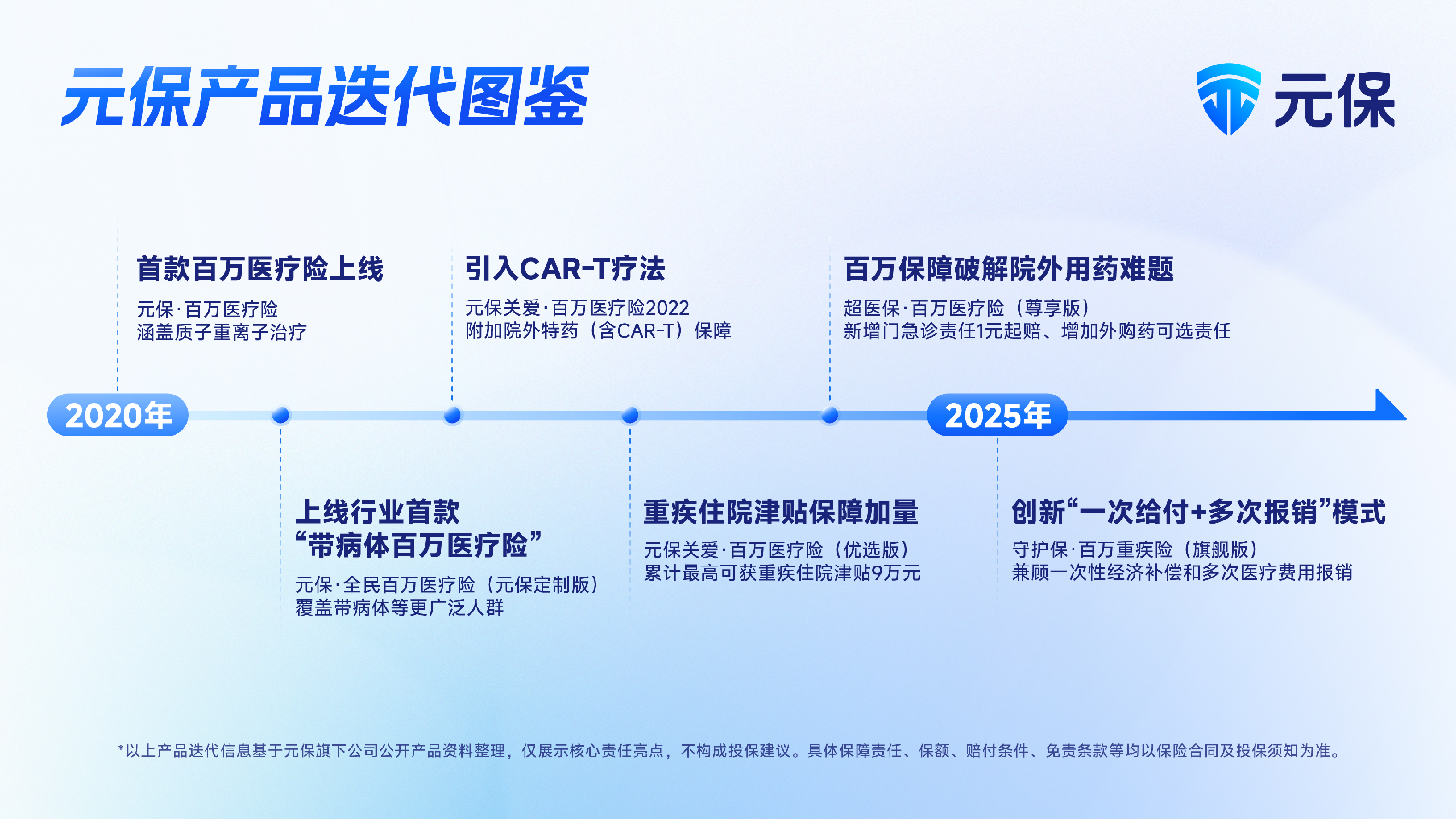
Core Insights - The article emphasizes the importance of inclusive insurance that caters to the needs of ordinary people, highlighting the role of technology in making insurance more accessible and affordable [1][18] - Yuanbao, a leading internet insurance technology group in China, aims to leverage technology to promote inclusive insurance, aligning with the broader trend in the insurance industry towards enhancing protection for ordinary families [1][18] Group 1: Focus on "Inclusivity" and "Affordability" - The Chinese insurance industry is undergoing a paradigm shift, with traditional life insurance models facing challenges while technology is driving down costs and improving efficiency, thus promoting inclusive insurance [2][3] - Yuanbao stands out by focusing on inclusive health insurance through internet-based solutions, addressing the balance between social value and commercial viability [2][3] - The development of inclusive insurance is currently in a phase of growth and capability testing, facing challenges such as diverse protection needs and the need for better product customization [3] Group 2: Product Innovation and Accessibility - Yuanbao utilizes AI technology to personalize advertising and product services, significantly enhancing the accessibility of insurance for a broader audience [4] - The company has introduced various tailored products to meet specific health needs, such as insurance for women and seniors, and has relaxed restrictions for new workers [4][5] - Yuanbao's commitment to affordability is evident in its product offerings, which include enhanced coverage without increasing costs, thereby alleviating financial pressure on families [5][6] Group 3: Claims Experience and Service Efficiency - The article highlights the transformation of claims processing from a mere administrative task to a critical aspect of service value, with Yuanbao leveraging technology to improve efficiency and transparency [10][13] - Yuanbao has implemented a "one-click upload" feature for claims, significantly reducing processing time and enhancing user experience [10][11] - The company also offers personalized claims assistance through its "Ruyi Claim" service, which has successfully resolved numerous disputes and increased user satisfaction [11][13] Group 4: Policy Support and Technological Integration - The Chinese government has prioritized the development of inclusive insurance, issuing guidelines to promote high-quality growth in this sector [14][15] - The integration of digital technologies, such as big data and AI, is crucial for enhancing the efficiency and sustainability of inclusive insurance [15][16] - Yuanbao's growth trajectory reflects its proactive approach to technology, establishing a comprehensive intelligent insurance service system that addresses real-world needs [15][16] Group 5: Future Outlook - The insurance industry is moving towards a new phase of inclusive development and service enhancement, with Yuanbao leading the way in making health insurance accessible to all [18] - Experts predict that inclusive insurance will evolve towards more precise, long-term, and systematic solutions, with technology playing a pivotal role in this transformation [18]
为了每个重要的普通人!
Zhong Guo Jing Ji Wang· 2026-01-30 05:35
Core Insights - The past six years have marked a transition in China's insurance industry from quantity to quality, emphasizing stability and long-term growth while integrating technology to reshape the value ecosystem [1] - The industry has shifted towards inclusive insurance, moving from "key coverage" to "broad accessibility," focusing on how protection can genuinely integrate into the lives of ordinary people [1] - The answer to this fundamental question points to the individual, with Yuanbao's six years of deep engagement serving as a vivid interpretation of true inclusivity, addressing the needs of every ordinary person [1] Company Developments - Yuanbao has leveraged technology and inclusivity as its guiding principles, focusing on product innovation and enhancing service experiences to deliver convenient and relevant protection to millions of families [1] - The company has grown into a leading insurance technology platform in China over the past six years, continuously striving to meet the everyday needs of individuals [1] - In celebration of its sixth anniversary, Yuanbao has released a short film titled "A Tribute to Every Important Ordinary Person," honoring the dedication of everyday individuals [1] Industry Trends - The insurance industry is increasingly recognizing the importance of addressing diverse user needs amid changing demographic structures and technological advancements [1] - The commitment to inclusivity and the belief that every ordinary person is significant drives the industry's evolution and Yuanbao's ongoing efforts [1] - The focus on ordinary yet crucial aspects of life, such as education for children and health for the elderly, serves as a motivational force for Yuanbao's continuous progress [1]
在线人寿保险服务商Ethos(LIFE.US)今晚登陆纳斯达克:IPO定价19美元,募资约2亿美元
Zhi Tong Cai Jing· 2026-01-29 03:21
Group 1 - Ethos Technologies has priced its IPO at $19 per share, which is the midpoint of the previously announced range of $18 to $20 [1] - The company is issuing a total of 10.5 million shares, raising up to $210.5 million, with approximately half being newly issued shares and the other half from existing shareholders [1] - At the $19 pricing, Ethos has a fully diluted market capitalization of approximately $1.3 billion, reflecting a decrease from its $2.7 billion valuation when led by SoftBank Vision Fund in 2021 [1] Group 2 - Ethos has demonstrated superior profitability compared to other startup companies in the insurtech sector, with projected revenue of $277.5 million and a net profit of $46.6 million for the nine months ending September 30, 2025 [1] - The company utilizes a data-driven and machine learning-based simplified underwriting model, allowing it to maintain a healthy profit margin while achieving rapid growth [1] - Ethos operates a digital platform that integrates various functions of life insurance, enabling customers to obtain coverage in minutes rather than months [2] Group 3 - Ethos plans to officially list on the Nasdaq stock exchange on January 29, 2026, under the ticker symbol "LIFE" [2]

元保重磅发布六周年品牌视频:为了每个重要的普通人!
Jin Rong Jie· 2026-01-28 09:56
Core Insights - The article discusses the advancements in the insurance technology sector, particularly focusing on the company Yuanbao and its innovative solutions in the insurance market [1] Group 1: Company Overview - Yuanbao is positioned as a leader in the insurance technology space, leveraging technology to enhance customer experience and operational efficiency [1] - The company has introduced several new products aimed at streamlining insurance processes and improving accessibility for consumers [1] Group 2: Industry Trends - The insurance technology industry is experiencing significant growth, driven by increasing demand for digital solutions and improved customer engagement [1] - There is a notable shift towards automation and data analytics within the insurance sector, which is expected to reshape traditional business models [1]
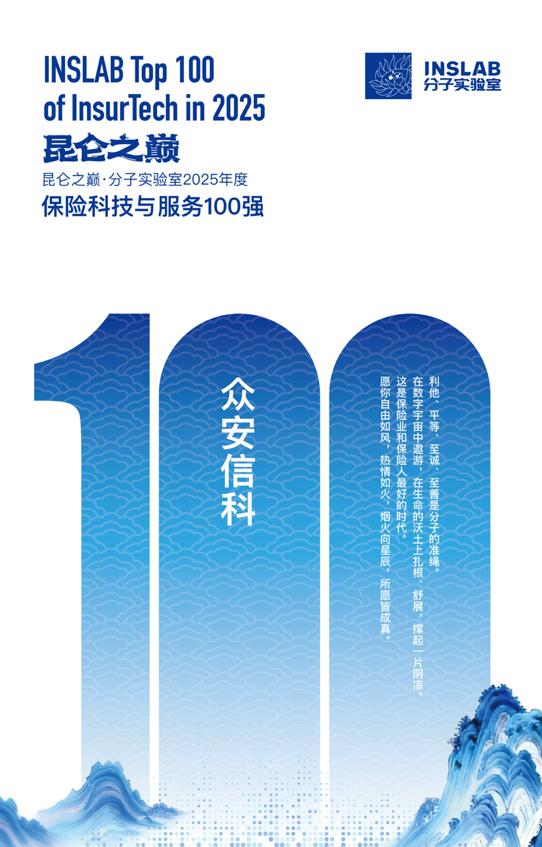
众安信科荣登分子实验室2025年度「保险科技与服务100强」
Xi Niu Cai Jing· 2026-01-14 11:42
Core Insights - The 2026 Molecular Insurance Technology Festival, hosted by Molecular Laboratory, recognized ZhongAn Technology for its continuous efforts in the insurance technology sector, awarding it the "Top 100 Insurance Technology and Services of 2025" [1] - Molecular Laboratory is the largest insurance technology and innovation collaboration platform in China, and the annual conference has become a core summit in the insurance technology circle [1] - The inclusion in the "Top 100" list signifies that ZhongAn Technology's products and services have been validated and recognized in real business scenarios within the insurance sector [1] Group 1: Achievements and Recognition - ZhongAn Technology's projects, "AI Empowered Private Domain Operations" and "AI Insurance Agent Assistant," won awards at previous competitions organized by Molecular Laboratory, showcasing their innovative capabilities [4] - The recognition reflects a resonance between ZhongAn Technology and Molecular Laboratory, emphasizing their collaborative efforts in advancing insurance technology [4] Group 2: AI Empowerment in Core Business Processes - The "AI Claims Assistant" enhances the claims process from reporting to settlement, improving customer experience and operational efficiency while reducing costs [6] - The "AI Underwriting Assistant" transforms traditional decision-making into a verifiable intelligent system, providing structured decision support for underwriters [6] Group 3: Comprehensive Solutions for Life Insurance - ZhongAn Technology offers end-to-end intelligent solutions for life insurance, addressing complex processes and long cycles, including agent empowerment and multi-channel integration [8] - The solutions aim to upgrade sales, service, and management processes in life insurance to adapt to new trends in elite and consultative business practices [8] Group 4: Expansion into Diverse Industries - ZhongAn Technology addresses common challenges in intelligent transformation across various industries, including banking, securities, technology, and retail [9] - The company aims to establish deep trust by delivering measurable value through intelligent marketing and operational solutions, positioning itself as a reliable partner in the intelligent transformation journey [9]