健康食品加工

Search documents
儋州万宁乐东定安昌江白沙6市县代表答记者问
Hai Nan Ri Bao· 2026-01-31 02:20
Core Viewpoint - The press conference highlighted the transformation of various industries in six counties of Hainan, focusing on sustainable development and the promotion of local specialties, aiming to attract investment and enhance economic growth. Group 1: Industry Transformation - Changjiang is shifting its industrial structure from "black and gray" to "blue and green," emphasizing the development of clean energy, new materials, and smart computing [2][6] - Danzhou's shipping hub capabilities have significantly improved, with the registration of 82 vessels and a total capacity exceeding 7.62 million deadweight tons during the 14th Five-Year Plan period [6][11] - The industrial park in Ding'an has entered the "billion-yuan park" category, focusing on local specialties like coconut milk and coffee [10] Group 2: Agricultural Development - Ledong's winter melon occupies a 65% market share in the national winter market, showcasing the success of tropical specialty agriculture [2][9] - The county has successfully established provincial industrial parks for seed breeding and winter melon, leading in the export of winter vegetables [9] Group 3: Tourism and Cultural Integration - Wanning aims to enhance its tourism sector by leveraging its surfing culture and tropical rainforest resources, planning events like the "Wanning Marathon" to attract visitors [9] - The integration of "duty-free + cultural tourism" is expected to stimulate consumer activity in Wanning [9] Group 4: Investment Opportunities - Danzhou's health food processing sector has become the first hundred-billion-level manufacturing cluster directly stimulated by free trade port policies in Hainan [11] - The counties are encouraged to attract investors by showcasing their unique industrial flavors and opportunities for high-quality development in the Hainan Free Trade Port [11]
传承“百载商埠”荣光 汕头加快构建内通外畅贸易网络
Zhong Guo Xin Wen Wang· 2026-01-04 13:42
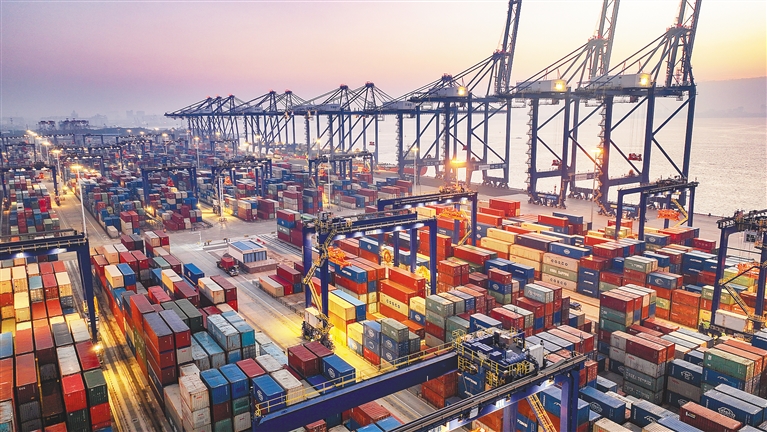
Core Viewpoint - Shantou is leveraging its commercial heritage to enhance trade networks and stimulate economic growth, focusing on both internal and external trade collaboration [1][2] Group 1: Trade Network Development - Shantou is accelerating the construction of a trade network that is both internally connected and externally accessible, enhancing the foundation and stability of its commerce [1] - The city has successfully created a synergy between its comprehensive bonded zone, cross-border e-commerce pilot zone, and free trade development area, leading to significant institutional innovations and trade expansion [1] Group 2: Economic Diversification - Shantou is actively promoting various economic sectors, including cultural tourism, food economy, nighttime economy, and concert economy, aiming to provide an enjoyable experience for visitors [1] - The city has introduced over 200 first stores from various regions and cities, establishing unique commercial districts and complexes that blend historical and modern commercial elements [1] Group 3: Industry Support and Attraction - Shantou is supporting local enterprises in sectors such as printed circuit boards, electronic chemicals, health foods, and high-end chemicals to strengthen their brands and market presence [2] - The city has attracted leading companies like BYD and Luxshare Precision, fostering the development of upstream and downstream enterprises within the industry [2] Group 4: Global Trade Expansion - Shantou is utilizing its global network of overseas Chinese to broaden trade channels, exemplified by hosting significant events like the 22nd International Teochew Association Annual Conference and the 10th World Teochew Business Conference in 2024 [2] - The city is embracing new business models, such as "cross-border e-commerce + industrial belt," enabling thousands of companies to sell products globally, particularly in key markets along the Belt and Road Initiative [2] Group 5: Future Vision - Shantou aims to continue its legacy as a commercial hub by building platforms, strengthening key players, and expanding channels to enhance its regional trade vitality and efficiency [2]
封关运作开新篇 踔厉奋发向未来
Hai Nan Ri Bao· 2025-12-19 01:26
Core Viewpoint - The official launch of the all-island customs closure in Hainan Free Trade Port marks a significant milestone, showcasing China's commitment to high-level opening-up and reform [3][4][5]. Group 1: Economic and Trade Opportunities - The all-island customs closure transforms Hainan into a special customs supervision area, implementing a policy characterized by "open on one line, controlled on the second line, and free within the island" [6][13]. - The closure is expected to attract global enterprises, capital, and talent, enhancing Hainan's role as a key open gateway for China's new era of reform and opening-up [4][7]. - Hainan's unique geographical and ecological advantages position it as a testing ground for national reform and opening-up policies, particularly in trade, investment, and cross-border capital flow [5][9]. Group 2: Industry Development and Innovation - The launch of the customs closure is anticipated to boost various industries, including tourism, which will benefit from innovative travel routes and enhanced local product offerings [8][10]. - The establishment of a high-end processing project in the health food sector demonstrates the positive impact of customs policies, significantly reducing import costs and increasing production capacity [10][11]. - The focus on high-quality development in sectors such as aerospace, digital economy, and biomedicine is emphasized, with plans to create industry clusters worth hundreds of billions [15][18]. Group 3: Policy and Regulatory Framework - The provincial government aims to create a market-oriented, law-based, and international business environment, enhancing the transparency and predictability of the investment climate [13][14]. - Continuous efforts will be made to optimize foreign investment policies and improve market access, particularly in new industries and business models [16][17]. - The integration of various regulatory bodies and the establishment of a collaborative governance model are crucial for the effective implementation of the customs closure [12][19].