
农药销售

Search documents
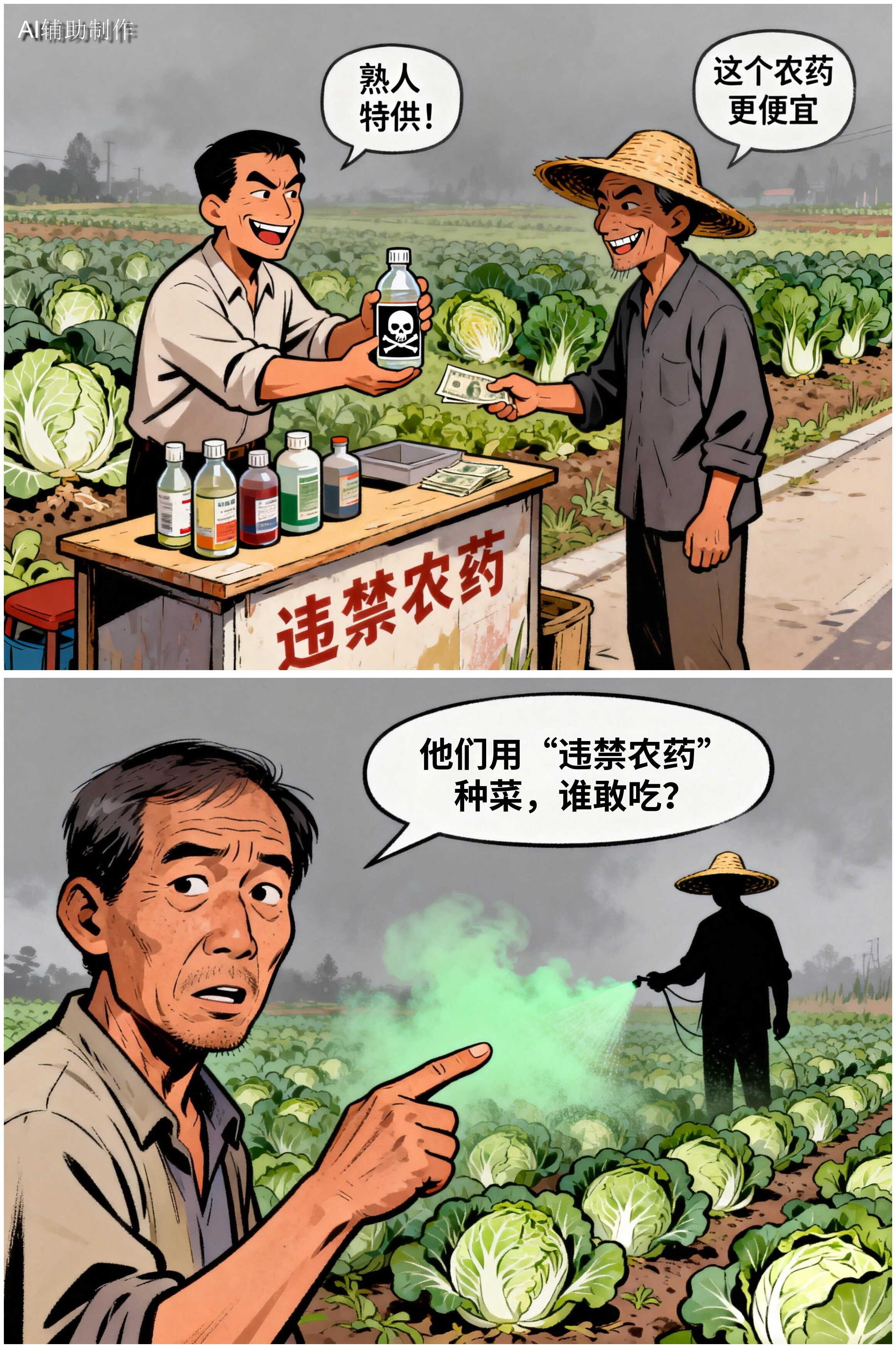
漫画|当地村民都不敢吃,怎能让违禁农药流入农田?
Zhong Guo Jing Ji Wang· 2026-01-23 12:26
Group 1 - The article highlights alarming issues regarding the illegal sale of banned and restricted pesticides by certain merchants and companies, who use methods such as falsifying production dates and changing packaging to covertly sell these harmful substances [4] - These illegal pesticides are reportedly being used in vegetable cultivation, raising significant food safety concerns among local villagers, who express distrust in consuming locally grown vegetables [4] - The article calls for regulatory authorities to strengthen control and inspection measures, and to impose severe penalties on the black market industry to ensure food safety [4]

央视曝光“菜商违规使用含毒农药”
Xin Lang Cai Jing· 2026-01-18 15:19
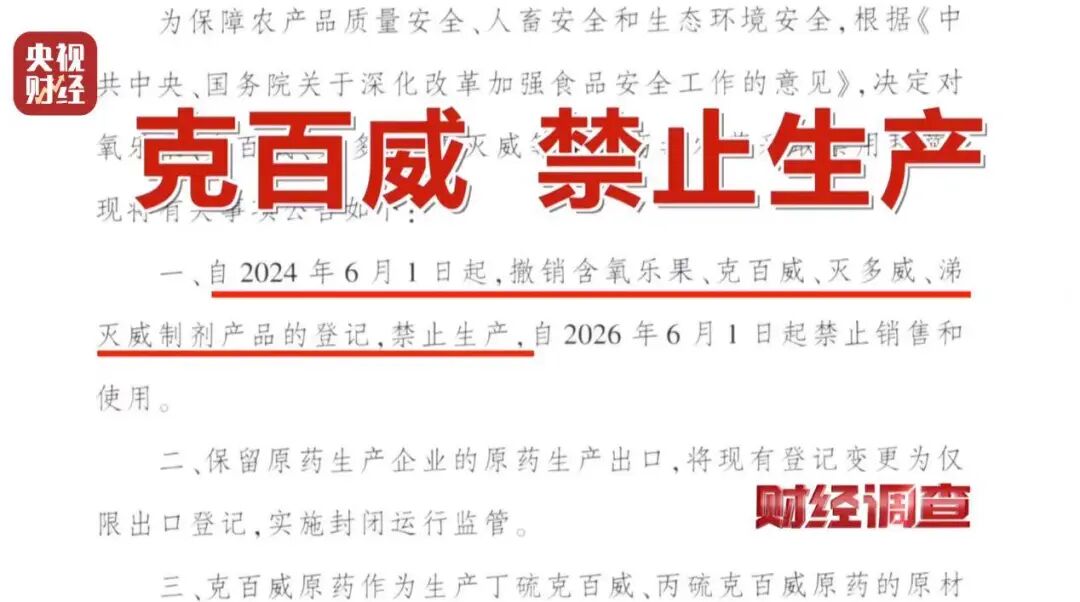
Core Viewpoint - The article highlights the ongoing illegal sale and use of toxic pesticides, specifically "Kebaiwei," which is banned for use on vegetables and other crops, despite government regulations prohibiting its sale and production starting June 2024 [1][12]. Group 1: Illegal Sales and Usage - Reports indicate that some merchants and farmers are still using "Kebaiwei," a broad-spectrum pesticide, in violation of national regulations [1][3]. - In Hubei Province, a local farmer admitted to using "Kebaiwei" and claimed to have access to banned pesticides [8][22]. - Investigations revealed that "Kebaiwei" is being sold to vegetable growers, despite clear labeling that it should not be used for such crops [13][22]. Group 2: Evasion Tactics - Some sellers are reportedly altering production dates on pesticide packaging to evade regulatory scrutiny, claiming products are from before the ban [15][31]. - Merchants are also selling "Kebaiwei" under different names or in disguised packaging to avoid detection [20][31]. - The article notes that other banned pesticides, such as "Jiabanfeng," are also being sold under the radar, with sellers aware of the risks of pesticide residue on crops [26][29]. Group 3: Consumer Awareness and Health Concerns - Local residents express concerns about the safety of vegetables grown with these toxic pesticides, indicating a lack of trust in the produce from affected areas [6][22]. - The article emphasizes the health risks associated with consuming vegetables treated with banned pesticides, as farmers continue to prioritize yield over safety [31].
厂家铤而走险、商户违规牟利,含毒农药克百威在多种渠道隐蔽销售
Xin Lang Cai Jing· 2026-01-18 15:19
Core Viewpoint - The article highlights the ongoing illegal sale of toxic pesticides, specifically "Kebaiwei" and "Jiabanglin," which are banned or restricted for use in agricultural practices, particularly in vegetable cultivation [1][2][24]. Group 1: Illegal Sales of Pesticides - Certain vendors continue to sell "Kebaiwei," a broad-spectrum pesticide that is prohibited for use on vegetables, fruits, tea, and medicinal herbs as per official regulations [2][24]. - Reports indicate that some farmers are using banned pesticides like "Jiabanglin" to control pests, despite knowing the legal restrictions [22][23]. - Investigations reveal that vendors are circumventing regulations by changing packaging and selling to familiar customers to avoid detection [23][28]. Group 2: Regulatory Framework - The Ministry of Agriculture and Rural Affairs of the People's Republic of China has issued announcements prohibiting the production and sale of "Kebaiwei" starting June 1, 2024 [2][24]. - The regulations specify that pesticide users must adhere strictly to the labeled usage guidelines, including application methods and dosage [8][29]. - The article emphasizes the importance of compliance with agricultural safety standards to protect food quality and environmental health [18][24]. Group 3: Consumer Awareness and Impact - Local residents express concerns about the use of toxic pesticides in their vicinity, indicating a lack of trust in the safety of the vegetables produced [32][33]. - The article documents instances where farmers openly admit to using banned pesticides to increase crop yields, highlighting the economic pressures driving these decisions [22][31]. - The presence of toxic pesticide residues poses significant risks to consumer health and safety, raising alarms among community members [26][32].

个别菜商违规用含毒农药禁止销售的含毒农药竟被偷偷贩卖
Xin Lang Cai Jing· 2026-01-18 15:19
Core Viewpoint - Some merchants and companies are still illegally selling pesticides that are banned or restricted by the state, posing a risk to consumer safety and agricultural practices [1] Group 1: Illegal Sales of Banned Pesticides - Certain merchants are reported to be selling "Kebaiwei" (克百威), a toxic pesticide that is prohibited for use on vegetables and other crops [1] - The production of formulations containing this pesticide will be banned starting June 1, 2024, with a complete prohibition on its use by the end of November 2025 [1] Group 2: Consumer Awareness and Safety Concerns - In Hubei's Tianmen City, villagers are aware of the use of this toxic pesticide in local vegetable fields and refuse to consume the produce grown there [1] - The grower of the vegetables confirmed the use of "Kebaiwei" and admitted to having access to banned pesticides through certain channels [1]
轻信销售人员推荐用错农药致百亩瓜田几乎绝收
Ren Min Wang· 2025-07-09 01:02
Core Points - A farmer in Xinjiang suffered significant economic losses due to misleading recommendations from a pesticide sales company, resulting in a court ruling that the company must compensate the farmer for over 300,000 yuan while the farmer bears 290,000 yuan of the loss [1][2] Group 1 - The farmer purchased a pesticide intended for apple trees, which was incorrectly recommended by the sales personnel, leading to the death of nearly all crops on 100 acres of land [1][2] - The court confirmed a direct causal relationship between the use of the inappropriate pesticide and the crop failure, holding the sales company accountable for its major fault in the recommendation process [2] - The farmer, despite having some planting experience, failed to verify the product's suitability, which contributed to the losses, leading to a shared responsibility ruling by the court [2]