
冶金装备制造

Search documents
行业聚焦:全球双电极直流电弧炉行业头部生产商市场份额及排名调查
QYResearch· 2026-01-27 02:43
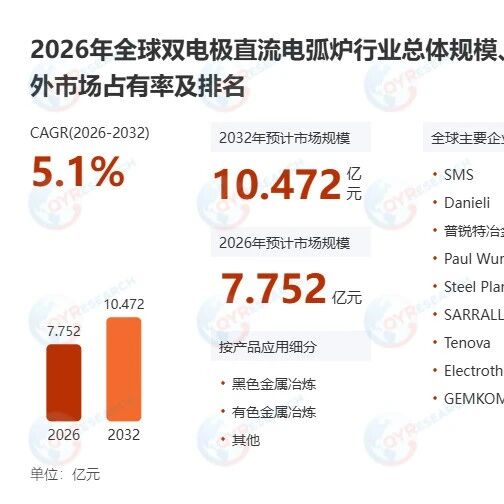
Core Viewpoint - The article discusses the advantages and market dynamics of twin-electrode direct current (DC) electric arc furnaces, highlighting their efficiency, stability, and environmental benefits in the steelmaking industry [2][4][5]. Group 1: Technology and Performance - Twin-electrode DC electric arc furnaces offer significant advantages over traditional AC arc furnaces in terms of arc stability, energy utilization efficiency, and controllability of the smelting process [4]. - The direct current arc exhibits less fluctuation and stronger directionality, which helps reduce electrode consumption, minimize furnace lining erosion, and effectively suppress dust generation and noise emissions [4]. - Enhanced electromagnetic stirring improves the uniformity of temperature and composition in the molten pool, making it particularly suitable for metallurgical scenarios that require high cleanliness, composition control, and repeatability [4]. Group 2: Industry Chain - The twin-electrode DC electric arc furnace is a highly integrated heavy equipment, with upstream components including high-power DC power systems, rectification and control modules, graphite electrodes, refractory materials, and automation systems [4]. - Midstream players are responsible for overall engineering design, equipment manufacturing, installation, and performance assurance, while downstream customers primarily consist of electric arc steel mills using scrap steel, special steel enterprises, and high-alloy smelting production lines [4]. Group 3: Application Areas - Twin-electrode DC electric arc furnaces are widely used in scrap-based steelmaking, production of special steels, and high-alloy metal smelting, especially in operations with strict requirements for smelting stability, composition accuracy, and inclusion control [5]. - In the context of the steel industry's transition towards carbon reduction and resource recycling, DC arc furnaces are gaining attention for their high energy efficiency and relatively favorable environmental impact in new and upgraded projects [5]. Group 4: Market Trends - The twin-electrode DC electric arc furnace is increasingly integrating with efficient scrap preheating, intelligent batching, digital smelting control, and low-carbon energy systems [6]. - As the steel industry simultaneously raises demands for energy efficiency, emissions, and product quality, twin-electrode DC electric arc furnaces are expected to maintain their technological value and application space in high-end electric steel and special steel sectors [6]. Group 5: Market Size and Growth - According to QYResearch, the global market for twin-electrode DC electric arc furnaces is projected to reach USD 150 million by 2031, with a compound annual growth rate (CAGR) of 5.1% in the coming years [7]. - The top five manufacturers in the global market are expected to hold approximately 57.98% of the market share by 2024, with key players including Danieli, Steel Plantech, SMS, Sarralle, and Tenova [9].

国内首台!投产!
Xin Lang Cai Jing· 2026-01-05 10:34
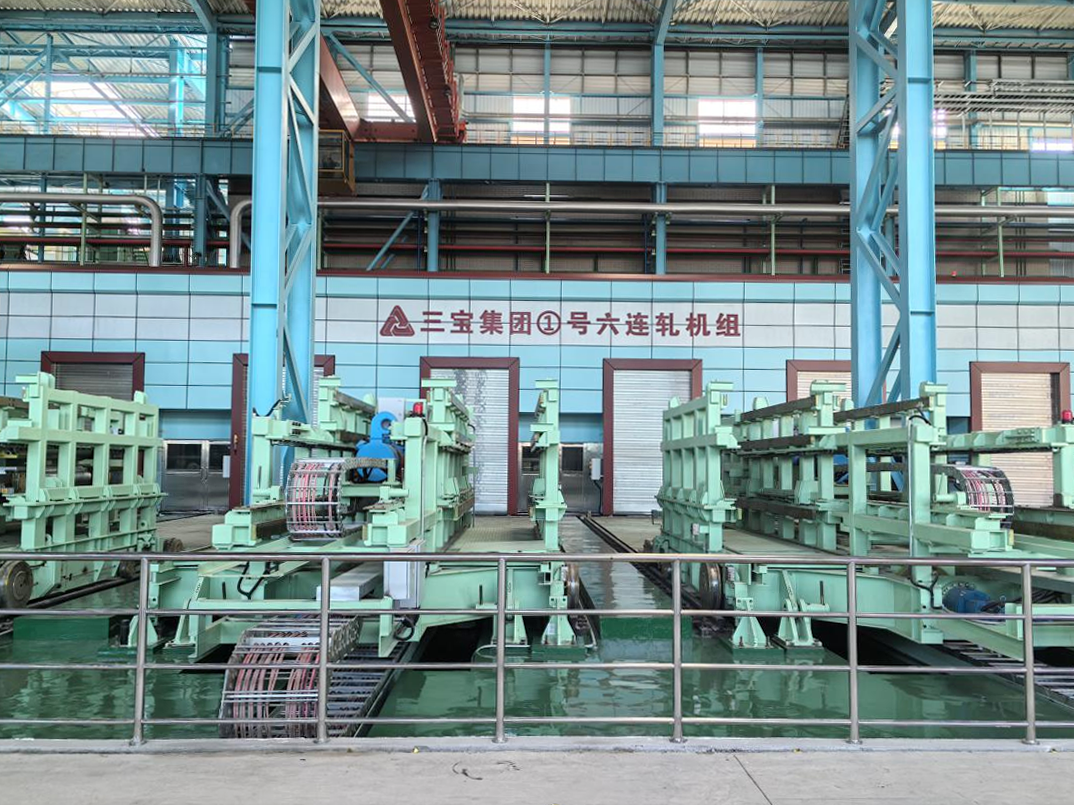
Core Viewpoint - The successful production of China's first 1450mm high-grade silicon steel cold-rolling mill marks a historic breakthrough in the core equipment field of high-end silicon steel cold rolling, enhancing China's competitiveness and technological authority in this sector [2][3][10]. Group 1: Technological Breakthrough - The 1450mm silicon steel cold-rolling mill is the first domestically designed and manufactured small-diameter six-stand cold-rolling mill, breaking the long-standing monopoly of foreign suppliers in the core equipment field [3][10]. - The successful production of this mill addresses critical technical challenges in the six-stand small-diameter cold-rolling process, significantly improving the core competitiveness of China's cold-rolling equipment [3][10]. - This achievement demonstrates complete autonomy in the technology of high-end silicon steel cold-rolling equipment, providing a solid guarantee for the localization of high-value-added products like silicon steel [3][10]. Group 2: Strategic Value and Industry Impact - The production of the mill promotes the high-end and clustered development of China's metallurgical materials industry chain, representing a threefold strategic value [3][10]. - The mill is a significant outcome of the deepened cooperation between China First Heavy Industries and Sanbao Group, following their collaboration on the 1780mm hot-rolling project [5][11]. - This initiative supports Sanbao Group in upgrading its product structure and expanding its product lines in high-value-added areas such as silicon steel and ultra-thin strip steel [5][11]. Group 3: Future Directions - China First Heavy Industries aims to continue its mission of "Equipping China, Going Global," driving domestic cold-rolling equipment from "keeping pace" to "leading" through continuous innovation [7][11]. - The company is committed to contributing to the intelligent and green high-quality development of China's steel industry, showcasing Chinese wisdom and strength in the global high-end manufacturing landscape [7][11].

中冶宝钢 冶金物流装备实现突破
Zhong Guo Zheng Quan Bao· 2025-09-11 20:35
Core Viewpoint - The successful launch of three "new energy" electric-driven, trackless metallurgical logistics special vehicles by China Metallurgical Group Corporation (MCC) marks a significant advancement in the "green and intelligent" development of metallurgical logistics equipment [1][3]. Group 1: Product Launch and Features - The three vehicles include two 120-ton electric grab trucks, four 120-ton electric slag transport vehicles, and one 80-ton articulated electric grab truck, all aimed at addressing efficiency and environmental issues in metallurgical slag handling [2]. - The 120-ton electric grab truck features an integrated frame structure and a four-motor independent drive system, enhancing heavy load transport capabilities [3]. - The 120-ton electric slag transport vehicle employs a single-axis line traction drive and an integrated rotating top cover system, significantly improving safety and environmental standards for high-temperature slag transport [3]. Group 2: Environmental Impact and Innovation - The introduction of these vehicles is a key achievement in response to the "dual carbon" goals, with the potential to reduce carbon dioxide emissions by over 700 tons annually and lower electricity costs to one-third of that of fuel vehicles [2]. - The vehicles are designed to achieve "zero carbon emissions" during transport, providing essential support for "zero carbon" production [2]. - The company emphasizes ongoing innovation, focusing on electric drive, intelligent networking, and lightweight technologies to expand its new energy product line [4]. Group 3: Strategic Collaboration and Future Outlook - Since the beginning of the construction of Zhanjiang Steel in 2013, MCC has provided metallurgical equipment support, establishing a deep cooperative foundation [3]. - Over the past twelve years, MCC has evolved from traditional fuel equipment to new energy electric drive technology, offering integrated logistics solutions for slag handling [3]. - The company plans to continue driving innovation and product development to further enhance its offerings in the metallurgical logistics sector [4].
中冶宝钢冶金物流装备实现突破
Zhong Guo Zheng Quan Bao· 2025-09-11 20:17
Core Viewpoint - The successful launch of three "new energy" electric-driven non-track metallurgical logistics special vehicles by China Metallurgical Group Corporation (MCC) marks a significant advancement in the "green and intelligent" development of its metallurgical logistics equipment [1][3]. Group 1: Product Development - The three vehicles include two 120-ton electric grab trucks, four 120-ton electric slag transport vehicles, and one 80-ton articulated electric grab truck, showcasing MCC's commitment to green technology innovation [1][2]. - The vehicles are designed to address efficiency and environmental challenges in metallurgical slag handling and transportation, aligning with the "dual carbon" strategy [1][2]. Group 2: Technological Innovations - The core technological framework includes structural innovation, direct drive motors, energy recovery, and high-pressure safety interlocks, leading to significant improvements in operational stability and intelligence [1][2]. - The electric grab truck features an integrated chassis structure and a four-motor independent drive system, enhancing heavy-load transportation capabilities [2][3]. - The electric slag transport vehicle employs a single-axis traction drive and an integrated rotating top cover system, improving safety and environmental standards for high-temperature slag transport [2][3]. Group 3: Environmental Impact - The new vehicles are expected to achieve "zero carbon emissions," reducing carbon dioxide emissions by over 700 tons annually, with electricity costs only one-third of those of fuel vehicles and maintenance costs reduced by over 40% [2][3]. Group 4: Future Outlook - MCC plans to continue focusing on innovation-driven development, enhancing product research and development, and expanding its new energy product line, particularly in electric drive, intelligent networking, and lightweight technologies [3].