品牌出海服务

Search documents
科技企业主导深圳写字楼市场需求,市场竞争预计维持高强度
Di Yi Cai Jing· 2026-01-20 09:31
Core Viewpoint - The overall vacancy rate of Grade A office buildings in Shenzhen rose to 26.2% in 2025, reflecting structural pressures in the market due to high new supply and a transformation in leasing demand from enterprises [1][2] Group 1: Market Overview - The Shenzhen Grade A office market is undergoing structural adjustments, with a "total pressure and structural differentiation" pattern emerging due to high levels of new supply and changes in leasing demand [1] - The technology sector dominates the market demand, accounting for nearly 30% of the transaction area, with the smart manufacturing sector showing particularly active leasing demand [1][2] Group 2: Demand Drivers - The main drivers of new leasing demand in Shenzhen's office market are threefold: expansion in the consumer electronics industry, accelerated overseas branding leading to increased demand for related professional services, and the rapid development of strategic emerging industries like artificial intelligence and semiconductor chips [2] - Approximately 30% of the new leasing demand in 2025 will come from expansions, upgrades, and new establishments in the aforementioned sectors [1] Group 3: Supply and Vacancy Trends - The overall vacancy rate for Grade A office buildings in Shenzhen increased by 1.8 percentage points year-on-year to 26.2% in 2025, indicating further structural pressure [2] - An estimated 1.5 million square meters of new supply is expected to enter the market in 2026, with short-term structural supply-demand contradictions likely to persist, maintaining high competition and pressure on rental prices [2] Group 4: Future Outlook - The demand for office space is anticipated to continue rising due to the recovery in consumer electronics demand and the accelerated application of artificial intelligence, which will drive the expansion of smart manufacturing and consumer electronics companies [2]
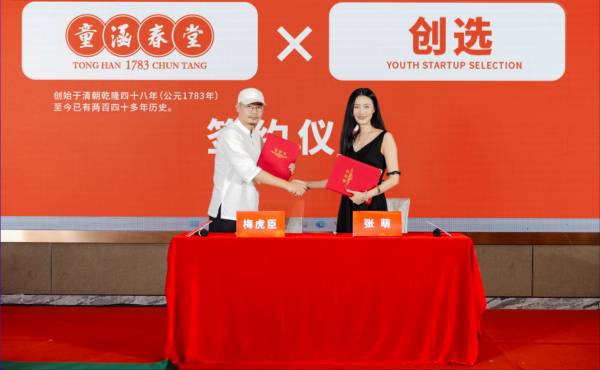
"老字号新出海"战略破局:童涵春堂联名创选开启全球化新范式
Zhong Guo Shi Pin Wang· 2025-07-10 02:49
Core Viewpoint - The collaboration between the 240-year-old Chinese brand Tong Hanchun Tang and the Qichuang platform marks a significant step in the globalization of traditional Chinese brands, focusing on appealing to younger consumers through innovative products and marketing strategies [1][3]. Group 1: Company Collaboration - Tong Hanchun Tang, a key player in traditional Chinese medicine, aims to modernize its brand image and reach younger demographics by partnering with Qichuang [3]. - The partnership is seen as a shortcut to brand rejuvenation, leveraging Qichuang's expertise in brand globalization and youth engagement [3][5]. - The joint product line will incorporate elements of "Guochao" (national trend) in both formulation and packaging, targeting both domestic and international markets through platforms like Xiaohongshu [5]. Group 2: Globalization Strategy - Qichuang's strategic vision includes not only bringing foreign brands into China but also facilitating the international expansion of Chinese traditional brands [5]. - A high-profile forum titled "Wealth Gravity: Globalization Strategy and Wealth Reconstruction" was held to discuss the future of Chinese brands going global, featuring industry experts and scholars [7][8]. - Experts shared insights on globalization strategies, including the importance of cultural adaptation and comprehensive marketing methodologies for brand internationalization [10]. Group 3: Qichuang's Role - Founded in 2013, Qichuang integrates entrepreneurship education, IP incubation, and brand globalization services, showcasing its unique value in the new era of globalization [12]. - The founder, Zhang Meng, emphasizes that true globalization involves the dual output of cultural values and commercial ecosystems, not just the flow of goods [12]. - Qichuang is positioned as a crucial channel for traditional Chinese brands to enter the global market, with ongoing discussions with multiple old brands for future collaborations [12].