
城市运营服务

Search documents
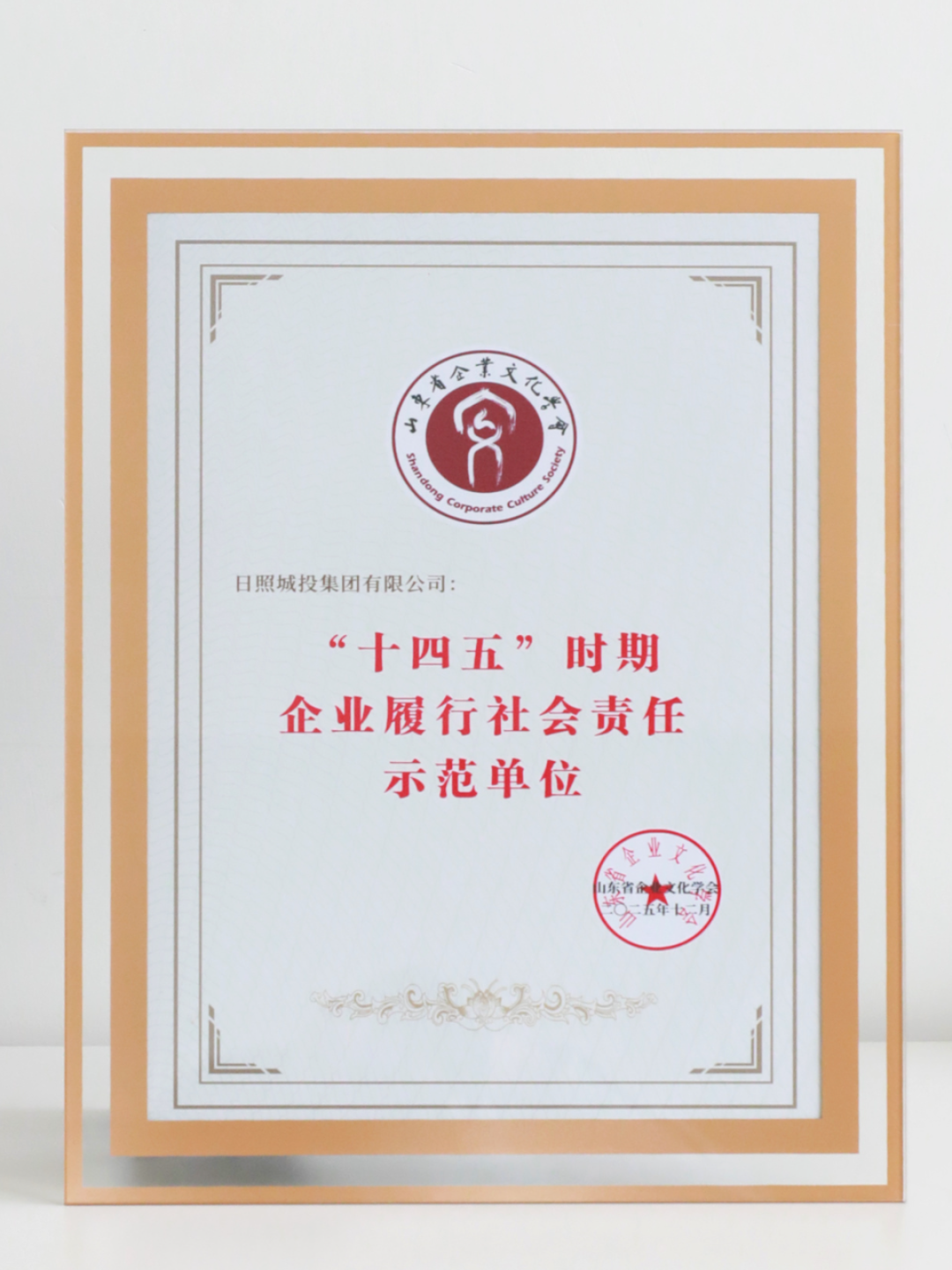
日照城投集团企业文化建设获多项荣誉
Qi Lu Wan Bao· 2025-12-26 08:19
Core Viewpoint - The conference in Weihai focused on the achievements and practices of corporate culture construction in Shandong Province during the "14th Five-Year Plan" period, emphasizing the role of party building and cultural foundation in promoting high-quality corporate development [1] Group 1: Corporate Social Responsibility - The company has been recognized as a model unit for fulfilling social responsibility during the "14th Five-Year Plan" period due to its outstanding performance in corporate culture construction and social responsibility [1] - The company integrates ESG (Environmental, Social, and Governance) principles deeply into its strategy and operations, emphasizing reform, green transformation, compliance governance, and community building [3] Group 2: Corporate Culture Development - The company promotes a culture brand called "Integrity and Integration," encouraging participation and multi-dimensional promotion to internalize cultural concepts and externalize actions [5] - The company’s cultural achievement titled "Forging the Soul of Integrity and Integration, Gathering the Power of Culture" received the "Outstanding Achievement in New Era Corporate Culture Construction" award at the 2025 11th Corporate Culture Development Conference [5] - The company aims to strengthen party leadership and deepen cultural empowerment, continuously consolidating cultural construction achievements and innovating cultural carriers to transform cultural soft power into hard support for reform and transformation [5]

破局与赋能:城投公司转型的动因分析与路径探索
Zheng Quan Shi Bao Wang· 2025-11-18 03:31
Group 1: Driving Factors for Urban Investment Transformation - Urban investment companies in China are under unprecedented pressure to transform from traditional government financing platforms to market-oriented, industrial entities due to external policy, debt, and market pressures [1][2][3] - The People's Bank of China and other departments have mandated that urban investment companies fully "exit the platform" by June 2027, detaching from government financing functions [2] - As of June 2025, urban investment companies had a total interest-bearing debt of 67.82 trillion yuan, with high financing costs in key provinces [2] Group 2: Internal Demand for Sustainable Development - The traditional reliance on government credit and fiscal support is unsustainable, necessitating a shift towards market-oriented and industrialized operations for survival [3] - The transformation allows urban investment companies to diversify income sources, improve cash flow structures, and enhance resilience against economic cycles [3] Group 3: Transformation Paths for Urban Investment Companies - Urban investment companies need to adapt to tightened policies and market changes through four main transformation paths: business structure, asset and capital, management mechanism, and debt resolution [4] - The first path involves shifting focus from infrastructure construction to becoming urban operation service providers, regional development operators, and resource integrators [5][6][8] - The second path emphasizes asset securitization and mixed-ownership reforms to optimize capital structures and reduce debt ratios [9] - The third path focuses on modernizing management mechanisms to improve efficiency and reduce administrative burdens [10][11] - The fourth path involves debt restructuring and financial transformation to mitigate risks and enhance operational capabilities [12] Group 4: Significance of Urban Investment Transformation - The transformation of urban investment companies is crucial for implementing national strategies and promoting local economic development [13][14] - It serves as a core engine for upgrading local economies by optimizing resource utilization and enhancing resilience against economic fluctuations [15] - The transformation also represents a key practice in deepening state-owned enterprise reforms at the local level, addressing common issues such as administrative dominance and weak profitability [16]
华扬联众数字技术股份有限公司 关于第六届监事会第九次(临时)会议决议的公告
Zhong Guo Zheng Quan Bao - Zhong Zheng Wang· 2025-08-14 08:48
Group 1 - The company, Huayang Lianzhong Digital Technology Co., Ltd., plans to jointly invest with its controlling shareholder, Hunan Xiangjiang New District Development Group Co., Ltd., to establish a joint venture company named Hunan Huayang Cultural Tourism Operation Management Co., Ltd. The total investment amount is 402 million RMB, with the company contributing 205 million RMB in cash for a 51% stake, while Xiangjiang Group will contribute 100% equity of Hunan Xiangjiang Urban Operation Management Co., Ltd. valued at 197 million RMB for a 49% stake [12][14][29] - The joint venture aims to enhance the company's strategic collaboration and operational capabilities in the digital cultural tourism sector, which is seen as a necessary move to counteract the declining growth in the digital marketing industry [29][30] Group 2 - The supervisory board meeting held on August 12, 2025, approved the proposal for the joint investment, with all three supervisors present voting in favor [5][7][33] - The board of directors also approved the proposal during its meeting on the same day, with a unanimous vote of 4 in favor and 3 abstentions from related directors [78] - The proposal will be submitted for approval at the upcoming fifth extraordinary general meeting of shareholders scheduled for August 29, 2025 [9][52] Group 3 - The joint venture is expected to improve the company's business structure and strengthen its competitive edge, provided that the projects are executed as planned and yield the anticipated returns [30][29] - The company has established mechanisms to manage related party transactions, ensuring transparency and fairness in pricing, and has committed to disclosing relevant information to protect minority shareholders' interests [25][26][27]
