宠物美容

Search documents
春节里的萌宠经济:扮靓“毛孩子”过大年
Xin Hua Wang· 2026-02-23 07:02
Core Viewpoint - The article highlights the increasing demand for pet grooming services around the Spring Festival, with many pet owners seeking to pamper their pets through grooming and styling services [1] Industry Trends - Numerous pet grooming schools have been established in various regions to train professionals in pet grooming, indicating a growing industry and the emergence of new job opportunities [1]
2025中国宠物美容市场:洞察先机,蓄势腾飞
Sou Hu Cai Jing· 2026-02-10 00:40
Core Insights - The Chinese pet grooming market is experiencing rapid growth, with a compound annual growth rate (CAGR) of 22.3% from 2019 to 2023, reaching a market size of over 42 billion yuan in 2023. It is projected to exceed 62 billion yuan by 2025 and reach 120 billion yuan by 2030, indicating a promising future for the industry [1][2][10][12]. Group 1: Market Overview - The pet grooming industry in China is expanding significantly, driven by changes in social structure and family dynamics, with pets becoming integral to many households [1][2]. - The number of pets in China has surpassed 130 million, leading to an annual demand for over 80 million pet grooming services [2][14]. - The younger generation of pet owners is becoming the main consumer group, willing to pay premium prices for enhanced pet care services, which has diversified service offerings beyond basic grooming to include spa treatments and health management [2][14]. Group 2: Market Structure - The market exhibits significant regional stratification, with first-tier cities like Beijing, Shanghai, and Guangzhou accounting for approximately 55% of the market share, where average spending per service exceeds 500 yuan [3][19]. - Lower-tier cities contribute to 60% of market growth, focusing on cost-effective services, although customer loyalty and repeat purchase rates remain low, indicating potential for future growth [3][20]. - The competitive landscape is fragmented, with a low market concentration (CR5 market share of about 28%), featuring numerous small pet grooming shops alongside a few leading chains [3][22]. Group 3: Industry Challenges - The industry faces challenges such as the lack of standardized service protocols and certification systems, which affect service quality and credibility [3][4]. - There is a significant shortage of qualified pet groomers, with tens of thousands needed, and existing training programs often do not align with market demands [3][4]. Group 4: Future Trends - Technological innovation and business model transformation are expected to drive industry upgrades, with the integration of IoT, big data, and AI leading to the adoption of smart grooming equipment [4]. - Digital services like online booking and data analytics will help businesses better understand and meet customer needs [4]. - Companies are also looking to expand into overseas markets, particularly in Southeast Asia, while continuing to develop lower-tier markets through community-based and mobile service models [4].


研判2025!中国宠物美容行业发展背景、发展历程、市场规模、重点企业及发展前景展望:宠物主对宠物美容意识提高,推动宠物美容规模达175.8亿元[图]
Chan Ye Xin Xi Wang· 2025-09-06 23:51
Core Insights - The pet grooming industry is experiencing significant growth, driven by rising living standards and the increasing importance of pets in households. The market size in China is projected to grow from 2.12 billion yuan in 2015 to 17.58 billion yuan in 2024, with a compound annual growth rate (CAGR) of 26.5% [1][11] - Consumers are shifting from basic grooming services to more specialized and personalized care, indicating a trend towards higher quality and health-oriented services [1][11] Industry Overview - The pet grooming industry provides services such as hair trimming, cleaning, styling, and health management, aiming to enhance pets' appearance and well-being [3][11] - The industry has evolved through various stages, from its inception in the 1990s to a stable and mature phase today, influenced by changing consumer behaviors and technological advancements [5][7] Market Dynamics - The number of pet dogs and cats in urban China is expected to rise from 91.49 million in 2018 to 124.11 million by 2024, with a CAGR of 5.21%. This growth is accompanied by an increasing demand for grooming services [7][9] - The urban pet consumption market is projected to grow from 170.8 billion yuan in 2018 to 300.2 billion yuan in 2024, with a CAGR of 9.86% [9][10] Industry Structure - The pet grooming industry consists of a clear supply chain, including upstream suppliers of grooming products, midstream service providers, and downstream consumers. The quality of upstream products directly impacts service effectiveness [8][9] Competitive Landscape - The industry features a mix of large chains, small grooming shops, and individual operators. Major players leverage economies of scale and brand recognition to gain competitive advantages [11][12] Future Trends - The industry is moving towards personalized services, integrating health management into grooming, and adopting digital technologies for enhanced customer experience [14][15][16]

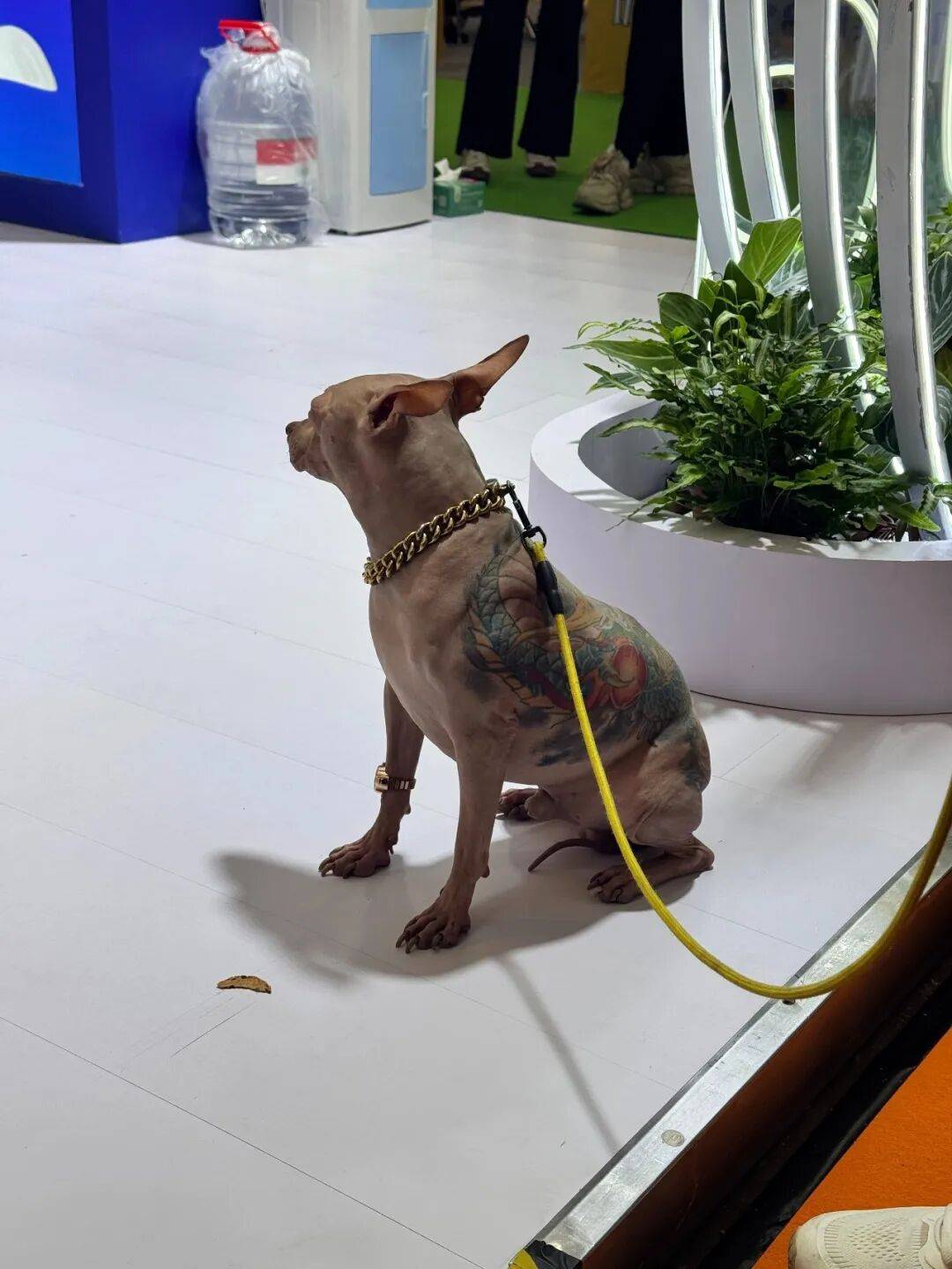
小狗“文身染发”,宠物美容越发离谱了
Hu Xiu· 2025-09-02 04:42
Core Viewpoint - The incident of a tattooed dog at the 27th Asia Pet Exhibition has sparked widespread outrage and discussions about animal welfare, ethics, and the boundaries of pet grooming practices [13][16][57]. Group 1: Incident Overview - A tattooed dog, described as having intricate designs and accessories, was showcased at the Asia Pet Exhibition, raising concerns about animal welfare [1][14]. - The dog's owner claimed that the tattooing process was done without anesthesia, as the dog has no pain receptors in its skin [10][14]. - The incident led to significant social media backlash, with over 20,000 likes and 5,000 comments on a post highlighting the ethical implications of such practices [13]. Group 2: Industry Reactions - The event prompted the exhibition organizers to ban the dog's owner from further participation [14]. - The tattoo artist publicly apologized, acknowledging the act as animal abuse and explaining the process involved [14][16]. - Industry professionals expressed their outrage, emphasizing the pain and stress animals endure during such procedures [18][22]. Group 3: Ethical Discussions - The incident ignited a broader conversation about the ethics of pet grooming and the fine line between care and harm [16][37]. - Experts highlighted that animals experience pain similarly to humans, and any invasive procedure should be approached with caution [22][23]. - The discussion also touched on the changing perceptions of pets, with many owners now viewing them as family members rather than property [38][50]. Group 4: Legal and Regulatory Aspects - Current laws in China classify pets as property, lacking specific animal protection legislation, which complicates the enforcement of animal welfare standards [49][50]. - There is a growing call for improved industry standards and regulations to protect animals from harmful practices [57]. Group 5: Future Implications - The incident serves as a catalyst for ongoing debates about animal welfare, prompting stakeholders to reconsider grooming practices and the responsibilities of pet owners [57][58]. - The need for a shift in societal attitudes towards pets and their treatment is emphasized, advocating for a more compassionate approach to pet care [59][60].