
散热器

Search documents
【研究报告】2025年印度散热器行业市场现状及海外企业进入可行性研究报告
Xin Lang Cai Jing· 2025-12-11 10:16
Core Insights - The Indian automotive industry has experienced rapid growth, with production reaching 5.457 million vehicles in 2022, accounting for 6.4% of global output, ranking fourth worldwide [1][5] - The "Make in India" initiative has significantly boosted the domestic electronics market, with electronic product output projected to grow at a compound annual growth rate (CAGR) of 14.9% from 2018 to 2024, surpassing 115 billion yuan by 2023 [1][5] - The demand for radiators, essential components in automotive cooling systems and power electronics, has increased in the Indian market due to the growth in the automotive and electronics sectors [1][5] Chapter 1: Overview of the Indian Radiator Industry - Definition and classification of radiator products, along with their development characteristics [1] - Analysis of the gap between domestic and international radiator industries, market saturation levels, and the impact of economic conditions on market size [1] - Overview of global radiator industry development, challenges faced, and current technological trends [1] Chapter 2: Development Environment Analysis of the Indian Radiator Industry - Economic environment analysis including GDP trends, final consumption expenditure, and industrial composition [2] - Policy environment analysis focusing on foreign investment regulations, incentives, and restrictions [2] - Social environment analysis covering labor demographics, financial conditions, business costs, infrastructure, and international trade relations [2] Chapter 3: Supply and Demand Analysis of the Indian Radiator Industry - Overview of industry development characteristics, technological advancements, and driving factors [3] - Market size analysis of the radiator industry, including supply and demand conditions [3] - Supply situation analysis detailing the scale and regional structure of radiator supply in India [3] Chapter 4: Industry Chain Analysis of the Indian Radiator Industry - Analysis of the radiator industry's supply chain structure and the interrelation with upstream and downstream industries [4] - Examination of the upstream supply scale and key enterprises affecting the radiator industry [4] - Demand scale analysis of downstream industries and their influence on the radiator sector [4] Chapter 5: Sales Channel Analysis of the Indian Radiator Industry - Identification of primary sales channels for radiator products and changes in these channels [5] - Strategies for sales channels within the radiator market [5] Chapter 6: Competitive Situation Analysis of the Indian Radiator Industry - Analysis of market concentration and entry barriers within the radiator industry [6] - Competitive landscape analysis, including the degree of competition and product substitutability [6] - Key factors influencing competition and strategic recommendations for the industry [6] Chapter 8: Future Development and Trends of the Indian Radiator Industry - Technological forecasts for the radiator industry [8] - Market size and supply-demand forecasts for the radiator industry from 2025 to 2029 [8] - Analysis of trends in downstream application fields, product development, and competitive dynamics [8] Chapter 9: Investment Feasibility Analysis and Recommendations for the Indian Radiator Market - Opportunities for investment in the radiator market [8] - Summary of market entry feasibility, including regulatory and competitive considerations [8]
为什么外资扎堆这些小而精的企业?路畅科技、鑫科材料等
Sou Hu Cai Jing· 2025-08-26 10:06
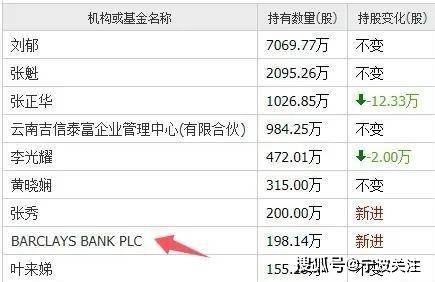
Group 1: Investment Trends - Major global capital firms, including UBS, JPMorgan, and Goldman Sachs, have recently invested heavily in six Chinese companies, indicating a strong interest in the Chinese market [1][7] - Road畅科技, a company specializing in automotive smart devices, attracted significant foreign investment, with four foreign institutions purchasing nearly 2 million shares [1][2] - XinKe Materials, known for high-performance copper alloys, saw substantial foreign buying, with Barclays and JPMorgan acquiring 4.17 million and 3.18 million shares respectively [1][4] Group 2: Company Highlights - Road畅科技 focuses on automotive electronics, producing key products like navigation screens and voice control systems, and has backing from major engineering machinery giant Zoomlion [2][7] - 双一科技, which manufactures composite materials for wind turbine blades, has also drawn foreign interest, with UBS and Barclays making significant purchases [3][7] - 金龙羽, a leading cable manufacturer, is developing next-generation solid-state batteries, which has caught the attention of foreign investors [6][7] Group 3: Market Dynamics - The influx of foreign capital into these companies reflects a broader trend of international investors targeting technically proficient small giants in China [7] - The investments are characterized by a collective approach from multiple foreign institutions, indicating a strong consensus on the potential of these companies [6][7] - The presence of both foreign and domestic capital in companies like 浙江华业 highlights a rare convergence of interest in the Chinese market [5][6]


搭桥铺路破梗阻 多方协调“润”小微
Shang Hai Zheng Quan Bao· 2025-08-14 18:23
Group 1 - The core idea of the articles revolves around the establishment of coordinated mechanisms by various financial regulatory bodies to address the financing difficulties faced by small and micro enterprises (SMEs) through innovative approaches and collaboration among government departments and financial institutions [1][2][3][5][6]. - The "Jin Yu Network" in Chongqing has been instrumental in identifying high-potential enterprises by analyzing data to create a "white list" for banks, enabling them to provide credit loans without collateral [1]. - In Shandong, a "joint consultation" mechanism has been established to assist SMEs that have financing needs but do not meet lending conditions, resulting in significant loan approvals and reduced interest rates for various companies [2][6]. Group 2 - The coordinated mechanisms have led to the integration of multiple government departments, allowing for a comprehensive assessment of SMEs' operational conditions and enhancing trust between banks and enterprises [2][3][5]. - The financial support provided through these mechanisms has resulted in substantial loan disbursements, with Chongqing issuing loans totaling 628.88 billion yuan to 313,200 SMEs, while Shandong has seen an 89.11% loan approval rate for 326,300 SMEs [6]. - The "thousand enterprises and ten thousand households" initiative has been implemented to conduct thorough surveys of SMEs' actual operating conditions and financing needs, facilitating better financial service delivery [7][8][9].