
数字认证

Search documents
落地首个沪新数字身份互操作应用场景 提升新加坡投资者来沪投资登记便利度——《基于沪新跨境数字信任服务的全程网办登记注册服务》发布
Di Yi Cai Jing· 2025-11-25 15:20
Group 1 - The core viewpoint is that Singaporean enterprises investing in Shanghai will benefit from expedited, simplified, and secure cross-border business processes, enhancing bilateral investment flows between Shanghai and Singapore [1][2]. - The launch of a cross-border digital trust service platform aims to improve the efficiency, security, and reliability of cross-border identity and document verification, thereby facilitating international cooperation [1][2]. - The pilot program utilizing Distributed Identity Technology (DID) and Verifiable Credentials (VC) allows Singaporean investors to register foreign enterprises in Shanghai without the need for paper notarized documents, significantly reducing time and costs [2]. Group 2 - Future initiatives will focus on facilitating Chinese enterprises' entry into Singapore by providing convenient online registration services and expanding cooperation scenarios between Shanghai and Singapore [3]. - The ongoing development of the cross-border digital identity interoperability platform aims to explore a blockchain-based model and enhance identity verification capabilities for foreign individuals and enterprises [3].
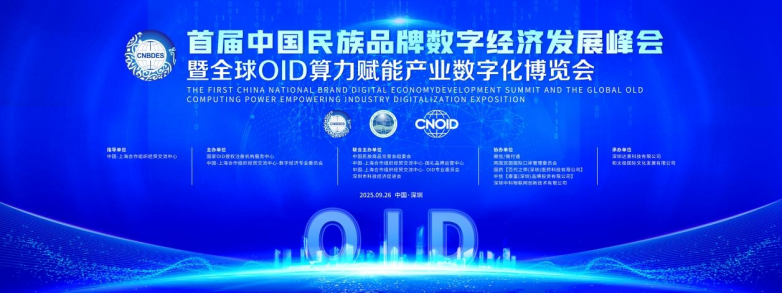
为民族品牌发放“数字护照”,首届中国民族品牌数字经济发展峰会推动全球化出海
Zhong Jin Zai Xian· 2025-09-30 06:32
Core Insights - The "First China National Brand Digital Economy Development Summit and Global OID Computing Power Empowerment Industry Digitalization Expo" was successfully held in Shenzhen, attracting over 1,300 attendees from government, international organizations, industry institutions, and enterprises to discuss the innovative development paths of national brands in the digital economy era [1][27] - The summit emphasized the importance of the OID (Object Identifier) technology as a key tool for establishing global digital trust, which will support national brands in building credible digital identities and enhancing brand competitiveness in international markets [3][11] Group 1: Summit Highlights - The opening ceremony featured a poem recitation expressing gratitude for the current era and aspirations for national rejuvenation, setting a patriotic tone for the summit [3] - Key figures included Cao Chuanli, head of the Central Policy Research Office, and Li Zongtang, chairman of Shenzhen Daxi Technology Co., who discussed topics such as "digitalization of national brands" and "OID industry collaboration" [3][9] - A significant initiative, the "Global OID Industry Collaborative Development Initiative," was signed to promote the standardization and interoperability of the OID identification system internationally, providing a "digital passport" for national brands [11] Group 2: Institutional Developments - Three new institutions were unveiled, including the National Brand Gold Award Committee, aimed at establishing a fair evaluation system for national brands, and a committee for drafting technical standards for OID identification [12] - The summit facilitated multiple strategic partnerships, including a five-year collaboration between Shenzhen Daxi Technology Co. and the Shanghai Cooperation Organization's National Gift Brand Operation Center, focusing on the certification of 30,000 national gift brands [16][21] Group 3: Industry Collaboration and Digitalization - The summit highlighted the importance of digital transformation across various sectors, with discussions on the integration of traditional culture and digital technology, particularly in the health and wellness sectors [17][19] - A nationwide initiative was announced to launch "31 Provincial Industry Theme Forums," aimed at promoting the integration of local industries with digital technologies over the next three years [22] - The release of the "2025-2026 China National Brand Digital Economy Development White Paper" introduced a new "Digital Brand Power" evaluation system, providing authoritative guidance for the development of national brands [23][24] Group 4: Social Responsibility and Future Directions - A charity dinner was held to support the digital protection of traditional crafts, showcasing the social responsibility of national enterprises [26] - The summit marked a significant step in the practical implementation of the "Global Governance Initiative" proposed at the 2025 "Shanghai Cooperation Organization+" meeting, aiming to enhance efficiency across the entire industry chain and promote high-quality development [27]

十五部门:利用大数据和人工智能实现产品设计、服务体验和管理决策的持续创新
智通财经网· 2025-09-12 07:51
Core Viewpoint - The guidance issued by the State Administration for Market Regulation aims to accelerate the digital transformation of quality certification, enhancing its role in supporting key industries and sectors in their digital transitions by 2030 and establishing a comprehensive digital quality certification system by 2035 [1][4]. Group 1: Overall Requirements - The initiative emphasizes the integration of quality certification with digital transformation, aiming to create a high-level digital quality certification system that meets the needs of various industries by 2030 and 2035 [4][5]. - The plan includes selecting 10 exemplary digital certification institutions and 50 digital certification projects to serve as models for digital transformation in key sectors [4][5]. Group 2: Digital Development of Certification Institutions - The guidance calls for enhancing the digital capabilities of certification institutions and promoting a data-driven mindset within the industry [5][6]. - It emphasizes the establishment of a comprehensive digital management platform for certification processes to improve consistency and traceability [5][6]. Group 3: Supporting Key Industries' Digital Transformation - The initiative outlines specific measures to support the digital transformation of new industrialization, including smart manufacturing and green technology certifications [6][7]. - It aims to promote digital agriculture and water management through certifications that enhance the digital capabilities of these sectors [6][7]. Group 4: Strengthening Quality Certification for Digital Industries - The guidance focuses on developing certification standards for key digital products and services, including smart devices and digital infrastructure [6][7]. - It aims to enhance the quality certification system for digital infrastructure, ensuring it meets the demands of emerging technologies [6][7]. Group 5: Smart Regulation and Resource Application - The plan includes the establishment of a unified quality certification regulatory big data system to enhance oversight and data sharing among certification bodies and enterprises [7][8]. - It promotes the use of digital technologies in regulatory processes to improve efficiency and transparency in quality certification [7][8]. Group 6: Building a Supportive Ecosystem for Digital Certification - The guidance emphasizes the need for policy support and the establishment of a standardized framework for digital certification processes [8][9]. - It encourages international cooperation and mutual recognition of digital certification standards to align with global practices [8][9].
深圳CA携手保险机构共筑可信AI生态
Zheng Quan Ri Bao Wang· 2025-09-12 07:13
Group 1 - Financial One's subsidiary Shenzhen CA collaborates with a large insurance institution to explore a trusted identification and traceability system for internet content, ensuring that data shared among multiple parties has "trusted certification" and "responsibility identification" capabilities [1] - The collaboration integrates national secret algorithms with quantum-resistant algorithms to create a hybrid certificate authentication system, providing full lifecycle protection for AI-generated content [1] - Key metadata such as creator certificate ID, model version, timestamp, and content hash are signed and bound to the content, ensuring immutability and traceability throughout the content generation, storage, and dissemination process [1] Group 2 - A multi-modal intelligent review system integrates secure large model technology to accurately identify deepfake content and false information, establishing a multi-layered defense network for AI content safety [2] - In case of disputes regarding AI-generated content, regulatory or judicial authorities can quickly verify content integrity and creator identity through Shenzhen CA's verification services, achieving a high level of traceability [2] - As of now, over 490 large models have completed registration with the National Internet Information Office, and more than 240 have been registered at the provincial level, with the user base for generative AI products reaching 230 million [2]