智慧餐饮

Search documents
探营杭州首家“AI星厨智慧食堂”
Hang Zhou Ri Bao· 2025-11-12 02:26
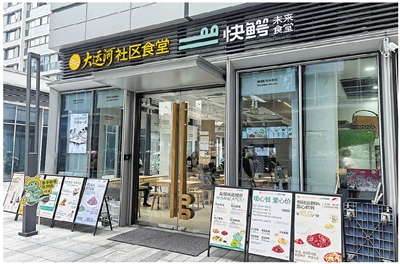
Core Insights - The article discusses the introduction of an AI-powered smart canteen in the Xiangqiao community of Hangzhou, which aims to enhance dining convenience and address traditional canteen issues [2][5]. Group 1: Smart Canteen Features - The smart canteen utilizes AI cooking equipment that automates food preparation and serves as both chef and server, optimizing space usage [3][4]. - The operational process is highly automated, with a central kitchen handling ingredient preparation and cold chain delivery to the canteen, minimizing contamination risks [4]. - The AI system adjusts cooking parameters based on algorithmic learning to ensure standardized quality, with a quick serving time of 3 to 5 minutes per dish [4]. Group 2: Community Needs and Benefits - The community sought a smart canteen to address common issues faced by traditional canteens, such as smoke management and inconsistent food quality, while providing extended service hours [5]. - Since its trial operation began in late August, the canteen has received positive feedback from residents, indicating a successful community integration [5][8]. Group 3: Financial Aspects - The initial investment for the AI cooking equipment is approximately 400,000 yuan, with a projected payback period of around two years due to reduced labor costs [5][6]. - The canteen operates with minimal staff, requiring only two to three employees, which is comparable to traditional canteen staffing costs [5][6]. - Daily customer traffic averages over 150, along with more than 150 takeaway orders, indicating that the canteen has already achieved profitability [7]. Group 4: Future Prospects - The smart canteen model is adaptable, allowing for scalability based on community size, and the company plans to collaborate with local governments to explore new service pathways [8]. - The community's initiative to adopt smart kitchens aims to enhance service quality, and the long-term viability of this model remains to be seen [8].

河南智慧食堂建设有了官方标准
Zhong Guo Chan Ye Jing Ji Xin Xi Wang· 2025-08-06 22:22
Core Viewpoint - The implementation of the local standard "Guidelines for the Construction of Smart Canteen Management Systems" marks a significant step towards the standardization and normalization of smart canteen development in Henan Province, enhancing the efficiency and quality of dining services [1][2] Group 1: Standard Implementation - The standard was officially implemented on July 20, 2023, filling a gap in the construction standards for smart canteens in Henan Province [1] - The guidelines provide a regulatory basis for the construction and upgrading of smart canteens across the province [1] Group 2: Food Safety and Consumer Experience - Food safety is emphasized as a core issue in canteen management, with the guidelines establishing a strict food ingredient traceability system, quality testing mechanisms, and environmental hygiene monitoring systems [1] - Smart canteens can offer personalized nutrition recommendations and customized dining services based on consumer dietary preferences and health needs, enhancing the dining experience and interaction between consumers and dining companies [1] Group 3: Resource Allocation and Economic Impact - The implementation of the standard positively impacts the rational allocation of social resources by enabling precise data analysis and forecasting for food ingredient procurement, thus avoiding over-purchasing and waste [2] - The development of smart canteens is expected to stimulate related industries, such as smart dining equipment manufacturing, restaurant information software development, and food supply chain optimization, promoting collaborative innovation and development across the industry chain [2]
孙正义投了一碗面,全是科技与狠活
创业邦· 2025-07-29 03:16
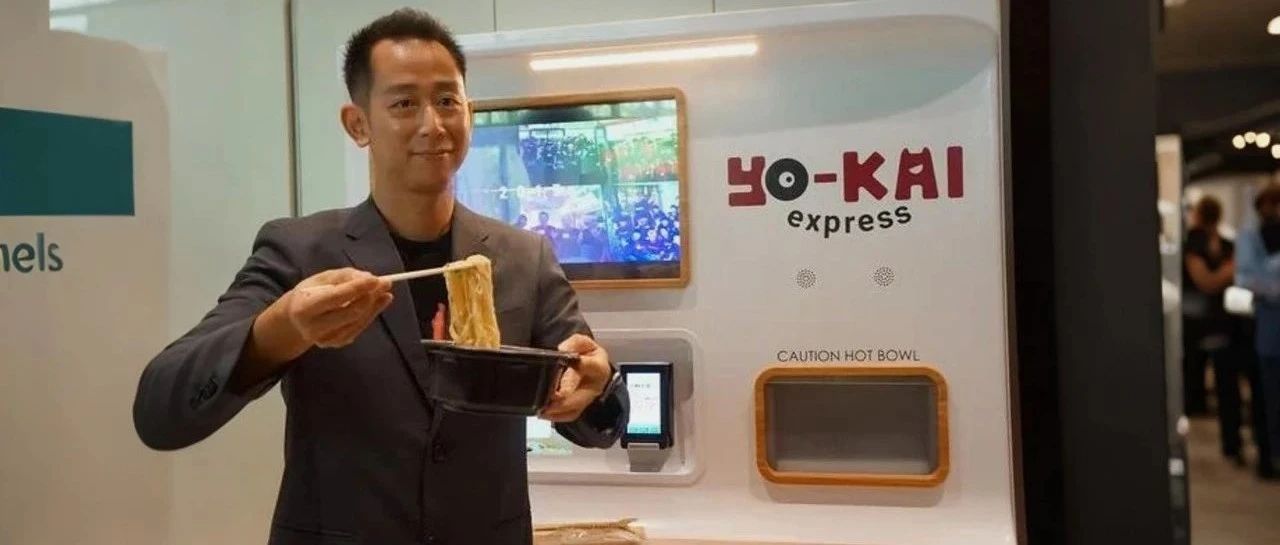
Core Viewpoint - The article discusses the innovative approach of Yo-Kai Express in integrating AI, IoT, and semiconductor technology into automated food vending machines, aiming to revolutionize the food service industry and address consumer demands for quality and convenience [3][23]. Group 1: Company Overview - Yo-Kai Express was founded in 2016 by Lin Zhihong in Silicon Valley, focusing on the fusion of AI, IoT, and semiconductor technology in the food vending machine sector [3][10]. - The company offers two types of vending machines: one for ramen and another for bubble tea, both designed to deliver high-quality food quickly [4][18]. - The machines utilize a unique heating method that ensures precise temperature control, allowing for a cooking process that mimics traditional methods [14][16]. Group 2: Technology and Innovation - The technology used in Yo-Kai Express machines is based on a reflow oven technology from the semiconductor industry, enabling accurate temperature control for different food items [14][23]. - The machines can produce a bowl of ramen in 90 seconds and a cup of bubble tea in 45 seconds, with taste and texture comparable to freshly made products from restaurants [4][16]. - The integration of Qualcomm's QCS 8550 chip allows for advanced edge computing capabilities, making the machines fully automated and remotely controllable [23]. Group 3: Market Strategy and Expansion - Yo-Kai Express aims to establish a significant presence in the U.S. market, with plans to set up 500 vending machines, potentially becoming the largest bubble tea chain in the country [7][28]. - The company has received investments from notable figures like Masayoshi Son, which has facilitated its international expansion into markets such as Taiwan, Japan, and South Korea [21][32]. - The vending machines are strategically placed in high-traffic areas like airports, factories, and schools, with a rental model generating revenue of $4,000 per month per machine [18][30]. Group 4: Future Plans and Goals - The company plans to expand its offerings beyond ramen and bubble tea, exploring the development of a mobile food vending vehicle that can operate in various modes [42][43]. - By the end of the year, Yo-Kai Express aims to increase its operational sites to 750 across 18 countries, with a long-term goal of reaching 20,000 machines and generating $4 billion in revenue by 2030 [43]. - The focus is on leveraging AI to enhance operational efficiency and meet the growing consumer demand for convenient, high-quality food options [43].