智能供应链

Search documents
上海启动绿色外债试点:首批3家企业签约融资超3亿元
2 1 Shi Ji Jing Ji Bao Dao· 2025-12-06 11:57
Core Viewpoint - The successful launch of the green foreign debt pilot program in Shanghai marks a significant step in enhancing cross-border green finance services and directing global funds to support local low-carbon industries [1] Group 1: Pilot Program Overview - The pilot program allows domestic non-financial enterprises to raise foreign currency funds specifically for green or low-carbon transition projects, with reduced impact on their overall cross-border financing risk-weighted balance [2] - As of November 2025, three key enterprises focusing on the "dual carbon" sector have signed green foreign debt agreements, raising over 300 million RMB for projects in distributed renewable energy, energy storage, and circular economy [1][2] Group 2: Implementation Details - The Shanghai branch of the State Administration of Foreign Exchange issued guidelines for the pilot program, detailing operational pathways and emphasizing support for non-financial enterprises established for over a year, excluding certain sectors like real estate and local government financing platforms [2] - The program includes incentives for cross-border financing, with a risk conversion factor of 0.5 for green foreign debt, and mandates that funds must be fully returned to China and used exclusively for designated projects [2] Group 3: Financial Institutions' Role - Several financial institutions demonstrated efficient service in the initial phase, with China Bank completing a $15 million green foreign debt registration for a smart supply chain project in one working day [3] - BNP Paribas assisted a distributed solar project in raising $29 million for acquiring photovoltaic assets, while China Construction Bank facilitated a green foreign debt registration for a renewable energy company in under half a day [3] Group 4: Future Prospects - Analysts highlight Shanghai's unique advantage in integrating policy precision, industry advancement, international collaboration, and long-term mechanisms, creating a closed-loop system for green finance [4] - The pilot program is expected to deepen the innovation of "green foreign debt + carbon finance," enhancing the efficiency of global resource allocation to the Yangtze River Delta green industry cluster [5] - The Shanghai branch of the State Administration of Foreign Exchange plans to improve the long-term mechanism of the green foreign debt pilot and innovate cross-border investment and financing policies [5]
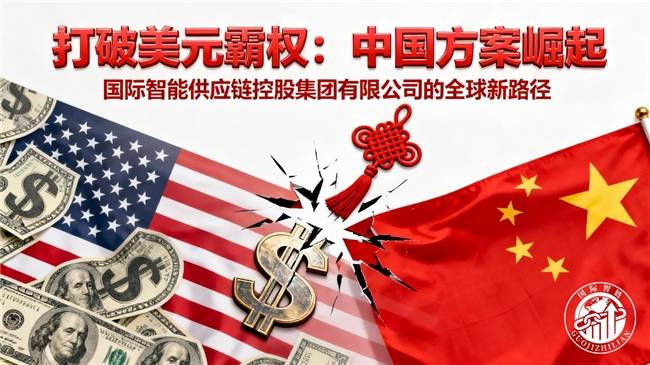
中国方案崛起——国际智能供应链控股集团有限公司的全球新路径
Sou Hu Cai Jing· 2025-11-01 04:34
Core Viewpoint - The article discusses how China, through the International Intelligent Supply Chain Holding Group, is proposing a new solution to challenge the dominance of the US dollar in global trade and finance, aiming for a more equitable global economic order [1][2]. Group 1: The Shift from Dollar Dominance to China's Response - The past global economy was characterized by a "one-way cycle" under dollar control, while the future is envisioned as a "shared prosperity cycle" driven by intelligent supply chains [3]. - The core strategy of the International Intelligent Supply Chain is to counter the dollar's "threefold harvesting" with a "threefold counterattack" using China's technological and supply chain strengths [4]. Group 2: Intelligent Supply Chain System - The "Intelligent Supply Chain System" is a global smart economic ecosystem that integrates smart manufacturing, Chinese warehousing, overseas delivery, and local services, with digital RMB as the core of settlement [9]. - This system allows for the free flow of resources, products, technology, and capital through a digital, transparent, and intelligent "trade highway" [10]. Group 3: The Role of Digital RMB - Digital RMB serves as a crucial foundation for the Intelligent Supply Chain, functioning not only as a payment tool but also as a "trustworthy settlement mechanism" [15][16]. - Transactions using digital RMB can be completed in minutes, with each transaction being traceable and verifiable, enhancing security and preventing capital flight and money laundering [17][18]. Group 4: Vision for Shared Prosperity - The vision of the Intelligent Supply Chain is to ensure that ordinary people benefit from technological advancements, allowing participants to become not just consumers but also stakeholders through mechanisms like "Intelligent Chain Points" and "equity dividends" [21][22]. - The system is expected to create new job opportunities across various sectors, contributing to a stable international supply network [23][24]. Group 5: China's Role in Globalization - China is transitioning from being a participant in globalization to becoming a shaper of globalization, moving towards a new order based on value creation rather than financial hegemony [26]. - The initiative represents a shift from "financial hegemony" to "technological co-governance" and aims to establish a fair global order where every trade is visible and every individual shares in the benefits [27].