
植物油加工

Search documents
重庆市首张重点液态食品道路散装运输准运证发放
Zhong Guo Xin Wen Wang· 2026-02-10 13:35
Core Points - Chongqing's Jiulongpo District Market Supervision Bureau issued the first transportation permit for key liquid food bulk transport to Hong Dragonfly (Chongqing) Plant Oil Co., marking the implementation of the new food safety law effective from December 1, 2025 [1][3] Group 1 - The new permit allows road transport operators to carry key liquid foods such as plant oils, seasonings, alcoholic beverages, sugar, and starch syrup, requiring specific documentation for application [3] - The new administrative licensing project for bulk transport will be enforced, with a deadline for operators to obtain permits by July 1, 2026, to avoid penalties [3][4] - The Chongqing Market Supervision Department conducted a comprehensive survey to understand the basic situation of liquid food transport operators and their needs for permit applications [3] Group 2 - The Chongqing Market Supervision Department plans to enhance collaboration with relevant departments to ensure compliance with the new licensing system and to prevent liquid food contamination risks [4] - There will be a focus on regulating the responsibilities of shippers, carriers, and receivers, along with the promotion of "Internet + AI supervision" [4] - The department will also work with transportation authorities to address illegal transport activities and ensure food safety for consumers [4]


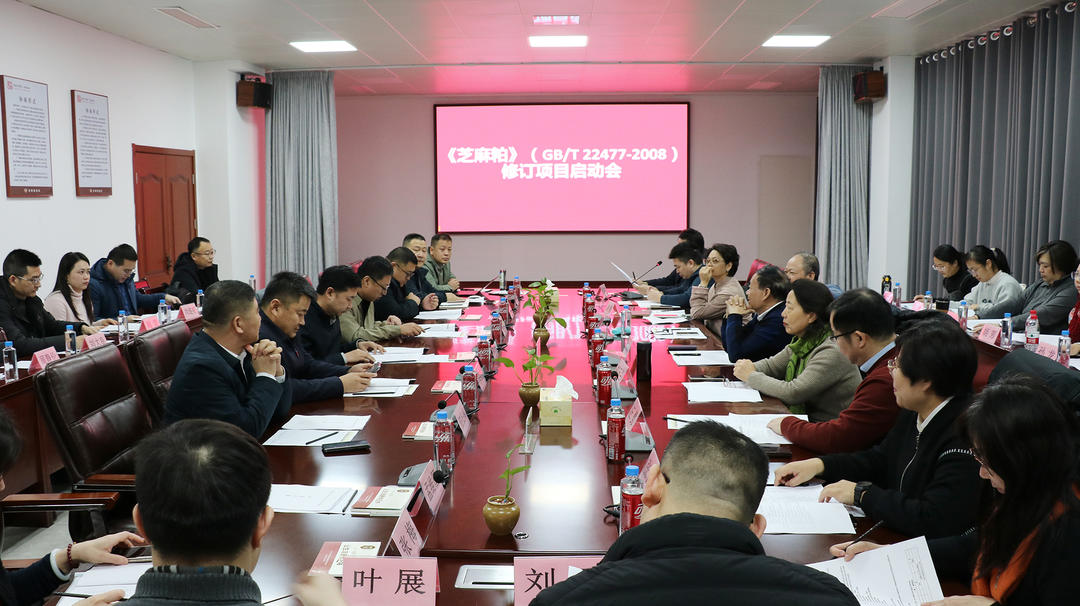
国标GB/T22477-2008《芝麻粕》修订项目启动会召开
Qi Lu Wan Bao· 2026-01-29 05:55
Group 1 - The national standard GB/T22477-2008 for sesame meal is undergoing a revision, with a kickoff meeting held at Shandong Shili Xiang Sesame Products Co., Ltd. [1] - The meeting was attended by key figures including Professor He Dongping, who emphasized the importance of the standard revision for the sesame industry [1][4]. - The revision aims to enhance the quality and regulation of the sesame industry, which is significant for the development of a complete industrial chain in the region [3][4]. Group 2 - The meeting highlighted the necessity and significance of the standard revision, outlining initial ideas and tasks for the next phase, including research and experimental validation [4]. - He Dongping noted that the revision is a systematic project requiring collaboration among various stakeholders, including local governments and technical experts [6]. - Participants included representatives from the national grain and oil standardization committee, sesame meal standard drafting units, and related enterprises [7].
2025年11月中国食用植物油进口数量和进口金额分别为72万吨和9.08亿美元
Chan Ye Xin Xi Wang· 2026-01-16 03:27
Core Viewpoint - The report by Zhiyan Consulting highlights significant growth in China's edible vegetable oil imports, indicating a robust demand in the market for the years 2026-2032 [1] Group 1: Import Data - In November 2025, China's edible vegetable oil imports reached 720,000 tons, representing a year-on-year increase of 44.7% [1] - The import value for the same period was $908 million, showing a year-on-year growth of 58.3% [1] Group 2: Industry Insights - Zhiyan Consulting is recognized as a leading industry consulting firm in China, specializing in in-depth industry research and providing comprehensive consulting services [1] - The firm has over a decade of experience in the industry research field, focusing on delivering quality services and market insights to empower investment decisions [1]

东莞一企业疑偷排污水被举报:环保部门检查后,企业连夜封堵下水管口
Xin Lang Cai Jing· 2026-01-02 02:01
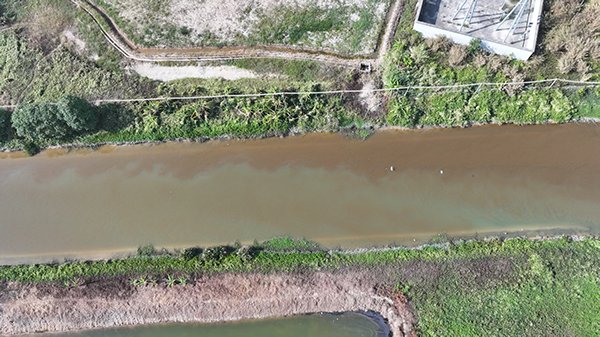
Group 1 - A resident reported that Guangdong Jinkun Industrial Co., Ltd. has been illegally discharging wastewater into a nearby river, which flows into the Pearl River Estuary [1][7] - The company was observed sealing a drainage pipe overnight after being notified of the investigation, raising suspicions of evidence destruction [1][9] - The company, established in 2014, specializes in the research, production, and sales of deep-processed plant oil products, occupying an area of 33,000 square meters with a total investment of 200 million yuan [5] Group 2 - The resident conducted a month-long investigation, noting that approximately half the time the river was contaminated with wastewater, which appeared reddish-brown [4] - The wastewater from the company's production process contains high concentrations of pollutants, posing significant environmental threats [5] - Previous violations by the company include a penalty in July 2017 for breaching solid waste management regulations [9]
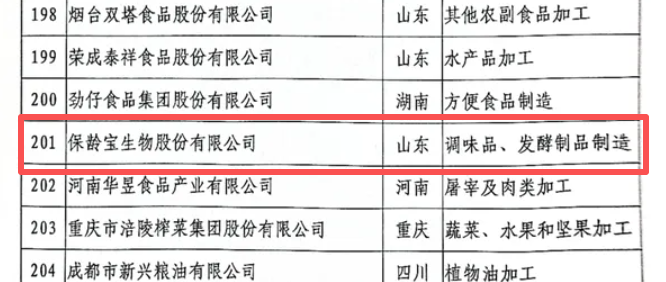
古贝春、百龙创园、保龄宝入选“2025中国食品工业重点企业500家名录”
Feng Huang Wang Cai Jing· 2026-01-01 23:59
Core Insights - The "2025 National Food Industry Technological Progress Work Conference and the Release of the 2025 China Food Industry Development Research Report" was held in Beijing, where the report and the list of "2025 China Food Industry Key Enterprises 500" were released [1] - The report aims to guide food enterprises in China to adapt to new development stages and promote high-quality development in the food industry [2][3] Group 1: Key Enterprises - Three companies from Dezhou, including Gubeichun Group Co., Ltd., Shandong Bailong Chuangyuan Biotechnology Co., Ltd., and Baolingbao Biology Co., Ltd., were included in the key enterprises list [1] - The list is the first of its kind in the food industry, aimed at analyzing and summarizing the growth experiences of these key enterprises [2][3] Group 2: Research and Analysis - Starting from 2025, the association will conduct annual analyses of the 500 key food enterprises, focusing on their growth and their roles in regional economies and industry development [3] - The selection of these enterprises is based on their voluntary application and the revenue standards set for 2024 [3]


食用植物油突出问题排查整治
Xin Lang Cai Jing· 2025-12-29 17:12
Core Insights - In 2025, the State Administration for Market Regulation conducted a crackdown on issues related to edible vegetable oils, resulting in the investigation of 2,581 illegal entities and fines totaling 69.64 million yuan [1] - The regulatory body also referred 44 cases to law enforcement, effectively combating illegal activities in the edible vegetable oil sector and protecting consumer rights [1] Summary by Categories Regulatory Actions - The market regulator's actions included the issuance of administrative penalties such as the revocation of food production licenses and confiscation of illegal gains, with a total fine of 2.65 million yuan in a case from Qujing City, Yunnan Province [1] - In a case from Nanning, Guangxi, a company was found to have added a chemical substance to edible vegetable oil, leading to a criminal investigation for producing and selling harmful food [1] - In Shaanxi Province, a company was caught mixing cottonseed oil into products labeled as "pure rapeseed oil" and "first-grade soybean oil," with illegal gains amounting to 24.80 million yuan, resulting in criminal referral [2] Consumer Protection - The crackdown aimed to safeguard consumer rights by addressing issues such as adulteration, false labeling, and the use of recycled materials in food production [1][2] - The enforcement actions included imposing five-year bans on individuals involved in these illegal activities, reinforcing accountability within the industry [1][2]
提升食品安全检验检测能力 市场监管总局“揭榜挂帅”
Yang Shi Xin Wen Ke Hu Duan· 2025-09-12 04:33
Core Viewpoint - The launch of the 2025 National Food Safety Publicity Week emphasizes the importance of food safety, with a focus on combating food adulteration and illegal additives through public engagement and innovative testing methods [1]. Group 1: Food Safety Initiatives - The State Administration for Market Regulation (SAMR) has introduced a "challenge list" to solicit public input on food testing methods, particularly targeting adulterated meat and cooking oils [2][5]. - The initiative aims to enhance food safety by encouraging interdisciplinary collaboration in developing effective testing methods [2][5]. Group 2: Challenges in Meat Testing - The detection of adulterated meat faces three major technical challenges: variability in fat and protein content across different meat types, the impact of processing methods on protein integrity, and interference from other ingredients [3][4]. - Examples of adulteration include mixing duck meat with lamb and soybean oil with peanut oil, highlighting the need for reliable testing standards [2][3]. Group 3: Challenges in Oil Testing - Detecting adulteration in edible oils is complicated by the similarity in fatty acid profiles among different oils, making it difficult to determine the types and proportions of oils mixed [4][5]. - The processing methods for oils, such as refining and extraction, can alter their characteristic properties, further complicating accurate testing [4]. Group 4: Transgenic Oil Detection Issues - The detection of transgenic components in edible oils faces three significant technical bottlenecks, including the low residual levels of transgenic material after processing and the difficulty in developing standard reference materials [5]. - Current detection methods, such as PCR, are hindered by the complex composition of oils, necessitating the development of more efficient DNA extraction techniques [5].
市场消息:俄罗斯暂停植物油出口税以支持生产商。
news flash· 2025-07-25 07:19
Core Viewpoint - Russia has suspended export taxes on vegetable oils to support producers in the agricultural sector [1] Group 1: Industry Impact - The suspension of export taxes is aimed at boosting the competitiveness of Russian vegetable oil producers in the global market [1] - This move is expected to enhance production levels and potentially increase exports of vegetable oils from Russia [1] Group 2: Economic Implications - The decision may lead to a decrease in domestic prices for vegetable oils, benefiting local consumers [1] - By supporting producers, the government aims to stabilize the agricultural sector amid fluctuating global prices [1]