
消费级硬件

Search documents
大疆,带给3D打印行业一场“成人礼”
Tai Mei Ti A P P· 2025-11-21 02:31
Core Insights - The recent investment by DJI in Smart派 has stirred significant attention in the 3D printing industry, indicating a pivotal moment for the sector [2][3] - The entry of major players like DJI is seen as a validation of the 3D printing market rather than a threat, suggesting that the industry is maturing and gaining serious interest from established companies [7][10] Industry Growth - The consumer-grade 3D printing market is projected to reach a scale of $4 billion in 2024, with a compound annual growth rate approaching 30% [8] - The reduction in costs of key components and the integration of AI tools are making 3D printing more accessible, with entry-level products now priced below 2,000 yuan [9] Competitive Landscape - As the industry matures, competition is expected to intensify, which is a natural outcome of growth and market validation [11][12] - Companies like拓竹 are already demonstrating significant profitability, with projected revenues nearing 6 billion yuan and a net profit margin of 30%, surpassing that of major players like Apple [11] Technological Paths - The 3D printing sector is characterized by two main technological paths: Fused Deposition Modeling (FDM) and Stereolithography (光固化), with FDM being more user-friendly and widely adopted [17] - The presence of different technological approaches is essential for a healthy competitive environment, allowing for innovation and improvement within the industry [18] Emotional Dynamics - The emotional responses from industry players, particularly regarding DJI's entry, reflect underlying anxieties about competition and market positioning rather than factual concerns [20][22] - The narrative surrounding DJI's involvement serves as a mirror for the industry, highlighting the need for companies to strengthen their fundamentals and adapt to a more competitive landscape [19][25]
消费级硬件厂商忙跨界,大疆“两面”出击
Di Yi Cai Jing· 2025-08-08 00:33
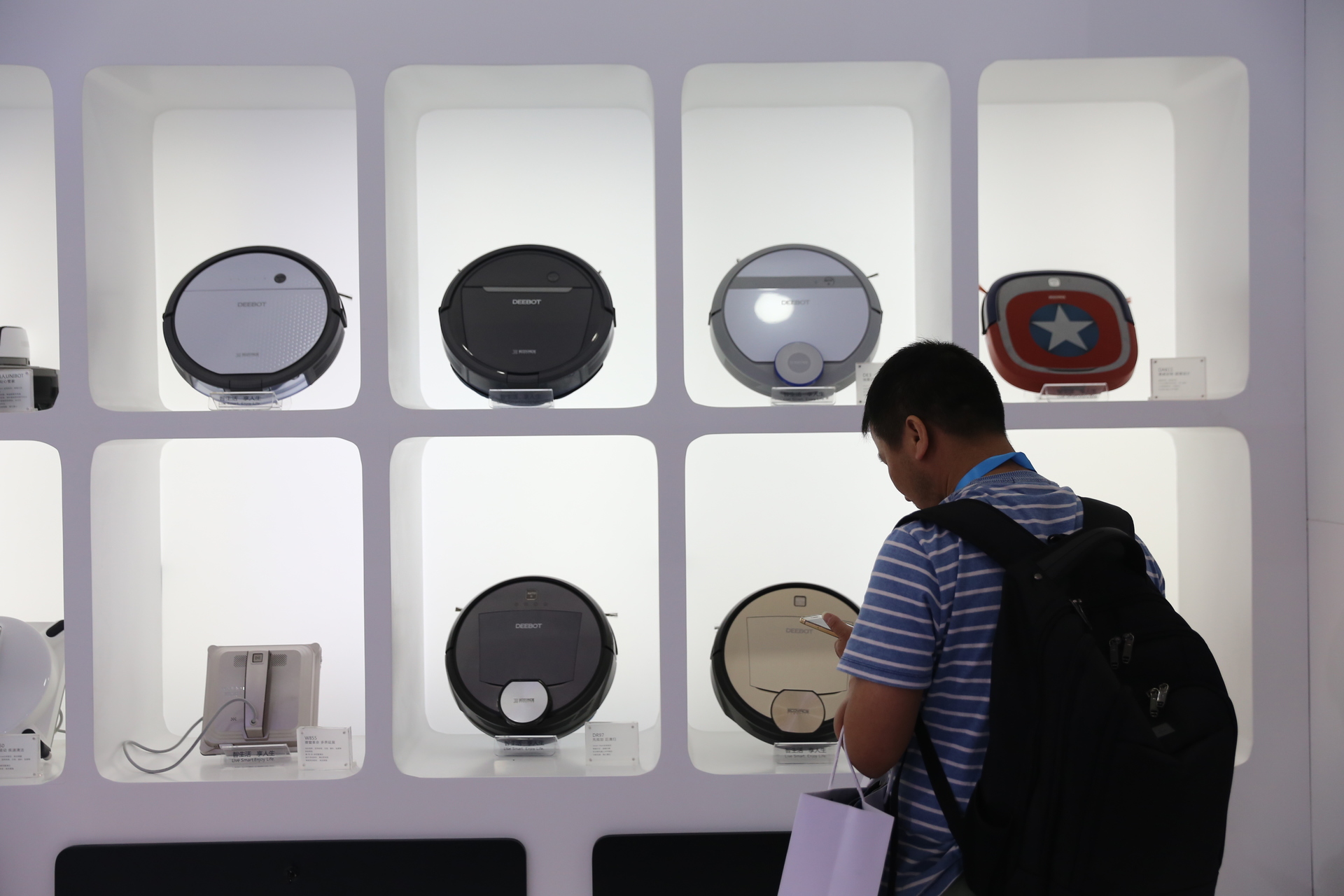
Group 1: Market Overview - The market for robotic vacuum cleaners has many players, but the penetration rate remains low, with only 5.5% in China last year [2] - The global market for panoramic cameras is relatively niche, with only a few players, and the market size is estimated at 5.03 billion yuan in 2023 [6] - The competitive landscape for robotic vacuum cleaners is intense, with the top five brands holding a market share of 93.6% in China [2] Group 2: DJI's Product Launches - DJI launched its first robotic vacuum cleaner, DJI ROMO, on August 6, following the release of its first panoramic camera, Osmo 360, on July 31 [1] - The robotic vacuum cleaner is priced starting at 4,699 yuan, targeting the high-end market segment [2] - DJI's entry into these markets is seen as a potential disruptor, although the impact on market dynamics remains to be observed [1] Group 3: Technical Challenges and Innovations - The design of DJI's robotic vacuum has undergone three significant changes, including the transition from mechanical to solid-state LiDAR technology [4] - The production of robotic vacuums is more complex than that of drones due to challenges such as moisture and dirt, requiring extensive testing for dust and insect resistance [4] - The company aims to enhance the self-cleaning capabilities of its robotic vacuum to reduce the need for human intervention [5] Group 4: Supply Chain and Competitive Advantages - DJI benefits from a robust supply chain that allows for cost advantages and the reuse of technologies across different product lines [7] - The company has customized its sensor technology to improve power efficiency and reduce the overall size of its products [7] - The panoramic camera market is seeing a shift towards custom square sensors to balance high image quality and compact size, which may become a trend in the industry [7]

消费级硬件厂商忙跨界 大疆“两面”出击
Di Yi Cai Jing· 2025-08-08 00:32
Core Insights - DJI has launched two new product categories within a week, entering the sweeping robot and panoramic camera markets, indicating a diversification strategy beyond its core drone business [1][2] Group 1: Sweeping Robot Market - DJI's first sweeping robot, priced from 4699 yuan, targets the high-end market, entering a competitive landscape where the penetration rate was only 5.5% in China last year [2] - The sweeping robot market has seen a decline in sales from 2021 to 2022, but a slight recovery occurred in 2023, with the top five brands holding a market share of 93.6% [2][4] - The design of DJI's sweeping robot has undergone three significant changes, including the transition from mechanical to solid-state LiDAR, indicating a focus on advanced technology [3] - The challenges in the sweeping robot market include the need for improved self-cleaning capabilities and coverage of hard-to-reach areas, which remain unresolved [4] Group 2: Panoramic Camera Market - The global panoramic camera market is valued at 5.03 billion yuan in 2023, with a significant market share held by domestic brands, particularly 67.2% by Insta360 [6] - The supply chain for panoramic cameras is primarily based in China, providing a competitive advantage in production and design [6][7] - The industry is moving towards custom square sensors to balance high image quality and compact size, although this requires significant investment and foresight [7]