
牛肉贸易

Search documents
牛肉涨价,第一批“倒下”的会是谁?
虎嗅APP· 2026-01-11 02:45
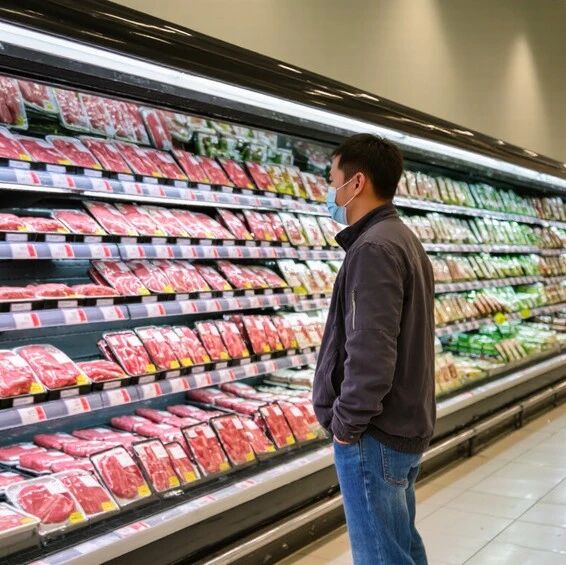
Core Viewpoint - The Chinese Ministry of Commerce announced new import beef regulations, implementing country-specific quotas and additional tariffs starting January 1, 2026, for three years, which will significantly impact the beef market and trade dynamics in China [3]. Group 1: Impact on Import Beef Prices - Following the announcement, beef traders in Shanghai reported price increases of 2 to 3 yuan per pound for imported Brazilian beef within just a few days [5]. - Importers are rushing to stock up on beef before quotas are exhausted, with Brazil allocated 1.106 million tons, Argentina 511,000 tons, Uruguay 324,000 tons, and Australia and New Zealand approximately 200,000 tons each, totaling about 2.688 million tons for 2026 [5]. - The import volume of beef in China has already exceeded the total quota for 2026, leading to predictions that the quotas may be used up by mid-2026 [7]. Group 2: Changes in the Restaurant Sector - The rising costs of imported beef will challenge restaurants that rely on beef as a core ingredient, forcing them to reconsider their cost structures and ingredient choices [9]. - The market share of imported beef in China has increased from 20% in 2019 to approximately 30% in 2023, significantly impacting domestic beef prices, which have been declining [10]. - The average retail price of beef in major cities dropped to 36.82 yuan per pound by March 19, 2025, the lowest in six years, contributing to the growth of beef-related dining options [10]. Group 3: Future Adaptations in the Beef Supply Chain - The implementation of import beef regulations is expected to provide a window for domestic beef producers to adjust and innovate, as reliance on imports becomes less sustainable [12]. - The beef supply chain will face challenges in balancing cost and quality, while opportunities will arise for companies that can enhance supply chain resilience and innovate product offerings [12]. - The evolving consumer demand is shifting from mere availability to quality differentiation, prompting supply chain companies to focus on high-value beef and customized services [12].

山东政商要情(11.10—11.16)
Jing Ji Guan Cha Bao· 2025-11-16 14:28
Group 1: Trade and Economic Growth - In the first ten months of this year, Shandong's import and export volume reached 2.89 trillion yuan, a year-on-year increase of 4.7% [1] - Exports amounted to 1.76 trillion yuan, growing by 4.0%, while imports were 1.13 trillion yuan, increasing by 5.7% [1] - Among Shandong's 16 cities, 11 reported positive growth in trade, with Jinan leading at a growth rate of 28.7% [1] - General trade accounted for 65.5% of the total trade volume, with a growth of 6.1% [1] Group 2: Technological Innovation Plans - Shandong has released three-year action plans for four key industries: robotics, modern food, light industry and textiles, and modern metallurgy [2] - The plans aim to address critical areas and weak links in industrial development, focusing on core technology breakthroughs and major product demonstrations [3] - By 2028, Shandong aims to achieve over 200 breakthroughs in foundational and core technologies and create more than 20 advantageous industrial clusters [3] Group 3: International Cooperation and Trade - The "Dialogue with BRICS" event attracted over 400 guests from more than 30 countries, highlighting Shandong's growing trade with BRICS nations, which reached 550.6 billion yuan in the first three quarters of 2025 [4][5] - The BRICS countries account for nearly half of the world's population and about 30% of the global economy, presenting significant cooperation potential for Shandong [5] Group 4: Industry-Specific Conferences - The 2025 Petroleum and Chemical Industry High-tech Development Conference was held in Yantai, focusing on quality improvement and innovation in the sector [7] - Yantai's green petrochemical industry achieved a production value of 166.63 billion yuan in the first nine months, reflecting a growth of 25.9% [7] - The 2025 Beef Trade Cooperation Development Conference in Yangxin County aimed to enhance international beef trade, with a focus on sustainable development and industry collaboration [8][9] Group 5: Regulatory Changes - Shandong's market regulatory authority issued new guidelines for the use of "Shandong" in company names, effective January 1, 2026, to standardize naming practices [10]