生物医学材料

Search documents
3D打印新材料可与人体免疫系统兼容 有望推动人造器官移植和药物递送技术发展
Ke Ji Ri Bao· 2025-11-24 00:55
Group 1 - A new type of 3D printing material has been developed by a research team from the University of Virginia, which is compatible with the human immune system and has the potential to advance organ transplantation and drug delivery technologies [1][2] - The research team modified the properties of polyethylene glycol (PEG) to create a stretchable network structure, overcoming the limitations of traditional production methods that resulted in weak and crystalline structures [1] - The innovative "foldable bottle brush" structure allows the material to be both strong and highly elastic, enabling the production of 3D printable, highly stretchable PEG-based hydrogels and solvent-free elastomers [1] Group 2 - The team indicated that by altering the shape of the UV light, complex structures can be created, opening new possibilities for manufacturing artificial organs or drug delivery systems [2] - The stretchable 3D printed PEG material has been shown to be biocompatible, suitable for in-body applications such as organ scaffolds, as confirmed by cell culture tests [2] - The material may be combined with other substances to produce 3D printed products with varying chemical compositions, showcasing its potential as a high-performance solid electrolyte in advanced battery technologies [2]
华熙生物炮轰券商研报风波:西部证券涉事报告离奇“消失”,九家遭点名券商又为何集体沉默?
Mei Ri Jing Ji Xin Wen· 2025-05-26 12:39
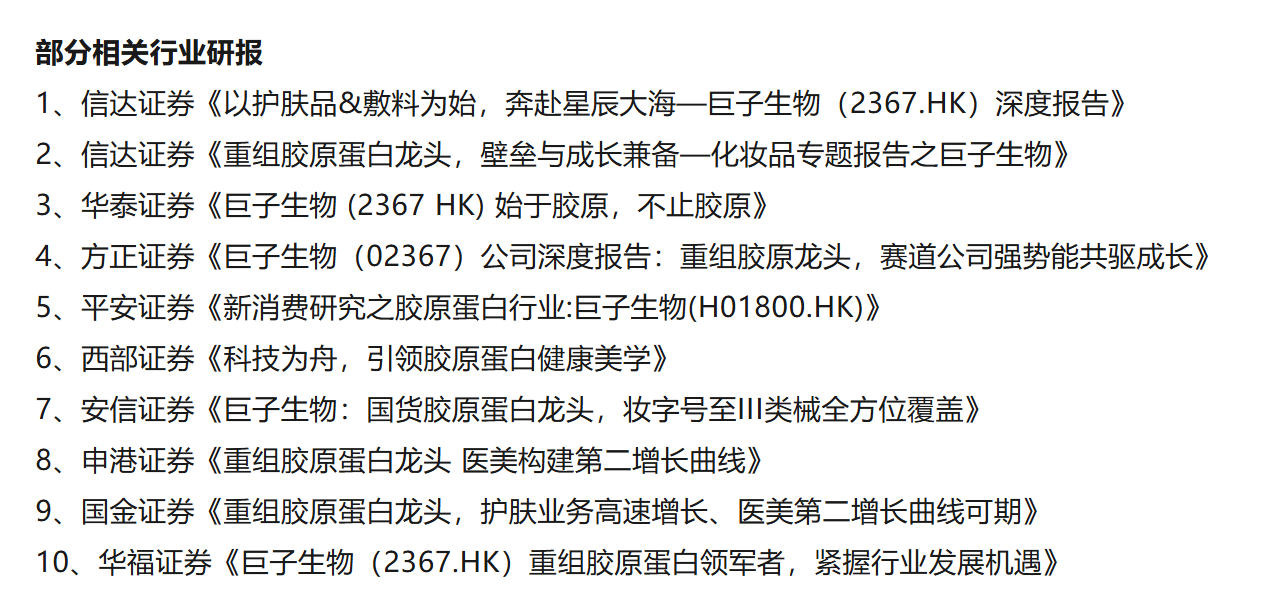
Core Viewpoint - The leading domestic hyaluronic acid company, Huaxi Biological, has publicly criticized 10 research reports from 9 securities firms for containing misleading statements, highlighting the competitive dynamics between hyaluronic acid and recombinant collagen products [1][2][3] Group 1: Criticism of Research Reports - Huaxi Biological published a nearly 5000-word article accusing the reports of creating inflated expectations around recombinant collagen products at the expense of the hyaluronic acid industry [2][3] - The criticized reports include those from major firms such as Huatai Securities, Ping An Securities, and Western Securities, with specific claims of bias and contradictions in their analyses [3][5][12] - Some reports have been reportedly deleted, particularly the one from Western Securities, raising questions about the integrity of the research [5][22] Group 2: Market Dynamics and Product Comparison - The reports discussed the advantages and disadvantages of hyaluronic acid and recombinant collagen, with some showing a preference for collagen, which has led to concerns about the objectivity of the analyses [7][16] - Huaxi Biological's core product is hyaluronic acid, while the competitor, Juzhi Biological, focuses on recombinant collagen, both of which are used in medical and cosmetic applications [3][19] - The market for recombinant collagen is expected to grow rapidly, potentially surpassing that of hyaluronic acid, due to its higher technical barriers and product characteristics [20][19] Group 3: Analyst Reactions and Industry Implications - The incident has sparked discussions among analysts, with some suggesting that securities firms may feel pressured to remain silent due to their weaker position against prominent companies like Huaxi Biological [23][22] - Analysts have noted that while both products have their merits, the technical complexity of recombinant collagen is higher than that of hyaluronic acid, reflecting broader trends in consumer preferences [23][20] - Despite the criticism, several securities firms continue to issue positive ratings for Huaxi Biological, indicating a complex relationship between market perception and research integrity [22][19]