
重组胶原蛋白

Search documents
今天下午直播,连续4天!70+生物基产品与技术竞逐「DT新叶奖」
DT新材料· 2026-03-22 16:04
Core Viewpoint - The 2026 DT New Leaf Award is a global, professional, and comprehensive award focused on innovations in the bio-based sector, often referred to as the "Oscar of the bio-based industry" [2][31]. Group 1: Event Details - The award ceremony will take place from March 23 to March 26, 2026, with live streaming of the evaluation process [2][31]. - The final award winners will be announced during the 11th Bio-based Conference and Exhibition on May 21, 2026, in Shanghai [2]. Group 2: Award Categories and Schedule - The awards include four categories: Innovation Materials Award, Innovation Application Award, Most Commercially Valuable Award, and Innovative Industry Solution Award [31]. - The schedule for the awards is as follows: - Innovation Materials Award: March 23, 13:00-15:10 (first half), 15:30-17:30 (second half) [3][31]. - Innovation Application Award: March 24, 13:30-15:10 (first half), 15:40-17:20 (second half) [7][31]. - Most Commercially Valuable Award: March 25, 13:30-15:00 (first half), 15:30-16:40 (second half) [10][31]. - Innovative Industry Solution Award: March 26, 13:30-14:40 (first half), 15:00-16:40 (second half) [12][31]. Group 3: Participating Companies and Products - Over 50 representative companies and more than 70 new products will participate in the competition [2][31]. - Notable products include bio-based 1,4-butanediamine, non-food cellulose crystalline glucose, and various bio-based materials and solutions [4][5][8][10]. Group 4: Evaluation Process - A panel of over 20 experts from various industries, including footwear, automotive, packaging, and home appliances, will evaluate the entries [14]. - The evaluation will occur online from March 23 to March 27, 2026 [14]. Group 5: Industry Context - The event aims to promote resource integration across the bio-based industry, supporting the green and low-carbon transformation of sectors such as packaging, footwear, and automotive [45]. - The 11th Bio-based Conference and Exhibition will feature 11 thematic forums, 7 concurrent activities, and 1000 new product displays, highlighting global strategic trends and opportunities in the bio-based sector [33].


美护板块2026年春季投资策略:把握成长与龙头改善
GUOTAI HAITONG SECURITIES· 2026-03-22 00:50
Investment Rating - The report indicates a positive investment outlook for the beauty industry, with a projected retail sales growth of 5.1% in 2025, outperforming the overall retail market by 1.4 percentage points [7]. Core Insights - The beauty market is experiencing a recovery, with significant growth expected in the second half of 2025, particularly in online sales channels like Tmall and Douyin, despite a slowdown in Douyin's growth rate [6][7]. - The report highlights a shift in consumer preferences towards premium and specialized products, with categories like color cosmetics and personal care showing stronger growth compared to skincare [12]. - The competitive landscape is evolving, with domestic brands accelerating their multi-brand strategies, leading to an anticipated increase in industry concentration [19]. Summary by Sections Beauty Market Overview - The beauty market is projected to achieve a retail sales figure of 465.3 billion yuan in 2025, with a year-on-year growth of 5.1% [7]. - Online platforms such as Tmall and Douyin are expected to see varying growth rates, with Tmall recovering due to instant retail dynamics, while Douyin's growth is stabilizing [6]. Category Trends - Color cosmetics and personal care categories are expected to grow faster than skincare, with online sales across multiple platforms reaching 487.1 billion yuan, a year-on-year increase of 8.7% [12]. - New brands in personal care are emerging successfully, with notable growth rates for brands like Canban and OFF&RELAX [12]. Promotional Events - The Double Eleven shopping festival in 2025 is projected to generate a gross merchandise volume (GMV) of 1.695 trillion yuan, reflecting a 14% increase from 2024 [15]. - E-commerce platforms are focusing on instant retail to drive growth, with stable performance across various beauty categories during promotional periods [15]. Company Trends - Leading companies are rapidly developing multi-brand matrices, enhancing their operational capabilities and market presence [19]. - Companies like Shiseido and L'Oréal are showing signs of recovery in the high-end segment, while domestic brands are experiencing varied growth rates [31]. Medical Aesthetics - The medical aesthetics sector is seeing increased penetration, but competitive pressures are leading to price reductions [22]. - The report notes a shift from single-product offerings to more comprehensive product combinations in response to market demands [27]. Competitive Landscape - The beauty market is experiencing a K-shaped recovery, with high-end brands rebounding while mid-range brands face challenges [34]. - The report emphasizes the importance of brand strength and cost-effectiveness as key competitive factors in the current market environment [38].




DT新叶奖投票火热进行中!每天3票,快来为你看好的产品打Call
合成生物学与绿色生物制造· 2026-03-19 00:41
Core Viewpoint - The 2026 DT New Leaf Award aims to recognize and promote innovation in the bio-based industry, showcasing over 50 participating companies and 70 products, with voting and evaluation processes set to take place from March 16 to March 27, 2026, culminating in an award ceremony on May 21, 2026, during the 11th Bio-based Conference in Shanghai [5][30]. Group 1: Award Structure and Process - The DT New Leaf Award is a global, professional, and comprehensive award focused on innovation in the bio-based sector, often referred to as the "Oscar of the bio-based industry" [5]. - The award features four main categories: Most Innovative Application Award, Innovative Materials Award, Most Commercially Valuable Award, and Innovative Industry Solutions Award [3][11]. - Voting will consist of online votes (20%) and expert evaluations (80%), with a total score of 100 points [30][31]. Group 2: Participating Companies and Products - Over 50 companies have registered, with notable entries including: - China Resources Double Crane with 1,4-Butanediamine - Qi Ye Technology with non-grain cellulose crystalline glucose and high-quality enzymatic lignin [7][9]. - The Innovative Materials Award aims to discover key platform compounds and encourage source innovation from "0" to "1" [6]. Group 3: Evaluation Criteria - The evaluation criteria for the awards include: - Innovation in technology and application - Functionality - Commercial value - Sustainability [31]. - Each award category has specific weightings for these criteria, emphasizing the importance of both innovation and commercial viability [31]. Group 4: Jury and Expert Involvement - A jury of over 20 experts from various sectors, including footwear, automotive, packaging, and home appliances, will participate in the evaluation process [14]. - The jury will conduct online assessments during the evaluation phase from March 23 to March 27, 2026 [14]. Group 5: Event Timeline - Key dates for the award process include: - Registration deadline: March 13, 2026 - Online voting: March 16-22, 2026 - Expert evaluation: March 23-27, 2026 - Award ceremony: May 21, 2026 [30]. Group 6: Industry Impact - The DT New Leaf Award aims to bridge the gap between laboratory innovations and market applications, providing a platform for bio-based materials to find practical uses [10]. - The initiative is expected to drive the bio-based industry towards sustainable development and low-carbon solutions [5].

细胞工厂里的产业革命:巨子生物如何走在前面?
远川研究所· 2026-03-18 13:09
Core Viewpoint - Biomanufacturing is emerging as a significant industrial revolution, comparable to information technology and new energy, with expectations for substantial economic growth and technological innovation [1][22]. Group 1: Biomanufacturing Overview - Biomanufacturing is increasingly recognized in industrial policies, with experts suggesting it could drive the next wave of industrial transformation [1]. - In the past five years, domestic biomanufacturing companies have filed 13,680 patents, accounting for 52% of total historical patent applications, indicating a surge in innovation [2]. Group 2: Material Revolution - Many industrial revolutions are fundamentally material revolutions, where advancements in materials dictate technological forms and industry limits [6]. - The evolution of materials in sectors like semiconductors and electric vehicles illustrates the critical role of material innovation in shaping industry dynamics [7][8]. Group 3: Biomanufacturing Materials - New biobased materials, such as nucleic acids, proteins, and biobased polymers, are transitioning from laboratory research to large-scale applications [9]. - Proteins, particularly recombinant collagen, are highlighted as essential materials due to their compatibility with human environments and potential for customization through genetic engineering [10]. Group 4: Recombinant Collagen - Recombinant collagen is a prominent example of biomanufacturing, with applications ranging from medical aesthetics to tissue engineering, reflecting the integration of scientific research into everyday life [11]. - Companies like Giant Bio are leading in recombinant collagen production, having developed a comprehensive system for its large-scale production [15]. Group 5: Industry Leadership - Giant Bio has established itself as a leader in the recombinant collagen sector, recognized for its technological advancements and comprehensive product offerings [14][16]. - The company has received multiple national and provincial awards, underscoring its research capabilities and contributions to the field [15]. Group 6: Regulatory Approvals - Recently, Giant Bio received approval for China's first recombinant type I collagen injection and the world's first injectable recombinant collagen and hyaluronic acid composite solution, marking a significant milestone in medical applications [18][21]. Group 7: Market Potential - The global medical aesthetics market has surpassed $100 billion, with injectable products being the fastest-growing segment, particularly in China, where the market is experiencing a compound annual growth rate exceeding 20% [21]. - The demand for biomanufactured materials is expected to grow, driven by an aging population and increasing needs for regenerative medicine and health materials [28]. Group 8: Future of Biomanufacturing - The OECD predicts that by 2030, approximately 60% of chemical products could be produced through biomanufacturing, indicating a shift towards a new industrial paradigm [23]. - China's robust industrial fermentation system positions it well for advancements in biomanufacturing, although challenges remain in scaling complex protein production [26][27].

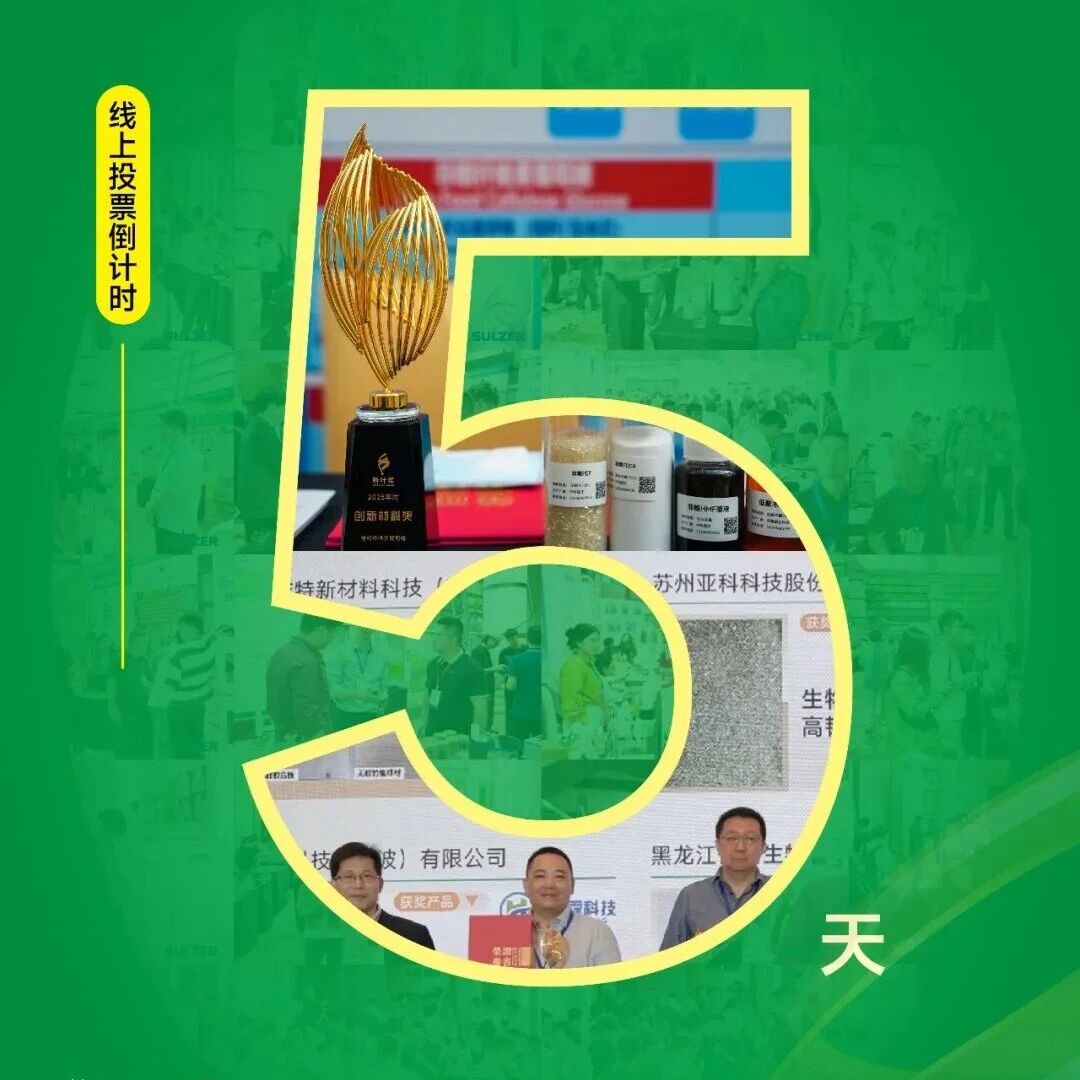
线上投票倒计时5天!DT新叶奖3.16启动线上投票!50+家单位,70+新品已参选,30+评委已加盟
合成生物学与绿色生物制造· 2026-03-12 07:53
Core Viewpoint - The 2026 DT New Leaf Award aims to recognize and promote innovation in the bio-based industry, showcasing sustainable solutions and products that contribute to low-carbon development [4][10]. Group 1: Award Overview - The 2026 DT New Leaf Award is a global, professional, and comprehensive award focused on innovation in the bio-based sector, often referred to as the "Oscar of the bio-based industry" [4]. - The award is organized by DT New Materials and the Bio-based Energy and Materials Committee, emphasizing the importance of renewable biomass and green technology [4]. - The online voting period is set from March 16 to March 22, 2026, followed by an online review from March 23 to March 27, 2026 [4][25]. Group 2: Participating Companies and Products - Over 50 listed and representative companies have submitted more than 70 new products for the 2026 DT New Leaf Award [4]. - Notable entries include: - China Resources Double Crane: 1,4-Butanediamine [6] - Qi Ye Technology: Non-grain cellulose crystalline glucose and high-quality enzymatic lignin [6] - Haosen Bio: Bio-based 1,5-Pentanediol [6] - Various other companies with innovative bio-based materials and applications [6][7][8]. Group 3: Award Categories - The awards include several categories: - Innovation Material Award: Focuses on discovering key platform compounds and innovative materials [5]. - Innovation Application Award: Bridges laboratory innovations to market applications [7]. - Most Commercially Valuable Award: Identifies future stars in the bio-based industry with both environmental and economic value [8]. - Innovative Industry Solution Award: Addresses common challenges in large-scale production and quality control [9]. Group 4: Evaluation Process - The evaluation will involve a panel of over 20 experts from various industries, including sportswear, automotive, packaging, and home appliances [10]. - The scoring system allocates 20 points for online voting and 80 points for expert reviews, totaling 100 points for each entry [25][26].
DT新叶奖参选名单揭晓!近50家单位,60+新品,20+评委(报名截止3.13)
合成生物学与绿色生物制造· 2026-02-28 03:44
Core Viewpoint - The 2026 DT New Leaf Award aims to recognize and promote innovation in the bio-based industry, showcasing the potential of sustainable materials and technologies [2]. Group 1: Award Overview - The DT New Leaf Award is a global, professional, and comprehensive award focused on innovation in the bio-based sector, often referred to as the "Oscar of the bio-based industry" [2]. - The award seeks to discover pioneering companies that utilize renewable biomass and green technologies to drive low-carbon innovation and sustainable development [2]. Group 2: Participating Companies and Products - A total of nearly 50 listed and representative companies have submitted over 60 products for the 2026 DT New Leaf Award [2]. - Categories for the award include: - **Innovation Material Award**: Focuses on discovering key platform compounds and innovative materials in the bio-based sector [2]. - **Innovation Application Award**: Bridges the gap between laboratory innovations and market applications for bio-based materials [6]. - **Most Commercially Valuable Award**: Identifies bio-based industry stars that combine environmental value with economic benefits [7]. - **Innovative Industry Solution Award**: Addresses common challenges in large-scale production and quality control within the industry [9]. Group 3: Award Process and Timeline - The application process includes several stages: registration and nomination, online voting for preliminary selection, online competition, and expert review for final selection [14]. - Key dates include: - Registration deadline: March 13, 2026 - Online voting: March 16-22, 2026 - Expert review: March 23-27, 2026 - Award ceremony: May 21, 2026 [15]. Group 4: Judging Panel - The judging panel consists of over 20 experts and executives from various sectors, including sportswear, automotive, packaging, and home appliances [10]. - Notable companies represented in the judging panel include Anta, Bosideng, and Goodyear [11][12].




华熙董事长再回应炮轰券商研报:不后悔为行业发声
Xin Lang Cai Jing· 2026-02-28 03:03
Core Viewpoint - The chairman of Huaxi Biological, Zhao Yan, expressed that the company does not regret its previous rebuttal of the "hyaluronic acid is outdated" theory, aiming to bring the industry back to a rational era [1][2]. Group 1: Industry Insights - Zhao Yan emphasized that the emergence of new substances should not lead to the denigration of existing ones, highlighting that both collagen and hyaluronic acid have synergistic effects in the market [1][2]. - The focus should return to scientific principles in product development, with companies prioritizing research and development and establishing their foundational logic rather than engaging in blind competition [1][2]. Group 2: Dialogue Highlights - The dialogue, part of the "Qian Dao" series produced by Sina Finance and Weibo, featured Zhao Yan discussing organizational aging, cognitive alignment, and rebuilding execution logic with Song Lixin, chairman of Yicai Yuan Investment Management [1][2].

医美纳入CPI,行业合规化脚步加快!
Xin Lang Cai Jing· 2026-02-27 10:42
Core Insights - The inclusion of "medical beauty services" in the CPI marks a significant shift for the industry, transitioning from a niche service to a recognized component of the national economic monitoring system [3][19] - The implementation of the new VAT regulations explicitly excludes profit-driven medical beauty institutions from tax exemptions, reinforcing their classification as commercial services and eliminating tax arbitrage opportunities [3][19] - These dual policy adjustments signify a transition from "wild growth" to "regulated development," fundamentally restructuring the competitive landscape and development logic of the medical beauty industry [3][19] Market Dynamics - The medical beauty market is experiencing "differentiated growth," with leading chain institutions achieving growth through refined operations, while smaller institutions face significant operational pressures [5][21] - In the first half of 2025, over 63% of medical beauty institutions reported revenue declines, with only 14% achieving growth; Q2 was particularly challenging, with 58% of institutions experiencing declines [5][21] - The average customer spending in the medical beauty industry dropped to 6,500 yuan, a 10% decrease year-on-year, while the frequency of consumer visits increased, indicating a trend towards more conservative spending among middle and high-income consumers [5][21] Consumer Trends - The trend of "popularization and down-market penetration" is becoming increasingly evident, with lower-tier cities emerging as new growth engines for the industry [6][22] - By 2025, the proportion of medical beauty institutions in third-tier cities and below increased from 30% in 2022 to 42%, with overall consumption growth reaching 22%, double that of first-tier cities [6][22] - Non-surgical light medical beauty projects have become the mainstream, accounting for over 53% of the market, with a market size of 227.9 to 258 billion yuan, driving industry growth [6][22] Regulatory Environment - The simultaneous implementation of the CPI inclusion and new VAT regulations represents a policy "one-two punch" for the regulated development of the medical beauty industry, establishing its commercial consumption attributes [8][24] - This regulatory shift has eliminated the "gray area" label that has long plagued the industry, with the CPI now monitoring price fluctuations and consumption scale as part of national economic management [9][25] - The combination of these policies is transforming the identity of the medical beauty industry from "marginal service" to "mainstream consumption," laying the groundwork for its regulated development [10][26] Competitive Landscape - The regulatory changes are leading to a "good money driving out bad money" scenario, where compliant institutions benefit from favorable conditions while non-compliant ones face significant operational challenges [11][27] - Over 18,000 non-compliant institutions were shut down in 2025, and more than 320 violators had their licenses revoked, indicating the effectiveness of ongoing regulatory measures [11][27] - The market is shifting from a seller's market to a buyer's market, with price wars becoming a primary strategy for smaller institutions competing for customers [6][22] Industry Evolution - The medical beauty industry is transitioning from an upstream-dominated model to one focused on terminal capabilities, with an emphasis on differentiation and scale as core competitive advantages [12][28] - Upstream companies are shifting their focus from licensing to product innovation, as competition intensifies and profit margins normalize [13][29] - The entry of public hospitals into the medical beauty sector is becoming a new variable, with a significant increase in the number of public hospitals establishing medical beauty departments [14][30] Consumer Behavior - Consumers are becoming more rational, shifting from a focus on appearance changes to daily anti-aging maintenance, with increased demands for product safety and institutional compliance [15][31] - This rationalization is driving industry upgrades, as institutions move towards standardized solutions that combine products, medical expertise, and post-operative management [15][31] - The transparency of industry information is improving, allowing consumers to compare the overall value of different institutions, which is pushing prices towards greater fairness [15][31]
头部医美机构春节消费情况交流
2026-02-24 14:16
Summary of Key Points from the Medical Aesthetic Industry Conference Call Industry Overview - The medical aesthetic industry has shown fluctuations in revenue at offline terminal institutions, with January 2026 experiencing an 11% year-on-year growth, while February saw a 4% decline due to the Spring Festival impact. Overall growth for the first two months is approximately 6% with a 10% increase in customer traffic, although the average transaction value continues to decline [1][4]. Core Insights and Arguments - **Shift Towards Light Medical Aesthetics**: The increasing proportion of light medical aesthetics has led to a decrease in average transaction prices. Institutions are encouraged to introduce high-margin products or equipment to maintain profit margins [1][5]. - **Non-Surgical Procedures Dominance**: Non-surgical procedures now account for 66%-70% of total services, with light-based skin treatments stable at 40%-45% and injection procedures on the rise. The demand for light-based skin equipment remains high, particularly for anti-aging treatments, although average transaction prices may continue to decline [1][8][9]. - **Injection Product Line Growth**: The injection product line is expected to see significant growth, with new products like hyaluronic acid, novel botulinum toxins, and recombinant collagen being introduced. Institutions are actively pursuing OEM custom branding to reduce costs and improve profit margins [1][10][11]. - **Hyaluronic Acid Market Trends**: High-end imported brands remain popular, but OEM custom-branded hyaluronic acid is becoming a key focus, showing remarkable growth rates of 100% to 200%. Traditional brands are experiencing slower growth, while differentiated new brands are performing well [1][12]. - **Recombinant Collagen Market Outlook**: The recombinant collagen market has shown significant growth, with expectations for continued strong performance in 2026. New entrants may pose challenges to established players, but new product launches are likely to expand market share [1][13]. - **Botulinum Toxin and Youthful Injection Products**: The botulinum toxin product line has maintained stable growth, with new approvals expected to drive sales. The youthful injection market is stabilizing but may see development through new technologies and differentiated products [2][14]. Regulatory and Market Dynamics - **Increased Regulation**: Stricter regulations in the medical aesthetic industry are promoting compliance and supporting the approval of new product lines. The introduction of VAT on consumer medical services adds pressure, but reasonable deductions can alleviate some burdens [1][6]. - **Market Competition**: The competition is expected to intensify in 2026, with a forecasted revenue growth of 8% to 10%. The rise of light medical aesthetics is attracting younger consumers, while first-tier cities are seeing slower growth compared to second and third-tier cities [1][7]. Additional Important Insights - **Emerging Product Categories**: New categories such as recombinant collagen and youthful water light products are anticipated to perform well in 2026. PDRN (polydeoxyribonucleotide) products, although not yet approved, are gaining attention due to strong demand [1][18]. - **PDRN Market Potential**: Companies like Lepu Medical are progressing rapidly in the PDRN field, with the potential for a market size of 1 billion to 2 billion once the first registration certificate is issued [1][19].
国金证券:中国高端消费筑底效应展现 重点推荐免税、黄金珠宝行业
智通财经网· 2026-02-23 02:19
Core Viewpoint - The recovery of high-end consumption in China is accelerating, driven primarily by the wealth effect of high-net-worth individuals and policy stimuli targeting the middle class [1] Group 1: Duty-Free Industry - The duty-free sector is expected to benefit significantly from the recovery of high-end consumption, with a low base and strong policy incentives driving growth [2] - The launch of the Hainan Free Trade Port is anticipated to have a substantial impact on local and national duty-free businesses, with a continued trend of high-end consumption recovery [2] - China Duty Free Group is expected to see sustained performance growth, driven by both domestic demand recovery and the untapped potential of inbound tourist spending [2] Group 2: Gold and Jewelry - Rising gold prices are favorable for high-end self-consumption and brand transformation, with consumers increasingly valuing emotional connections over mere functionality [3] - The trend of store adjustments is expected to continue, with companies that expand their channels by 2026 likely to see greater performance elasticity [3] - Companies like Lao Pu Gold and Chao Hong Ji are expected to perform well due to strategic store optimization and product offerings [3] Group 3: Baijiu Industry - The baijiu industry is showing signs of recovery, with strong demand for premium products like Moutai, which has seen prices rise above 1,700 yuan per box [4] - The overall performance of the baijiu industry is expected to stabilize, with a gradual easing of price pressures and improved market conditions post-Spring Festival [4][5] Group 4: Medical Aesthetics - The medical aesthetics market is entering a new phase, driven by innovative ingredients like recombinant collagen and PDRN, which meet the growing consumer demand for regenerative and anti-aging solutions [6] - Companies with early advantages in regulatory compliance are establishing significant barriers to entry, particularly in the emerging biocompatible materials market [6] - The market dominance of these new ingredients is expected to follow a clear hierarchy, with recombinant collagen leading the way [6]
