石墨行业

Search documents
美澳达成30亿美元稀土协议,不建矿山只兜底,却还是怕拼不过中国
Sou Hu Cai Jing· 2025-10-25 19:01
Core Points - The U.S. and Australia announced a $3 billion agreement to invest in critical minerals, but experts view it as more of a political statement than a genuine industrial solution [1][3] - The funds are primarily allocated for price guarantees and government purchasing rights rather than direct investment in new mining projects [3][12] - The mining industry faces significant challenges, including reliance on Chinese supply chains and price competition, which complicates the viability of Western mining companies [6][7][14] Investment and Market Dynamics - The demand for critical minerals has surged, with electric vehicles requiring six times more minerals than traditional cars, and wind turbines needing nine times more than gas power plants [3] - The agreement's structure suggests that the U.S. government is stepping in to support mining companies against price pressures from China, which dominates the market [3][6] - Arafura's Nolans project exemplifies the difficulties faced by Western mining companies, requiring substantial financing and time to become operational [3][9] Competitive Landscape - China holds a dominant position in the critical minerals market, controlling 60% of global rare earth production and 90% of refining capacity, which poses a significant challenge for Western companies [6][11] - The technological gap between Chinese and Western companies in mineral processing and production is substantial, with Chinese firms achieving higher purity and lower costs [6][11][14] - The Western mining sector is hindered by strict environmental regulations and high labor costs, making it difficult to compete effectively [7][11] Long-term Outlook - The $3 billion investment is seen as insufficient to build a complete supply chain, with estimates suggesting that several billion more would be needed to establish a competitive position against China [12][14] - The political and geological timelines for mining projects are misaligned, with significant delays expected before any substantial production can occur [9][11] - The ongoing reliance on Chinese supply chains indicates that Western consumers may face higher prices for electric vehicles and renewable energy solutions due to the need for "supply chain security" premiums [14]

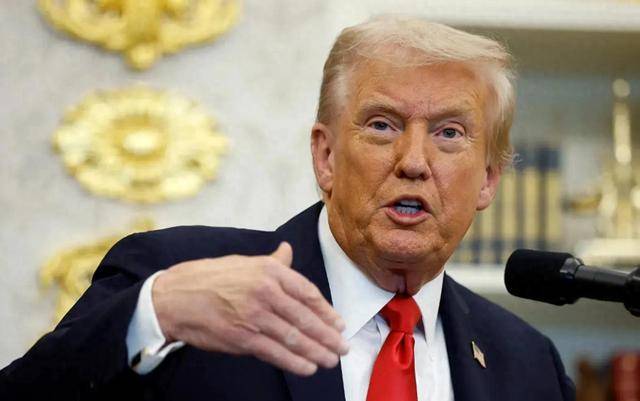
美国宣布对中国阳极级石墨征93.5%税,外交部回应
中国基金报· 2025-07-18 08:12
Group 1 - The U.S. Department of Commerce announced a preliminary anti-dumping duty of over 90% on certain graphite imports from China, which are deemed critical components for electric vehicles [1] - The Chinese Ministry of Foreign Affairs emphasized the importance of mutual benefit in China-U.S. economic cooperation and urged the U.S. to adhere to market economy rules [1] Group 2 - A report from U.S. Senate Foreign Relations Committee Democrats claimed that China is implementing a long-term strategy to replace the U.S. as a global superpower, enhancing its influence with developing countries [2] - The Chinese government rejected the report's assertions, labeling it as Cold War thinking aimed at suppressing China, and reiterated its commitment to a peaceful and cooperative foreign policy [2] - China called for the U.S. to adopt a correct understanding of China and to engage in actions that promote stable and healthy China-U.S. relations [2]
美国宣布对中国阳极级石墨征93.5%税,外交部回应
财联社· 2025-07-18 07:43
Core Viewpoint - The U.S. Department of Commerce has determined that Chinese imports of graphite are subject to unfair subsidies, leading to a preliminary anti-dumping duty of 93.5% on Chinese anode-grade graphite, which is a critical material for electric vehicle batteries [1] Group 1 - The U.S. decision to impose a 93.5% anti-dumping duty on Chinese anode-grade graphite highlights ongoing trade tensions between the U.S. and China, particularly in the context of materials essential for the electric vehicle industry [1] - The Chinese Foreign Ministry emphasizes the importance of mutual benefit in U.S.-China economic cooperation and urges adherence to market economy rules to maintain healthy and stable trade relations [1]