
矿山安全

Search documents
中国部署场景培育和开放 激活发展新动能
Zhong Guo Xin Wen Wang· 2025-11-10 02:47
Core Insights - The State Council has released an implementation opinion focusing on the cultivation and opening of new application scenarios, marking a systematic deployment at the national level to accelerate the market entry of new technologies and products [1][2][4] Group 1: Key Areas of Focus - The implementation opinion identifies 22 key areas for scenario cultivation and opening, covering digital economy, artificial intelligence, manufacturing, transportation, emergency management, and social governance [3][4] - Specific new fields highlighted include digital economy, artificial intelligence, unmanned systems, biotechnology, clean energy, and marine development, with a focus on exploring applications in metaverse, virtual reality, and robotics [4][5] Group 2: Market Opportunities - The new application scenarios are expected to create significant business opportunities, particularly in healthcare, where technologies like surgical robots and brain-machine interfaces can rapidly transition from labs to clinical applications [5] - The document emphasizes the importance of equitable access to these new scenarios, promoting collaboration between state-owned enterprises and private sectors to enhance resource allocation and innovation [6] Group 3: Implementation Strategy - The implementation opinion aims to break down barriers to entry for businesses, fostering a sustainable ecosystem that encourages collaboration between large enterprises, SMEs, and research institutions [6] - The National Development and Reform Commission plans to release a list of application scenario projects in phases, supporting the development of new productive forces and high-quality economic growth [6]

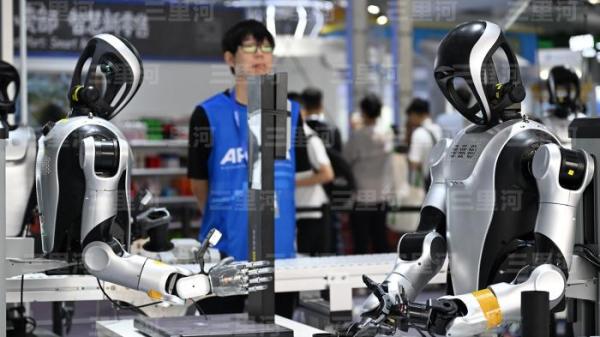
聚焦22类重点领域,国办最新部署
Guan Cha Zhe Wang· 2025-11-07 13:31
Core Insights - The State Council issued an implementation opinion to accelerate the cultivation and large-scale application of new scenarios, focusing on creating new application scenarios in various fields and promoting industrial transformation and upgrading [1][27]. Group 1: New Fields and New Tracks - The digital economy sector aims to explore applications of technologies like the metaverse, virtual reality, and robotics, enhancing the integration of the digital and real economies [2][30]. - In the artificial intelligence sector, there is a push for the cultivation and opening of high-value application scenarios to meet diverse development needs across technology, industry, and governance [3][30]. - The development of a comprehensive unmanned system across land, sea, and air is encouraged, with applications in tourism, logistics, and public services [4][30]. - The biotechnology sector is set to expand applications in new materials, energy, and environmental protection, focusing on bio-based materials and low-carbon transformations [5][30]. - Clean energy applications are to be promoted in various transportation sectors, aiming for a collaborative development of the clean energy industry chain [6][31]. - The marine development sector will focus on deep-sea exploration and biotechnology applications [7][31]. Group 2: Industrial Transformation and Upgrading - The manufacturing sector will innovate in smart and green manufacturing, supporting the development of intelligent factories and zero-carbon parks [8][32]. - The transportation sector will implement new technologies for smart traffic management and optimize urban transport structures [11][32]. - The logistics sector will accelerate the development of smart logistics hubs and explore new models integrating technology and logistics [12][32]. - Modern agriculture will enhance digital applications in breeding and farming, promoting digital transformation in livestock and aquaculture [13][33]. Group 3: Industry-Specific Application Scenarios - The emergency management sector will focus on digital scenarios for disaster response, enhancing capabilities in monitoring and rescue operations [15][34]. - The mining safety sector will integrate technologies for intelligent decision-making and automation to improve safety standards [16][34]. - The water conservancy sector will promote integrated monitoring and management applications to enhance flood prevention and water resource management [17][34]. - The construction safety sector will implement intelligent risk monitoring and autonomous inspections to improve safety management [18][35]. - The forestry sector will utilize remote sensing technologies for ecological monitoring and disaster prevention [19][35]. Group 4: Social Governance and Public Services - The government services sector will enhance smart services through intelligent appointment and identity verification systems [20][36]. - The smart city sector will focus on urban infrastructure and digital transformation to improve community services [21][36]. - The rural construction sector will promote digital village initiatives to enhance governance and service standards [22][36]. Group 5: Enriching Livelihood Application Scenarios - The healthcare sector will integrate new technologies for innovative medical applications, including remote healthcare services [23][37]. - The elderly care and childcare sectors will innovate service delivery through smart devices and remote systems [24][37]. - The cultural and tourism sector will accelerate the application of digital technologies to enhance visitor experiences [25][37]. - The cross-industry consumption sector will promote the integration of various sectors to create new consumer experiences [26][37].