种植园

Search documents
【环球财经】印尼总统称已关闭约1000处非法矿场
Xin Hua Cai Jing· 2026-01-23 15:29
Group 1 - The Indonesian government has closed approximately 1,000 illegal mining sites and will continue to crack down on violations in the natural resources and environmental sectors to uphold the rule of law [1] - President Prabowo Subianto emphasized that the rule of law is fundamental for creating a favorable investment environment, stating that without fair and just legal frameworks, there will be no investment [1] - Since taking office, the government has seized around 4 million hectares of illegal plantations and mining areas, and has decided to revoke or confiscate the operating licenses of 28 companies, affecting over 1.01 million hectares of land [1] Group 2 - Illegal mining activities often disregard safety and environmental standards, leading to natural disasters such as floods and landslides [1] - The Indonesian National Disaster Management Agency reported that floods and landslides on Sumatra Island at the end of last year resulted in approximately 1,200 deaths, with many residents forced to evacuate and seek temporary shelter [1]
为什么印尼如此贫穷落后?
Hu Xiu· 2025-10-01 01:42
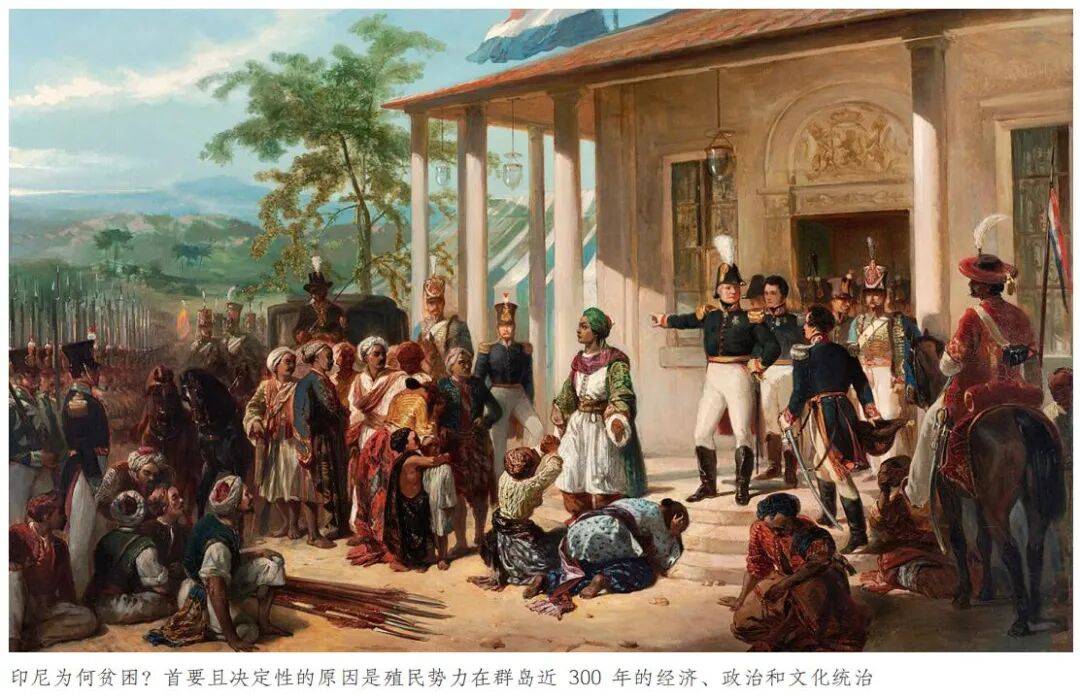
Group 1 - The conference titled "Global South and Southeast Asia" focuses on economic cooperation among Global South countries, exemplified by the BRICS group, which Indonesia has recently joined, although its cooperation direction remains unclear [2][3] - The essence of the Global South is structural poverty, which is evident in Indonesia and China, both considered poor countries despite their natural resource wealth [4][5] - In 2022, Indonesia's GDP per capita was $5,000, significantly lower than the U.S. at $76,000, highlighting the disparity in wealth and economic development [5][6] Group 2 - The historical context of Indonesia's poverty is rooted in nearly 300 years of colonial rule, which stunted its industrial development and left it with a lack of capital and manufacturing capabilities [8][10] - The legacy of colonialism has resulted in Indonesia being burdened with debt and lacking a modern industrial base, which has perpetuated its economic struggles [12][14] - The nationalization of Dutch enterprises post-independence did not lead to effective management or industrial growth, as the new leadership was often inexperienced or corrupt [16][18] Group 3 - Indonesia's economic strategy has been characterized by reliance on low productivity technologies, with over 90% of workers in small enterprises, and 80% earning below the official minimum wage [21][22] - The country has struggled with a lack of investment in production capabilities, with per capita investment in production materials being significantly lower than in countries like the U.S. and China [23][24] - The need for a balanced approach between the production of goods and the necessary production materials is emphasized, as Indonesia continues to depend on imports for essential production inputs [22][26] Group 4 - The future of Indonesia's economy hinges on its ability to develop specific production capabilities while navigating a global market dominated by imperialist structures [26][27] - Cooperation among Global South countries is increasingly seen as vital for economic planning and reducing dependency on Global North nations [27][28] - The political landscape in Global South countries, particularly regarding who controls economic power, is crucial for achieving meaningful change and cooperation [28]