科技数码

Search documents
供需双热!深圳南山年货节点燃新年消费“第一把火”
Nan Fang Du Shi Bao· 2026-01-12 13:57
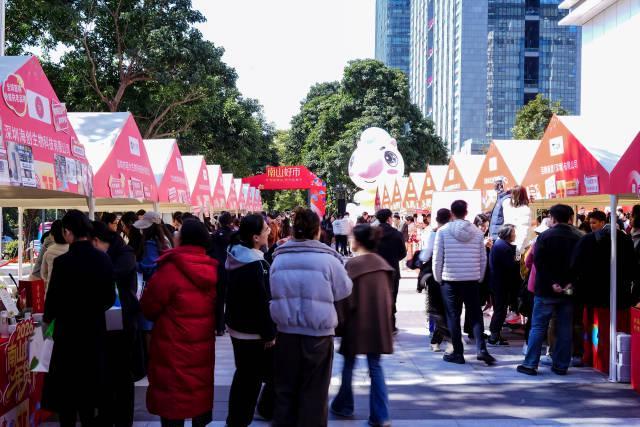
Core Insights - The "Nanshan Good Market" New Year Goods Festival successfully took place, featuring over 40 companies including OPPO and Nubia, creating a high-quality procurement platform for businesses [1][3] - The event facilitated 1,354 supply-demand connections and 4,115 transactions, showcasing the effectiveness of Nanshan's enterprise services and business environment optimization [1][7] Group 1: Event Highlights - The festival focused on precise matchmaking between supply and demand, offering bulk purchase discounts of up to 70% off for participating companies [3][5] - A diverse range of products was showcased, including consumer electronics, personal care, and cultural creative goods, creating an immersive shopping experience [5][6] - The event attracted significant participation from local enterprises, financial institutions, and government departments, enhancing collaboration and resource sharing [3][7] Group 2: Business Impact - Many small and medium-sized enterprises successfully integrated into larger supply chains, overcoming supply-demand bottlenecks [3][5] - The event included a dedicated "Business Negotiation Area" to facilitate large-scale procurement discussions and partnerships [6] - Legal consultation services were provided on-site to support businesses in navigating regulations and policies, reinforcing a stable operating environment [6][7] Group 3: Future Outlook - Nanshan District aims to continue enhancing its support for enterprises, focusing on precise services and quality ecosystems to stimulate market vitality [7] - The festival is seen as a significant step towards achieving high-quality economic development in the region, aligning with the goals of the 14th Five-Year Plan [7]

1年闭店37%,新能源汽车逃离购物中心
首席商业评论· 2025-12-21 04:33
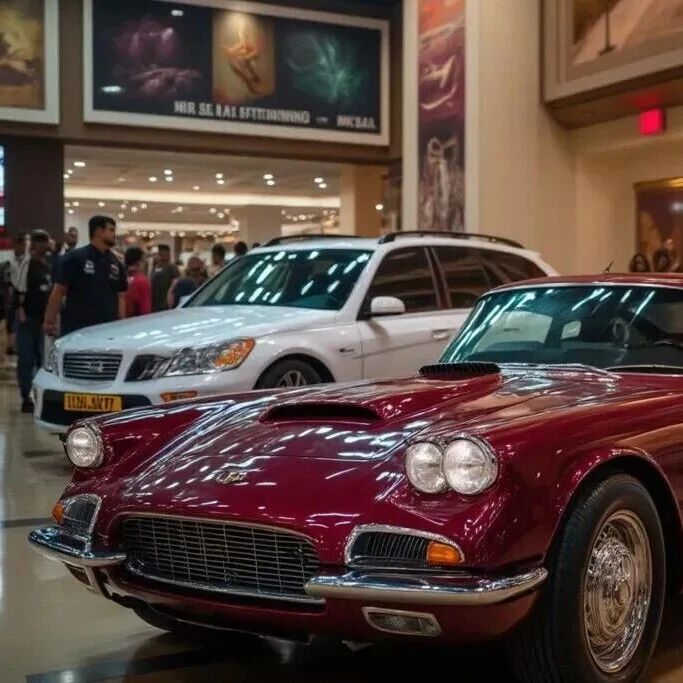
Core Viewpoint - The article discusses the shift in the automotive retail landscape in China, particularly the retreat of electric vehicle (EV) brands from shopping centers in first and second-tier cities, and their focus on expanding into lower-tier markets [6][8][10]. Group 1: Withdrawal of EV Brands - Many EV brands, including Tesla and NIO, initially established a presence in prime shopping locations to reach consumers but are now retreating due to intense competition and low profitability [7][8]. - The number of EV stores in shopping centers has decreased by 37% year-on-year in 2024, with over 70% of closures attributed to smaller brands like Neta and Leap Motor [8][10]. - Major brands are adapting by closing stores in core urban areas and shifting to service centers in suburban locations, reducing operational costs significantly [10]. Group 2: Expansion into Lower-Tier Markets - The competition has shifted from first and second-tier cities to third and fourth-tier cities, where price and test drive experiences are crucial for survival [8][10]. - Sales of EVs in third and fourth-tier cities have increased, accounting for over 45% of total sales in 2024, a 12 percentage point increase from the previous year [10]. - Brands like Leap Motor and Xpeng are successfully implementing new retail models in these markets, such as community-based stores and service stations along highways [10]. Group 3: Rise of Tech Companies - Companies like Huawei and Xiaomi are expanding their presence in the EV market, leveraging their technology and ecosystem to attract consumers [11][14]. - Huawei's sales of its EV brand, AITO, reached 81,900 units in November, marking a historical high [12]. - Xiaomi has also entered the top ten in EV sales, with plans to deliver over 400,000 vehicles in 2025, supported by a strong retail presence in key urban areas [14]. Group 4: Transformation of Shopping Centers - The departure of EV brands from shopping centers has allowed for the rise of new consumer categories, including trendy toys, outdoor sports, and new tea beverages [16][18][19]. - Brands like Pop Mart and Lululemon are taking over prime retail spaces, reflecting a shift in consumer preferences towards experiential and lifestyle products [16][18]. - The rapid growth of tech and digital brands in shopping centers indicates a significant transformation in consumer behavior and retail strategies [20].