
科技考古

Search documents
科技如何赋能考古?穿越千年历史探寻中华文明密码
Xin Lang Cai Jing· 2025-12-28 09:10
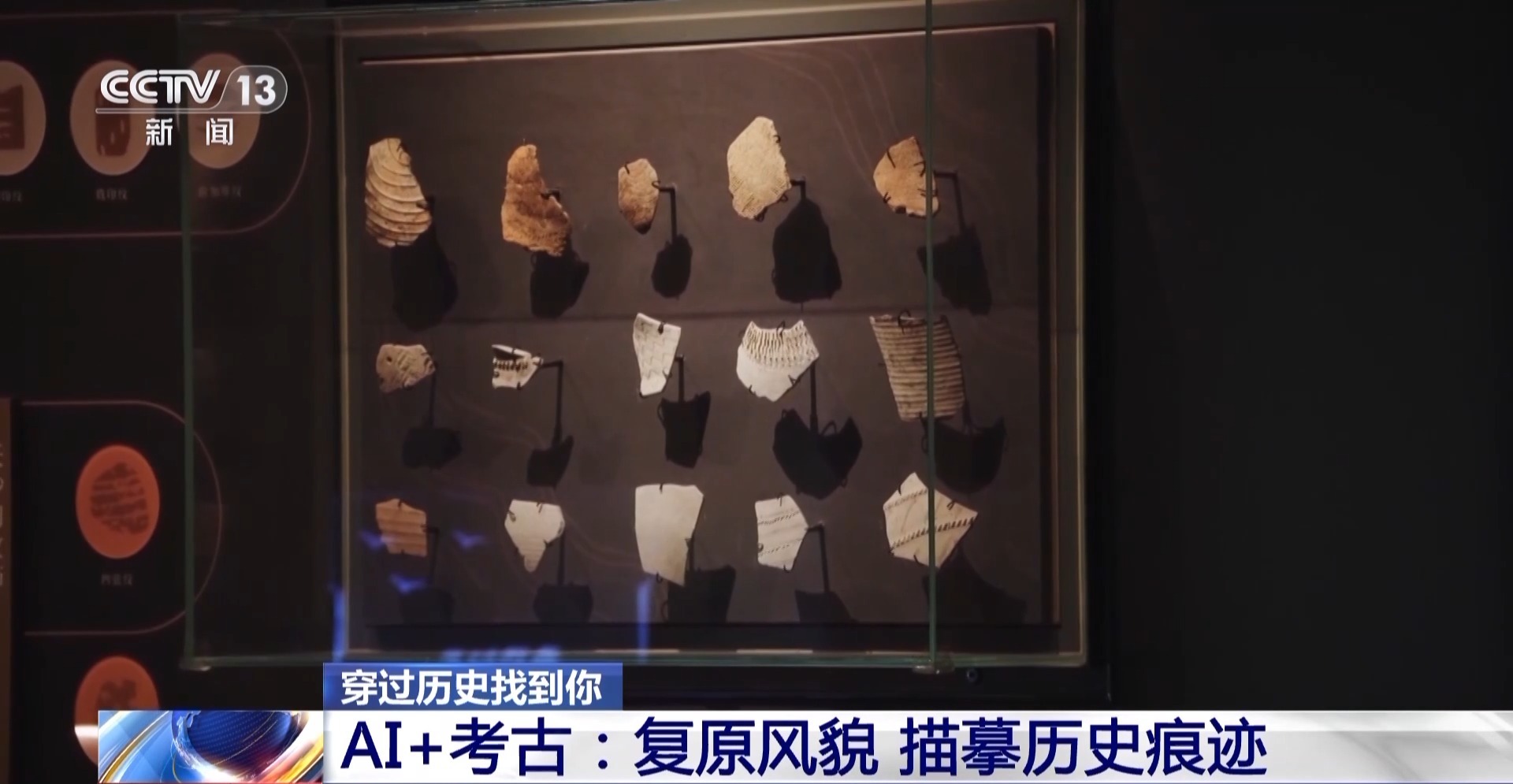
Group 1 - The article emphasizes the increasing role of technology, particularly AI, in archaeology, enhancing the understanding of civilization and aiding the exploration of Chinese civilization's evolution [1] - AI is being utilized in the analysis of fragmented pottery shards at the Baodun archaeological site, allowing researchers to establish chronological phases based on digital models [2][4] - The AI model successfully identifies the dating of ordinary pottery shards with high fragmentation and low information content, providing a new tool for efficient archaeological dating [2] Group 2 - Advanced digital modeling techniques are being employed to recreate historical civilizations, resulting in the creation of digital archives for numerous artifacts and ancient structures [6] - A team from Tianjin University is conducting high-precision measurements of the Jin Shrine, utilizing drones and 3D laser scanning to create a digital archive with millimeter-level accuracy [6][8] - The data collected includes 2.1 billion points, preserving detailed information about ancient craftsmanship and architectural features [10] Group 3 - The "Exploration of Chinese Civilization" project has achieved significant results this year, aided by technology [12] - Genetic studies on ancient human remains from the Shimao site provide insights into the formation and development of early Chinese states, revealing a complex social organization [14] - The research indicates a genetic continuity in the Shimao population, with evidence of diverse ancestral contributions from northern and southern regions, reflecting the multifaceted nature of Chinese civilization [14] Group 4 - The archaeological findings at the Liangzhu site, which is over 5,000 years old, represent a crucial testament to early Chinese civilization [16] - The confirmation of 30 dams at Liangzhu illustrates the evolution of its water management system, highlighting the transition from scattered settlements to a structured society with agricultural foundations [18] - The Liangzhu culture's development stages reveal a regional state form characterized by social differentiation and a unified belief system during the late Neolithic period [18]

以科技打开“时光宝盒”(纵横)
Ren Min Ri Bao· 2025-06-04 05:39
Group 1 - The article highlights the significant advancements in archaeological practices due to technological innovations, particularly in the context of cultural heritage preservation and research [1][2][3] - The introduction of various technologies such as sonar scanning and laser welding has led to remarkable discoveries and restorations of ancient artifacts, enhancing the understanding of history [1][2] - The integration of interdisciplinary approaches, including carbon dating and ancient DNA analysis, has allowed for new insights into historical mysteries and the evolution of civilizations [2] Group 2 - The article emphasizes the importance of public engagement and education in archaeology, suggesting that breaking down barriers and making findings accessible can foster cultural confidence [2] - The narrative illustrates the transformative journey of artifacts from discovery to restoration, showcasing the meticulous efforts involved in preserving fragile historical items [1][2] - The ongoing "cultural relic fever" indicates a growing public interest in archaeology, which is further fueled by technological advancements that connect the past with the future [2]