AI考古

Search documents
科技如何赋能考古?穿越千年历史探寻中华文明密码
Xin Lang Cai Jing· 2025-12-28 09:10
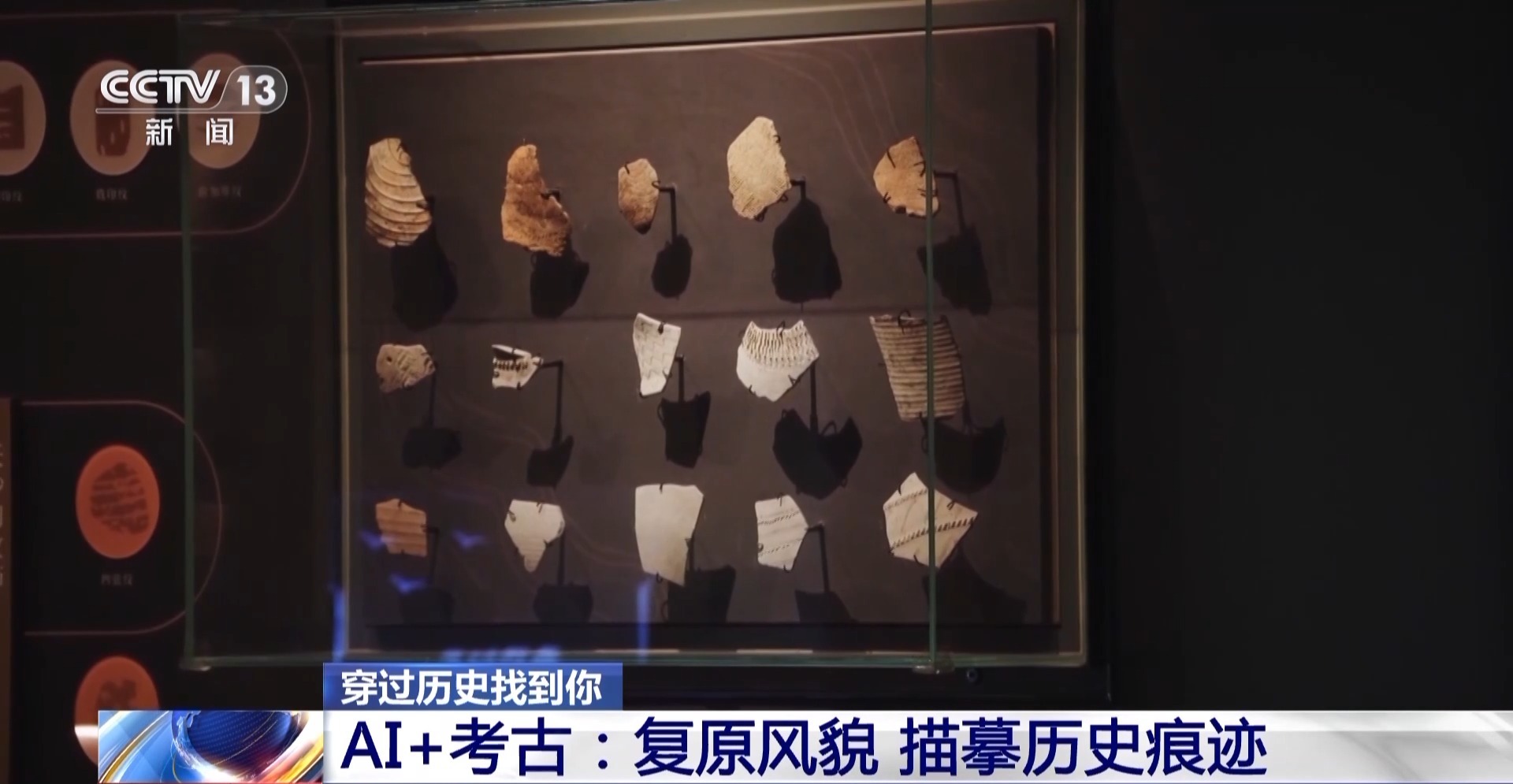
Group 1 - The article emphasizes the increasing role of technology, particularly AI, in archaeology, enhancing the understanding of civilization and aiding the exploration of Chinese civilization's evolution [1] - AI is being utilized in the analysis of fragmented pottery shards at the Baodun archaeological site, allowing researchers to establish chronological phases based on digital models [2][4] - The AI model successfully identifies the dating of ordinary pottery shards with high fragmentation and low information content, providing a new tool for efficient archaeological dating [2] Group 2 - Advanced digital modeling techniques are being employed to recreate historical civilizations, resulting in the creation of digital archives for numerous artifacts and ancient structures [6] - A team from Tianjin University is conducting high-precision measurements of the Jin Shrine, utilizing drones and 3D laser scanning to create a digital archive with millimeter-level accuracy [6][8] - The data collected includes 2.1 billion points, preserving detailed information about ancient craftsmanship and architectural features [10] Group 3 - The "Exploration of Chinese Civilization" project has achieved significant results this year, aided by technology [12] - Genetic studies on ancient human remains from the Shimao site provide insights into the formation and development of early Chinese states, revealing a complex social organization [14] - The research indicates a genetic continuity in the Shimao population, with evidence of diverse ancestral contributions from northern and southern regions, reflecting the multifaceted nature of Chinese civilization [14] Group 4 - The archaeological findings at the Liangzhu site, which is over 5,000 years old, represent a crucial testament to early Chinese civilization [16] - The confirmation of 30 dams at Liangzhu illustrates the evolution of its water management system, highlighting the transition from scattered settlements to a structured society with agricultural foundations [18] - The Liangzhu culture's development stages reveal a regional state form characterized by social differentiation and a unified belief system during the late Neolithic period [18]

助力“AI考古”与“活化利用”
Ren Min Ri Bao· 2025-12-21 23:42
Group 1 - The core focus of the Tencent NextGen initiative is on "AI archaeology" and "activation and utilization," aiming to expand the application of cutting-edge technologies like AI in archaeological exploration and cultural heritage protection [1] - The "AI archaeology" track plans to select 2-3 landmark scenario projects and 3-5 technological breakthroughs, providing corresponding funding [1] - The "activation and utilization" track aims to promote around 3 representative cultural digitalization scenarios, creating replicable and scalable models while pushing potential projects to an international level [1] Group 2 - Tencent's SSV Digital Culture Laboratory has launched the "Tanyuan AI" tailored for cultural heritage scenarios, with over 600 museums already registered on the Tanyuan platform [2] - The Tanyuan plan's annual innovation exhibition showcased advancements in digital protection and activation of cultural heritage, including AI-driven identification and virtual restoration of murals and high-precision 3D modeling of historical artifacts [2] - The Tanyuan plan aims to "empower the revitalization of Chinese culture through technology" and has been included in the "Digital Heritage Case Collection (2025)" by the World Internet Conference [2]

腾讯探元计划创新升级:重点破解“AI考古”与“活化利用”前沿难题
腾讯研究院· 2025-12-15 10:18
Core Insights - The article discusses the launch of the "NextGen" initiative under the Tencent Exploration Plan, focusing on "AI archaeology" and "activation and utilization" of cultural heritage, aiming to leverage cutting-edge technologies to address challenges in archaeological research and cultural heritage preservation [3][4][11]. Group 1: NextGen Initiative - The "NextGen" initiative aims to upgrade the existing Tencent Exploration Plan by focusing on two main tracks: "AI archaeology" and "activation and utilization" [3][4]. - The "AI archaeology" track plans to select 2-3 landmark projects, each receiving funding of around 1 million yuan, and 3-5 projects for technological breakthroughs, each receiving 300,000 yuan [3]. - The initiative seeks to integrate AI technology into archaeological research, addressing challenges such as time consumption, reliance on expert experience, and data processing efficiency [3][5]. Group 2: Activation and Utilization - The "activation and utilization" track aims to implement around three representative cultural digitalization scenarios, creating replicable and scalable models for international outreach [3][5]. - This track addresses three main industry pain points: the need for personalized and specialized models in cultural heritage, enhancing immersive interactive experiences, and preserving traditional skills through standardized digital methods [5][8]. - The goal is to reshape cultural heritage expression and create revolutionary experiences through innovative technologies [5]. Group 3: Technological Innovations - The Tencent SSV Digital Cultural Laboratory has developed "Tao Yuan AI," which integrates various AI capabilities to enhance public engagement with cultural heritage [6][8]. - The platform has onboarded over 600 museums across China, creating a rich database of cultural IPs, including oracle bones and the Beijing Central Axis [8]. - The AI aims to transform the public experience from mere observation to understanding and interaction, thereby enhancing the social value of cultural heritage [8][11]. Group 4: Achievements and Future Plans - The Tencent Exploration Plan has achieved significant breakthroughs in digital preservation and activation of cultural heritage, including the virtual restoration of the Kizil Caves murals and high-precision 3D modeling of the Longmen Grottoes [11][12]. - The initiative emphasizes a sustainable "culture + technology" funding model to support various projects in cultural heritage revitalization [11][12]. - Tencent aims to foster cross-disciplinary collaboration to drive technological breakthroughs and paradigm innovations in cultural heritage digitalization [5][12].

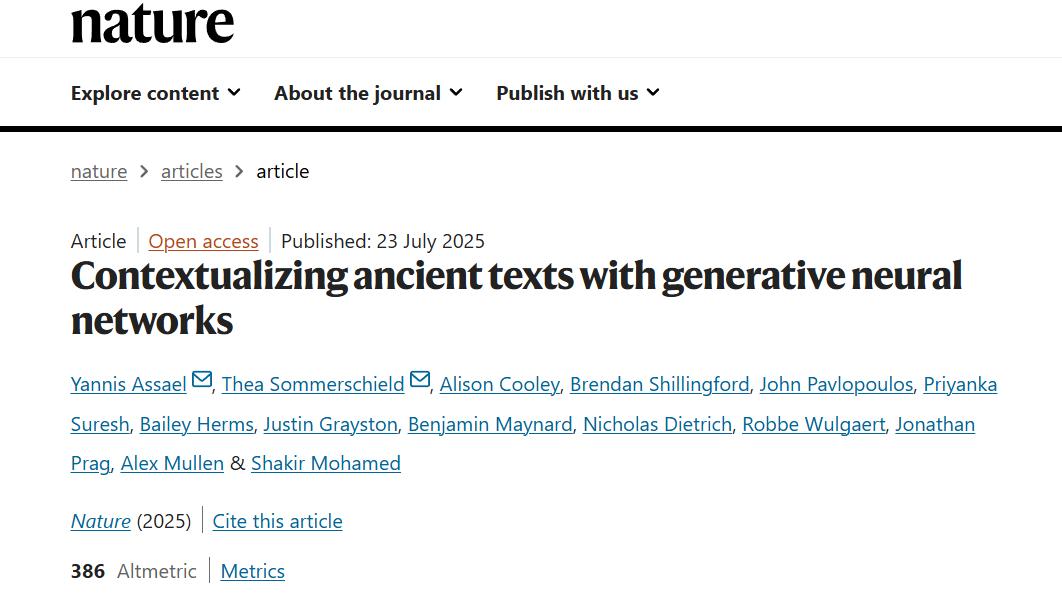
AI「解码」古罗马,重现千年铭文真相,DeepMind新模型再登Nature
3 6 Ke· 2025-08-12 03:24
Core Insights - The article discusses the introduction of Aeneas, a multimodal generative AI tool developed by DeepMind, which aids archaeologists in interpreting and restoring ancient inscriptions, significantly enhancing their research capabilities [1][9]. Group 1: Aeneas Overview - Aeneas is a multimodal generative neural network that assists historians in better interpreting, attributing, and restoring fragmented texts [1][9]. - It can analyze a vast collection of Latin inscriptions, providing context and meaning to isolated fragments, thus leading to richer conclusions about ancient history [9][10]. Group 2: Functionality and Accuracy - Aeneas can predict the dating of inscriptions within a 13-year range with a 72% accuracy rate, categorizing them into one of 62 ancient Roman provinces [9][10]. - It can repair damaged inscriptions with up to 73% accuracy for segments missing up to ten characters, and 58% accuracy when the length of the missing text is unknown [9][10]. Group 3: Historical Context and Applications - The tool is designed to handle various ancient languages and mediums, expanding its utility to connect broader historical evidence [10]. - Aeneas utilizes a large and reliable dataset, incorporating decades of historical research, to create a historical fingerprint for each inscription, allowing for contextual analysis [13]. Group 4: Case Study - Aeneas was applied to analyze the famous inscription "Res Gestae Divi Augusti," providing a probability distribution for its dating rather than a fixed date, reflecting the ongoing scholarly debate [15][17]. - The model's predictions highlight the nuances in language and historical context, offering a new quantitative approach to historical debates [15][17]. Group 5: Future Implications - The application of AI in archaeology is gaining traction, with institutions like Fudan University offering courses on AI archaeology, indicating a growing need for tools like Aeneas to sift through vast amounts of historical data [17].