科研设施建设

Search documents
原始创新“沿途下蛋” 科创“国家队”扎堆大湾区
2 1 Shi Ji Jing Ji Bao Dao· 2025-12-05 07:27
Core Viewpoint - The development of major scientific infrastructure in Guangdong is transforming the region into a hub for cutting-edge technology and innovation, significantly impacting various industries and enhancing national strategic capabilities [1][2][3]. Group 1: Major Scientific Infrastructure Development - The 15th National Games showcased an immersive viewing experience through 8K ultra-high-definition live broadcasts, supported by the Shenzhen Pengcheng Laboratory's technology [1]. - Guangdong has focused on building major scientific infrastructure, with five new national projects added during the 14th Five-Year Plan, bringing the total to ten, ranking third in the country [1]. - The China Spallation Neutron Source (CSNS) has become a leading facility, achieving significant advancements in neutron scattering technology and addressing critical national strategic needs [3][5]. Group 2: Technological Innovations and Achievements - The CSNS has increased its beam power from 100 kW to 170 kW during the 14th Five-Year Plan, completing over 2,500 research projects and yielding important results in various scientific fields [3]. - The development of a domestically produced high-power gradient magnetic alloy loading cavity has improved performance by approximately 30% compared to the best international standards, facilitating advancements in cancer treatment technologies [4][5]. - The AVS (Audio Video Coding Standard) has been successfully developed, with its third generation (AVS3) being the first to be applied in 8K broadcasts, marking a significant leap for China's digital video industry [6]. Group 3: Collaboration and Knowledge Transfer - The CSNS has established joint laboratories with universities in Hong Kong and Macau, fostering collaboration and innovation in the Greater Bay Area [7]. - Since its inception in 2018, the CSNS has registered over 9,000 users, with a quarter from the Greater Bay Area, completing more than 2,200 experimental projects in key sectors [7]. - The establishment of the Dongguan High-Energy Frontier Technology Application Industry Innovation Center aims to promote the industrialization of neutron capture therapy devices, providing new treatment options for cancer patients [9]. Group 4: Future Prospects and Infrastructure Expansion - The construction of the "Pengcheng Cloud Brain III" aims to enhance computing power and resource efficiency, contributing to the development of a national computing network [11]. - The anticipated computing network will facilitate seamless access to computing resources, making it as convenient as electricity [11]. - The ongoing development of major scientific facilities is expected to accelerate the transformation of research outcomes into industrial applications, fostering new production capabilities [10].
中国电建承建的世界容量最大超重力离心模拟与实验装置核心设备启动
Huan Qiu Wang· 2025-09-30 11:28
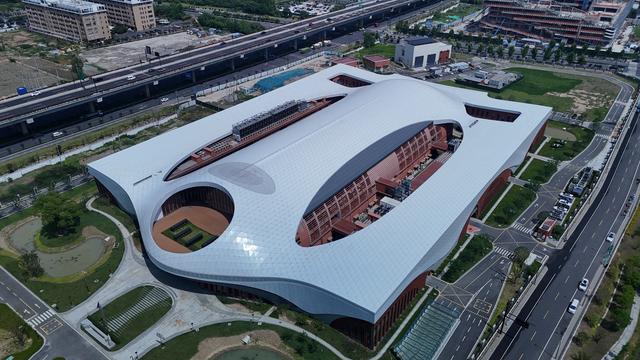
Core Insights - The "Hangzhou Supergravity Field," the world's largest supergravity centrifuge simulation and experimental facility, has been officially launched, marking a significant advancement in China's scientific research capabilities in this field [2][4]. Group 1: Facility Overview - The facility is located in Yuhang District, Hangzhou, and is part of the national major scientific infrastructure established during the 13th Five-Year Plan, being the first of its kind in Zhejiang Province [2]. - It includes three main centrifuges and six experimental chambers, with a total of 18 onboard devices, designed for various applications such as geotechnical engineering, deep-sea engineering, and material preparation [2]. Group 2: Technical Specifications - The first centrifuge, "CHIEF1300," has a capacity of 1300 g·t, making it the largest centrifuge in the world, capable of generating supergravity fields ranging from 10 to 300 times that of normal gravity [4][5]. - Two additional centrifuges, "CHIEF1500" and "CHIEF1900," with capacities of 1500 g·t and 1900 g·t respectively, are currently under construction [5]. Group 3: Technical Challenges and Solutions - The project faced unprecedented challenges, including vibration control and temperature regulation, necessitating innovative solutions to ensure successful construction [7]. - The project team utilized a proprietary digital engineering platform for three-dimensional design, addressing complex multi-disciplinary interfaces and ensuring effective lifecycle management of the facility [7].


新气象 | 打造科技创新“摇篮”探访怀柔科学城
Zhong Yang Ji Wei Guo Jia Jian Wei Wang Zhan· 2025-07-28 00:00
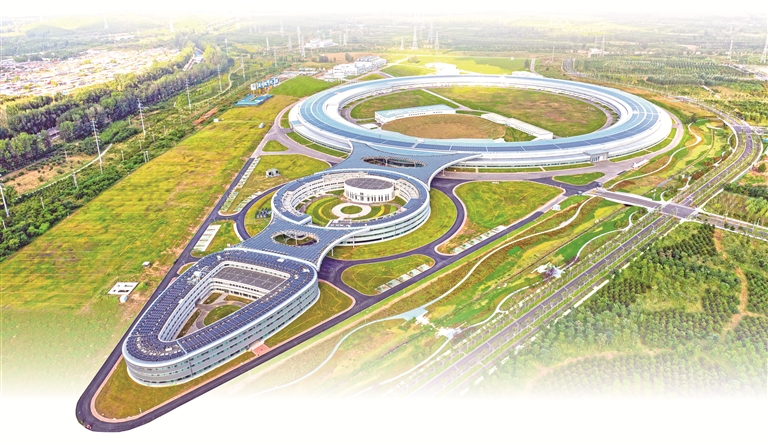
Core Insights - The article highlights the significant advancements and developments in Huairou Science City, which is a major national scientific infrastructure project aimed at fostering innovation and research in China [2][4][22] Group 1: Infrastructure and Facilities - Huairou Science City features 16 scientific facility platforms that are open for global sharing, with over 1.43 million hours of operational time accumulated [2] - The High Energy Synchrotron Radiation Source, a key facility, is set to be the brightest fourth-generation synchrotron radiation source globally, with a brightness one trillion times that of sunlight [3] - By 2050, Huairou Science City aims to become a world-class original innovation hub aligned with national strategic needs [4] Group 2: Research and Development - The city has entered a new operational phase, with 29 facility platforms from the 13th Five-Year Plan now in research status, and 8 new platforms from the 14th Five-Year Plan under construction [4] - Currently, there are 26,000 researchers in Huairou, including 33 Nobel laureates and 86 academicians, indicating a strong scientific community [4] Group 3: Achievements and Innovations - Huairou Science City has achieved breakthroughs in 51 key core technologies and produced 386 major scientific results, along with 465 high-level academic papers [14] - Notable innovations include the development of high-quality superconducting cavities and the first all-season observational laser radar, both of which are at the forefront of international technology [5][14] Group 4: Ecosystem and Collaboration - The city has attracted over 20 national research institutions, enhancing its scientific innovation ecosystem [15] - The integration of various research entities, including the Chinese Academy of Sciences, has strengthened collaborative efforts in addressing national strategic tasks [18]