童鞋

Search documents
泰兰尼斯高端童鞋加碳板引争议,被质疑影响孩子发育
2 1 Shi Ji Jing Ji Bao Dao· 2025-12-21 06:01
Core Viewpoint - The high-end children's shoe brand Taranis is facing controversy over its "carbon plate" technology, which has raised concerns about its impact on children's foot development [1] Group 1: Company Overview - Taranis was founded in 2011 and has become a "super brand" with annual sales exceeding 3 billion yuan [1] - The "Stable Running Shoes," a significant new product aimed at growing children, was launched this year [1] Group 2: Product Controversy - Consumers, including parents, have expressed dissatisfaction with the Taranis "Stable Running Shoes," citing issues such as discomfort and high price, with one parent mentioning a cost of over 1,400 yuan for shoes that were hardly worn [1] - The company claims that the half-carbon plate design is suitable for daily activities and aims to reduce the risk of ankle injuries [1] Group 3: Medical Perspective - Pediatric orthopedic doctors argue that children's feet require appropriate external stimulation for healthy growth, and shoes with carbon plates may hinder this development by being too rigid [1] - There is criticism that the focus on carbon plate technology detracts from the essential consideration of children's health and development [1] Group 4: Company Response - Taranis's founder and chairman, Ding Fei, addressed the concerns by stating that the half-carbon plate is intended to protect the arch of the foot and aims to dispel the misconception that carbon plates are harmful [1]
让供给与需求“双向奔赴”——企业家博鳌论坛嘉宾热议消费增长新空间
Sou Hu Cai Jing· 2025-12-04 11:32
Group 1 - A traditional bedding company has transitioned from home products to health services by quantifying sleep quality through sensors, chips, and algorithms, promoting a healthier sleep experience [1] - The Chinese consumer market is undergoing a transformation from "total expansion" to "structural optimization," driven by demand and supply dynamics [4] - The dairy industry is focusing on precision nutrition, with increasing demand for products containing probiotics and whey protein, necessitating more refined processing for higher added value [4] Group 2 - Cheese consumption in China faces challenges in market adaptation, primarily relying on restaurant channels; companies like Yili are innovating to create new growth points by developing crispy cheese snacks for the retail market [4] - The matcha industry is rapidly growing, with domestic production expected to reach around 7,000 tons this year, expanding into various high-value sectors such as baking, beauty, and pharmaceuticals [4] - Consumer demand is becoming increasingly diversified, with emotional value becoming a core demand for many consumers, particularly in the pet industry, which is evolving towards a more humanized and high-end approach [7] Group 3 - The widespread application of artificial intelligence is reshaping consumer market dynamics, with brands like KinuPu utilizing AI to analyze consumer feedback and adapt products to meet differentiated needs [7] - New technologies are enhancing consumer experiences in retail environments, exemplified by Kudi Coffee's use of IoT to standardize coffee preparation across over 18,000 stores [7] - A recent implementation plan by the Ministry of Industry and Information Technology aims to enhance the adaptability of consumer goods supply and demand, encouraging companies to innovate on the supply side to meet diverse consumer trends [8]

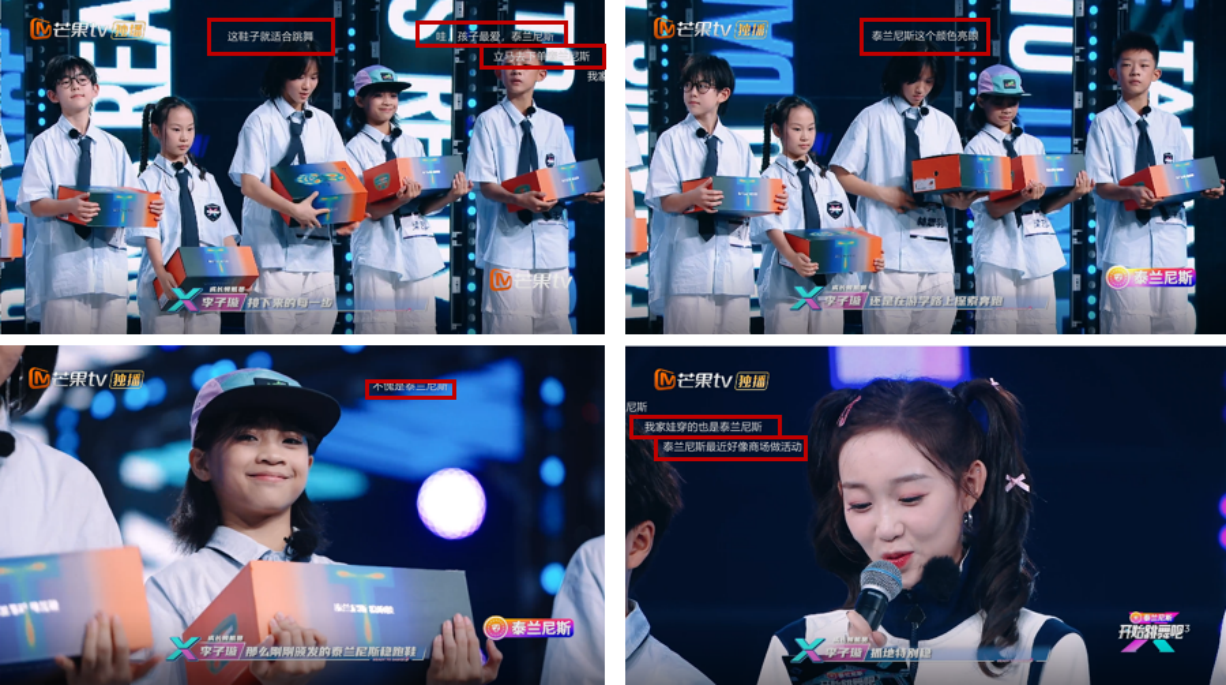
泰兰尼斯X《开始跳舞吧3》打造童鞋行业综艺营销新标杆
Cai Fu Zai Xian· 2025-11-12 03:55
Core Insights - The show "Let's Dance 3" has achieved over 500 million total exposure, ranking high on the broadcast charts, and has attracted industry attention for its innovative brand integration model [1][15] - The exclusive title sponsor, Tailaniss, effectively integrated its "Stable Running Shoes" technology into the show's narrative, successfully conveying the brand message of "Street dance should be cool, stable running protects" [1][15] Audience Engagement - The show demonstrated strong market appeal, with the first episode garnering 34.25 million views and the second episode peaking at 71.88 million views, maintaining an average of over 70 million views for the first six episodes [3] - Related social media discussions around the hashtag Let'sDance have exceeded 210 million in views and 8 million in discussions, significantly enhancing brand visibility [3] Innovative Brand Integration - Tailaniss's brand integration in this season broke traditional models, utilizing various deep integration methods across eight episodes, establishing strong brand recognition from the first episode [5] - The show featured natural product placements, such as highlighting the shoes' features during performances, which created a strong association between the brand and professional dance [5][8] Professional Authority and User Experience - The program transformed complex technology into relatable experiences through professional guidance, enhancing the brand's authority in the "professional protection" domain [8] - User testimonials during the show reinforced the brand's credibility, creating a positive feedback loop from "the brand claims" to "users proving" [8] Brand Evolution and Value Integration - By the season finale, the shoes were positioned as "battle boots" for participants, culminating in a narrative that intertwined the brand's value with the show's core themes of growth and dreams [10] - The brand evolved from being seen as mere "stage equipment" to becoming a "training partner" and "guardian of growth," deeply embedding its value within the show's narrative [10] Extended Brand Influence - During the show's airing, Tailaniss's social media accounts effectively operated around the show's content, generating significant user-generated content and achieving over 520 million total exposures [12] - The participation of guests in dance challenges while wearing Tailaniss shoes further amplified the brand's influence [12] Strategic Marketing Insights - The collaboration between Tailaniss and "Let's Dance 3" represents a new model for business cooperation in the children's footwear sector, moving from passive exposure to active resonance [15] - This partnership serves as a valuable case study for brands in the entertainment marketing field, showcasing how content and emotional connections can drive mutual success and industry innovation [15]
千元童鞋背后的中产焦虑:泰兰尼斯的高价博弈
Xin Lang Zheng Quan· 2025-10-24 09:57
Core Insights - The article discusses the high-priced children's shoes from the brand 泰兰尼斯, which are marketed using technology narratives and anxiety marketing to appeal to a new generation of parents [1] - 泰兰尼斯 has sold over 6 million pairs of children's shoes in 2024, achieving an annual revenue exceeding 3 billion yuan, with a year-on-year growth of over 50% [1] Pricing Strategy - 泰兰尼斯's main product line, the "稳稳鞋" series, is priced between 500-1500 yuan, with popular models concentrated in the 600-800 yuan range, while the newly launched "稳跑鞋" is priced at 1499 yuan, double that of similar Nike children's shoes [2] - The pricing strategy is notably higher than mainstream brands like 基诺浦 and 江博士, which typically range from 150-300 yuan [2] - Founder 丁飞 revealed that over 80% of transactions occur within the 300-600 yuan range, still significantly above the market average [2] Marketing Strategy - 泰兰尼斯 has invested heavily in marketing since 2022, partnering with 分众传媒 for extensive advertising across over 100 cities, resulting in over 9.33 billion exposures through elevator media [3][4] - The brand's marketing strategy has effectively increased brand recognition, even among those without children [4] Technology Narrative - To justify its high prices, 泰兰尼斯 has developed a comprehensive technology narrative, featuring imported materials and specialized designs for its shoes [5] - The "稳稳鞋" incorporates an Italian Vibram anti-slip sole and a multi-density support sole tailored for toddlers, while the "稳跑鞋" includes advanced protective technologies [5] Quality Concerns - The application of carbon plate technology in children's shoes has raised concerns among medical experts regarding potential impacts on children's foot development [6] - Consumer feedback on social media indicates dissatisfaction with the anti-slip performance of 泰兰尼斯 shoes, leading to over 500 complaints regarding product quality and after-sales service [7] Business Model - 泰兰尼斯 employs a "six-stage system" to categorize children aged 0-16, offering products tailored to each developmental stage, achieving a high repurchase rate of 80-90% [8] - The company maintains a consistent pricing strategy across online and offline channels, with over 1000 stores globally, 80% of which are self-operated [9] Market Dynamics - 泰兰尼斯's high pricing strategy is being tested in a declining birth rate environment, with newborn numbers in China dropping from 18.83 million in 2016 to 9.54 million in 2024 [10] - Market trends indicate a shift towards more affordable children's shoe brands, with a noticeable increase in market share for brands priced between 100-200 yuan [10] - Sales data from platforms like 天猫 and 淘宝 show a decline in 泰兰尼斯's sales, while competitors with better cost-performance ratios are experiencing growth [10]
千元一双童鞋,高价背后的泰兰尼斯争议重重
Qi Lu Wan Bao· 2025-10-24 09:49
Core Insights - Taranis, a domestic children's shoe brand, has achieved significant sales growth, with projected sales of over 6 million pairs and revenue exceeding 3 billion yuan in 2024, marking a year-on-year increase of over 50% [1] - Despite its marketing success, Taranis faces multiple controversies regarding product quality and customer service, leading to a growing number of consumer complaints [1][8] Group 1: Marketing and Sales Performance - Taranis has employed aggressive marketing strategies, including extensive advertising in elevators, airports, and high-speed train stations, reaching over 400 million people and achieving over 9 billion exposure instances in 2022 [11] - The brand's pricing strategy positions it at the high end of the children's shoe market, with its "Steady Shoes" priced between 500 to 1500 yuan, significantly higher than competitors like FILA KIDS [4] Group 2: Product Quality Issues - Taranis has received numerous complaints regarding product quality, including issues such as shoes being non-slip, peeling, and cracking, with 587 complaints recorded on consumer platforms [8][10] - Medical experts have raised concerns about the long-term effects of wearing carbon plate shoes on children's foot development, suggesting potential risks such as flat feet and tendonitis [6] Group 3: Customer Service Challenges - Customers have reported difficulties in contacting Taranis's customer service, with complaints about refusal to exchange or refund products [8][9] - The brand's "Black Gold Card" promotion has led to consumer dissatisfaction due to limited redeemable products and refusal to refund unactivated cards [13] Group 4: Research and Development - Taranis claims to invest over 10% of its revenue in research and development, with R&D expenses exceeding marketing costs by 1.2 times [11] - However, the majority of Taranis's patents are design-related, with few linked to functional or technological advancements, raising questions about the effectiveness of its R&D investments [13] Group 5: Brand Perception - Taranis is perceived by some consumers as a "fake foreign brand," despite being a domestic company founded in Hangzhou in 2006 [13] - The brand's marketing strategy has created confusion regarding its origin, with some consumers mistakenly believing it to be a British brand [13]
泰兰尼斯童鞋频陷质量和技术争议
Xi Niu Cai Jing· 2025-10-24 03:29
Core Insights - The article discusses the marketing strategies and challenges faced by the children's shoe brand, Tairanisi, highlighting its rapid growth and the controversies surrounding product quality and pricing [4][6][7]. Marketing Strategy - Tairanisi has effectively utilized targeted advertising through partnerships with media companies, placing ads in elevators and high-traffic areas in major cities, which has helped build brand recognition among consumers [4]. - The brand's messaging focuses on stability and safety, addressing the concerns of new parents, which has created a differentiated position in the competitive children's shoe market [4]. Product Quality Concerns - There have been numerous complaints regarding the quality of Tairanisi shoes, including issues such as lack of slip resistance and durability, which contradict the brand's claims of stability [4]. - The company has faced penalties for selling substandard products, with a recent fine of 1,140 yuan imposed for misrepresenting unqualified products as qualified [6]. Research and Development - Tairanisi claims to invest over 10% of its revenue in research and development, with R&D expenses reportedly 1.2 times higher than marketing costs [6]. - However, the return on this investment appears limited, as the majority of the 70 patents held by Tairanisi are design patents, with few related to functional or technical innovations [6]. Market Position and Challenges - The high pricing of Tairanisi shoes, comparable to luxury brands, has led to consumer pushback, with many expressing that the products are unaffordable [7]. - The potential for growth in the high-end children's apparel market remains, but the brand must deliver genuine high-end value to maintain its market position, as reliance on marketing alone may not sustain consumer interest [7].

公司快评|“童鞋第一股”ST起步欺诈发行6人被起诉、罚款6200万元,资本市场“毒瘤”必须清除
Mei Ri Jing Ji Xin Wen· 2025-09-25 06:32
Group 1 - ST Qibu (SZ603557) was fined 10 million yuan for fraudulent issuance of securities, with former chairman Zhang Limin and five other executives facing prosecution for related offenses [1] - The company has been penalized a total of 62 million yuan for fraudulent issuance, including a previous fine of 52 million yuan from the China Securities Regulatory Commission [1][2] - ST Qibu has experienced continuous financial decline, reporting a revenue drop from 773.4 million yuan in 2020 to 327.3 million yuan last year, with a cumulative net loss of 1.762 billion yuan over five years [2] Group 2 - In the first half of this year, ST Qibu's revenue was 85.84 million yuan, a year-on-year decrease of 33.53%, and the net loss attributable to shareholders was 37.14 million yuan, down 20.13% year-on-year [2] - The company has been under scrutiny for its governance and regulatory compliance, highlighting the need for increased enforcement against market misconduct to protect investor rights [2][3] - The recent legal changes have increased the maximum prison term for fraudulent issuance from 5 to 15 years, reflecting a stronger stance against financial crimes in the capital market [2]

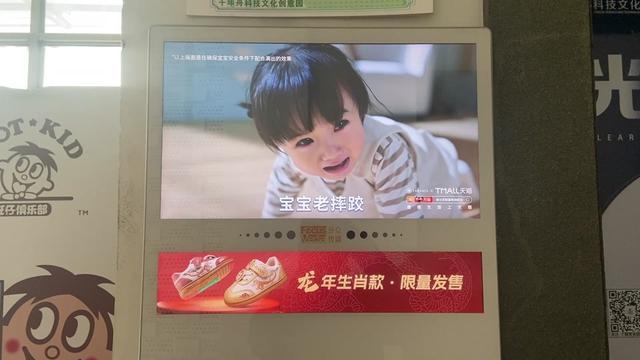
电梯里的“钉子户”,让中产家长狂掏30亿
3 6 Ke· 2025-09-18 07:56
Core Insights - The article highlights the impressive growth and market positioning of the children's shoe brand, 泰兰尼斯, which achieved sales of 6 million pairs and revenue exceeding 3 billion in 2024, marking a 50% increase from the previous year [3] - 泰兰尼斯 has successfully positioned itself as a high-end brand in the children's shoe market, with prices ranging from 500 to 1500, contrasting with competitors like Nike and Anta, which offer lower-priced options [3][9] - The brand's marketing strategy, particularly its focus on offline retail and targeted advertising, has played a crucial role in its success, with significant investments in high-traffic areas and partnerships with media companies [14][10] Company Strategy - 泰兰尼斯 was founded in 2013 by 丁飞, who aimed to create a high-end children's shoe brand amidst a chaotic market filled with low-quality products [6] - The brand differentiates itself by incorporating advanced technologies and materials typically found in adult high-end footwear, such as VIBRAM soles and GORE-TEX waterproof technology, into its children's shoes [7][9] - The company has adopted a strict pricing strategy, refusing to offer discounts or lower prices, which reinforces its premium brand image [9] Marketing and Sales - 泰兰尼斯 has effectively utilized targeted advertising, particularly through elevator and airport ads, reaching over 930 million people in 2022 [14] - The introduction of the "稳稳鞋" (Steady Shoes) specifically designed for toddlers has resonated with parents, contributing significantly to the brand's revenue growth [17] - The brand's online sales have surged, with online revenue increasing from less than 10% to 40% of total sales, driven by a focus on digital marketing and e-commerce [13] Challenges and Quality Issues - Despite its success, 泰兰尼斯 faces challenges related to product quality, with numerous complaints regarding wear and tear, and issues with mold and durability [21][30] - The brand's response to quality complaints has often been perceived as deflecting responsibility onto consumers, which has led to dissatisfaction among customers [24][26] - As 泰兰尼斯 aims to position itself as the "Hermès of children's shoes," it must address these quality concerns to maintain its premium image and customer trust [30][32]
一双童鞋要上千,泰兰尼斯却卖疯了
3 6 Ke· 2025-09-12 11:05
Core Insights - The article discusses the rapid growth and marketing strategies of the Chinese children's shoe brand, Talanis, particularly its "Steady Shoes" line, which has gained significant attention despite high prices [3][4][6]. Pricing and Market Position - Talanis's "Steady Shoes" are priced between 500-1500 RMB, significantly higher than competitors like Kenupu and Nike, which range from 150-300 RMB and 281-564 RMB respectively [3][6]. - Despite the high prices, Talanis's sales are projected to reach 6 million pairs and over 3 billion RMB in revenue for 2024, marking a 50% year-on-year increase [3][6]. Target Demographic and Consumer Behavior - The brand targets middle-class parents who are willing to spend more on children's health and safety, with about 40% of family spending allocated to children [7][8]. - Talanis has a high repurchase rate of 80%-90%, indicating strong consumer loyalty and a willingness to invest in children's footwear [14]. Marketing Strategy - Talanis has shifted its marketing focus from online to offline, utilizing elevator advertising to reach a broader audience, resulting in over 9.33 billion exposures in 2022 [14]. - The brand has established a presence in over 1,000 high-end shopping malls globally, positioning itself alongside luxury brands like Gucci and Prada [6]. Product Development and Consumer Needs - Talanis has developed a "six-stage professional children's shoe system," expanding its product range to cater to children aged 0-16, thus encouraging more frequent purchases [8][9]. - The shoes are marketed based on safety features and anatomical design, appealing to parents' concerns about their children's well-being [7][8]. Industry Trends and Challenges - Despite Talanis's success, the overall birth rate in China is declining, with newborns dropping from 18.83 million in 2016 to 9.54 million in 2024, which could impact future sales [5][6]. - The children's shoe market has seen quality issues, with Talanis facing complaints regarding product defects and safety concerns, which could affect brand reputation [18][21][22].
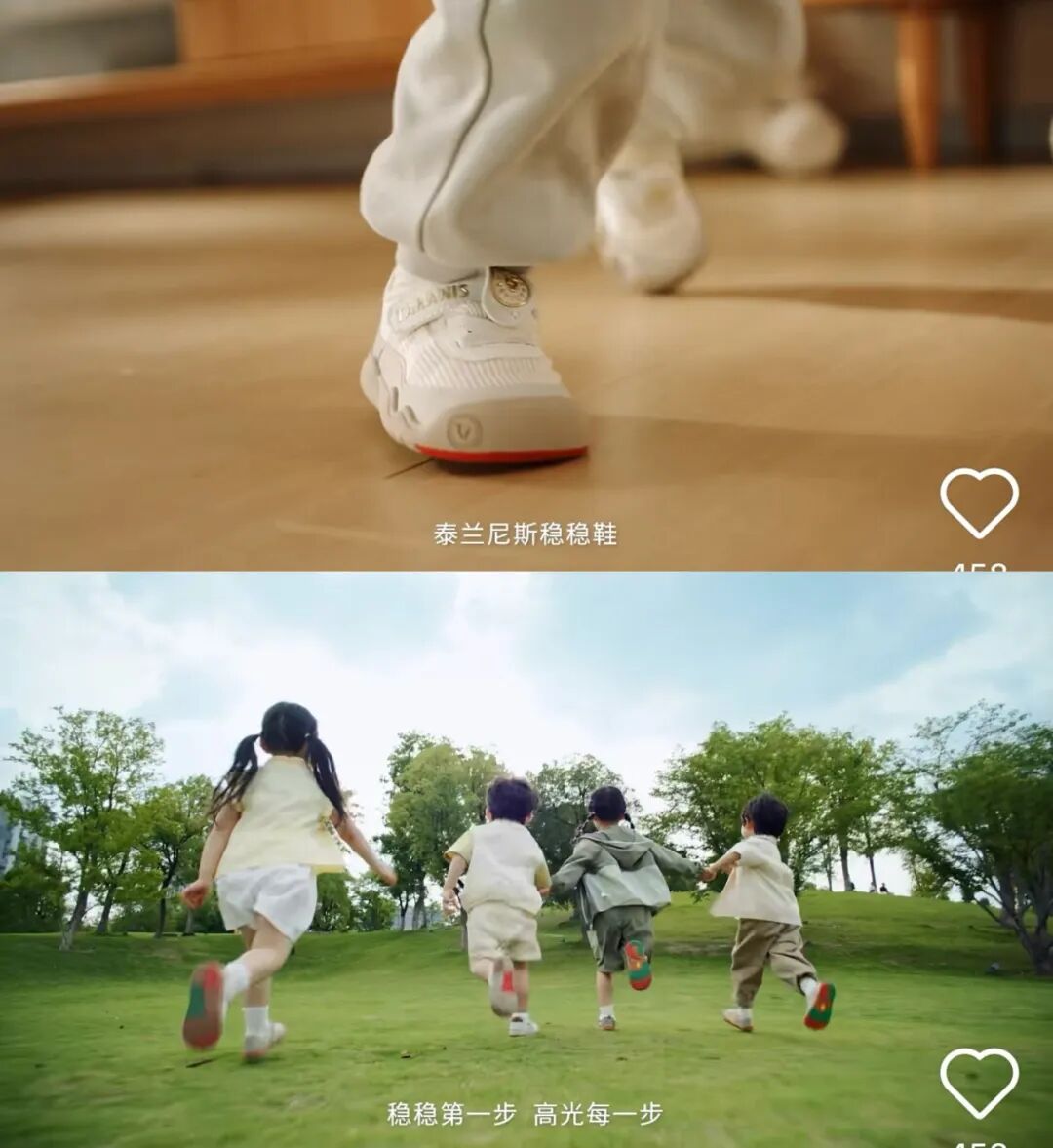
一生要强的中国人,连童鞋都卷成爱马仕
36氪· 2025-09-02 00:10
Core Viewpoint - The article discusses the rise of high-priced children's shoes, particularly the "稳稳鞋" (Steady Shoes) by 泰兰尼斯 (Tairaniss), which has become a symbol of parental anxiety regarding child development and safety, questioning whether these shoes represent a genuine need or merely a "智商税" (intelligence tax) [10][34]. Group 1: Market Performance and Brand Strategy - 泰兰尼斯 has achieved significant sales growth, with projected sales of over 6 million pairs and annual revenue exceeding 3 billion yuan in 2024, marking a year-on-year increase of over 50% [5][25]. - The brand has positioned itself in high-end shopping environments, enhancing consumer perception of value and willingness to pay premium prices [18]. - 泰兰尼斯 has developed a comprehensive marketing strategy, including over 2000 new SKUs annually, targeting various consumer needs and scenarios, which has contributed to its rapid growth [23][26]. Group 2: Consumer Behavior and Perception - Parents are increasingly anxious about their children's footwear, often viewing the purchase of high-priced shoes as a form of "insurance" for their child's safety and development [16][17]. - The brand's marketing effectively taps into parental fears, with slogans that resonate deeply with their concerns about child safety and development [35]. - However, there is a growing divide in consumer sentiment, with some praising the shoes' features while others criticize their high prices and question their actual benefits [9][36]. Group 3: Quality and Market Trends - Concerns have been raised regarding the quality of high-priced children's shoes, with reports indicating that a significant percentage of products do not meet safety standards [39]. - The overall market for children's shoes is shifting, with a noted increase in the market share of brands priced below 300 yuan, suggesting a potential decline in demand for premium-priced options [40]. - Experts in child development express skepticism about the claimed benefits of specialized children's shoes, advocating for a more cautious approach to footwear for young children [36][42].