
竹笛制作

Search documents
杭州劳务品牌:让每个人都有“够得着”的未来
Mei Ri Shang Bao· 2025-12-24 22:18
Core Viewpoint - The labor brand in Hangzhou is undergoing a significant transformation, evolving from traditional craftsmanship to new digital roles, reflecting the integration of technology and culture in the labor market [8][9][15]. Group 1: New Labor Brands - The emergence of new labor brands such as "Hangzhou AI Animation Maker," "Hangzhou AI Application Engineer," "JianDe Tofu Bun Master," and "ZhongTai Bamboo Flute Maker" showcases a path towards shared prosperity in the digital age [9][10]. - The "ZhongTai Bamboo Flute Maker" brand has a production ecosystem that includes R&D, manufacturing, sales, and training, with an annual sales volume of 4.5 million flutes, accounting for over 85% of the global market share, and generating an industry output value of 350 million yuan [9][10]. - The "JianDe Tofu Bun Master" brand has trained over 10,000 certified masters and created 50,000 jobs, with an annual output value exceeding 5 billion yuan through a standardized production and sales process [10]. Group 2: Digital Integration and Training - The "Hangzhou AI Animation Maker" brand utilizes AIGC technology, achieving a 10-fold increase in efficiency for animation production and a 70% reduction in costs for e-commerce advertising [11]. - The "Hangzhou AI Application Engineer" brand focuses on training professionals to develop AI applications, with over 1 million practitioners and more than 1 million AI applications generated [11][12]. - Hangzhou has cultivated 58 labor brands, involving over 320,000 enterprises and training more than 514,600 individuals annually, contributing to an industry output value exceeding 490 billion yuan [12]. Group 3: Ecosystem Development - Hangzhou has established a "four-dimensional integrated" ecosystem to support the growth of labor brands, leveraging policies, digital empowerment, brand development, and industry-education integration [13][14]. - The city promotes a collaborative approach to talent cultivation, bridging the gap between education and industry needs, and has initiated a digital skills talent training evaluation alliance [14][15]. - The ongoing development of labor brands in Hangzhou is redefining the concept of "skills" in the digital era, aiming for standardization, specialization, and branding of labor services [15].

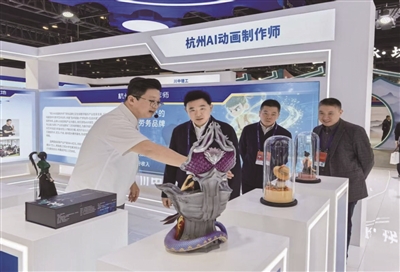
余杭擦亮劳务品牌“金名片”
Hang Zhou Ri Bao· 2025-09-05 02:25
Group 1 - The first labor brand competition in Hangzhou revealed outstanding performances from two labor brands in Yuhang: "AI Application Engineer" won the first prize in the mid-to-high-end skills category, while "Zhongtai Bamboo Flute Maker" secured the third prize in the traditional craftsmanship category [1] - Yuhang has been focusing on leveraging regional industrial advantages to create distinctive labor brands, which in turn boosts employment and income for the local population. The "AI Application Engineer" brand has trained an average of 20,000 individuals per month, leading to an average annual income of 100,000 yuan for practitioners and serving over 4 million enterprises, with an annual output value exceeding 10 billion yuan [1] - A master's graduate in architectural planning, referred to as Qing Tian, benefited from the "AI Application Engineer" brand by participating in a free certification training program, which enabled him to secure a position as an AI product manager with a starting salary 20% higher than the average for his peers [1] Group 2 - The "Zhongtai Bamboo Flute Maker" brand, based on intangible cultural heritage skills, has helped form a complete industrial chain in Zijing Village, Yuhang District, gathering over 180 enterprises and more than 100 e-commerce stores. This brand captures over 85% of the national market share, generating an annual output value of 350 million yuan and providing employment opportunities for over a thousand villagers [2] - Yuhang aims to cultivate and develop more distinctive labor brands in the future, promoting a positive interaction between industrial upgrades and improvements in people's livelihoods, thereby equipping more workers with the "golden key" to employment and wealth creation, and injecting continuous new momentum into the region's high-quality economic development [2]