
经济作物种植

Search documents
一颗核桃的“变形记”
Xin Lang Cai Jing· 2026-01-02 18:29
Core Viewpoint - The walnut industry in the Sanqun Ganquan Town has transformed from a struggling agricultural sector into a thriving economic powerhouse, significantly contributing to local ecological protection and economic development [5][9][15]. Industry Overview - The walnut planting area in Sanqun Ganquan Town has reached 80,000 acres, with an annual production of 36,000 tons and an annual output value exceeding 650 million yuan [8][12]. - The town has established itself as a national-level walnut demonstration base, receiving various accolades for its quality and innovation in walnut production [12]. Technological Advancements - A technology team has been providing hands-on training for walnut tree cultivation, focusing on pruning techniques and pest control, which has led to increased yields and improved nut quality [10][11]. - The introduction of a "six unifications and three transformations" development model has streamlined production processes, enhancing quality and efficiency [10]. Economic Impact - The walnut industry has become a significant source of income for local farmers, with some reporting earnings of over 200,000 yuan in good years [6]. - The establishment of cooperative models and partnerships with enterprises has strengthened the economic framework, leading to the formation of 49 walnut cooperatives and attracting investment from companies like Zhejiang Zhejiang Fruit Industry Co., Ltd. [11][14]. Market Expansion - The marketing strategy includes both online and offline sales channels, with a focus on e-commerce platforms and local partnerships to enhance product reach [14]. - The integration of tourism with walnut production has created new revenue streams, attracting visitors and promoting local culture through events like the walnut cultural festival [14]. Environmental Benefits - The walnut forests serve as a natural barrier against desertification, improving local climate conditions and water conservation [9][15]. - The successful cultivation of walnuts in previously unproductive sandy land demonstrates the potential for ecological restoration through agricultural practices [6][9].

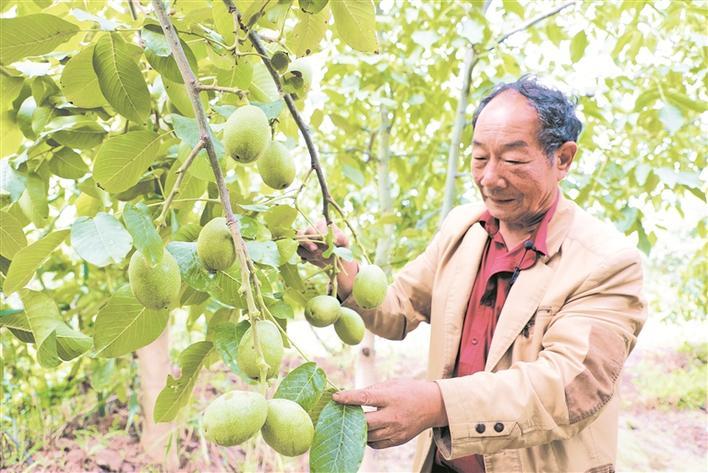
年终话“三农”丨“土味”变特色 激发新活力——2025年乡村富民产业发展一线观察
Xin Hua Wang· 2025-12-25 23:10
Core Viewpoint - The key to rural revitalization lies in industrial revitalization, focusing on developing rural industries to enhance agricultural efficiency and farmer income [1]. Group 1: Industry Development - The central government emphasizes the importance of developing rural industries to improve agricultural comprehensive benefits [1]. - Various regions are showcasing successful rural industry developments, such as smart fruit and vegetable greenhouses in the east and premium beef cattle in the north [1]. - The "14th Five-Year Plan" supports the establishment of 210 characteristic industrial clusters and 250 modern agricultural parks, enhancing local economies [4]. Group 2: Local Adaptation - The Angus cattle breeding in Heilongjiang province demonstrates a successful adaptation to local climate, generating a sales value of 625 million yuan and increasing farmer income by 150 million yuan [2]. - The development of local specialties, such as tea in Guangxi and bamboo shoots in Jiangxi, highlights the importance of leveraging regional advantages for industrial growth [4]. Group 3: Technological Innovation - Technological advancements are crucial for transforming traditional agricultural practices, as seen in the smart greenhouses in Shandong, which produce over 450 million tons of vegetables annually [7]. - The introduction of new production techniques in oil tea processing in Henan enhances product quality and creates additional revenue streams from by-products [9][10]. - Collaboration between local governments and educational institutions is fostering innovation in challenging environments, such as salt-alkali land in Shaanxi [5]. Group 4: Branding and Market Expansion - The establishment of unified branding for agricultural products, like "Caidian Lotus Root," is enhancing market competitiveness and increasing the overall industry value [12][13]. - The integration of tourism with agricultural production, as seen in the coffee industry in Yunnan, is transforming local economies and increasing farmer incomes significantly [13].
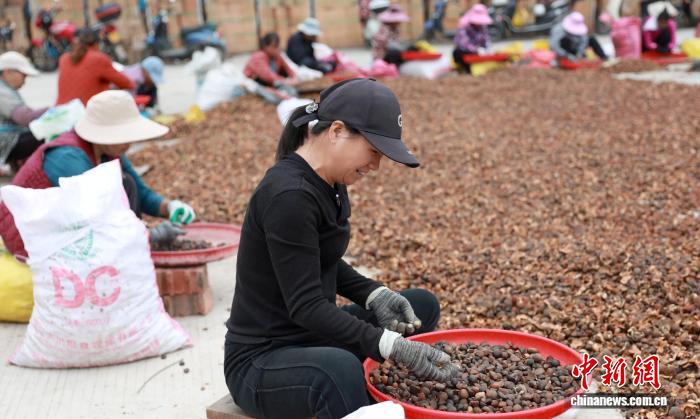
广西三江:油茶铺就增收路
Zhong Guo Xin Wen Wang· 2025-11-21 06:19
Group 1 - The article focuses on the activities of villagers sorting oil tea seeds, highlighting the agricultural practices and community involvement in the oil tea industry [2][4][5][7][8][10] Group 2 - The imagery provided in the article emphasizes the labor-intensive nature of oil tea seed sorting, showcasing the importance of this process in the overall production chain [2][5][7][10]
从一棵茶树到一条产业链 油茶如何更好助力乡村振兴?
Zhong Guo Xin Wen Wang· 2025-08-04 17:23
Core Insights - The oil tea industry in Guocheng County, Hubei Province, plays a significant role in local economic development, with an annual output value of nearly 500 million yuan and supporting around 20,000 farmers [2][5]. Group 1: Economic Impact - Guocheng County has 200,000 acres of oil tea forest, producing 11,900 tons of oil tea seeds annually, contributing to an economic output of nearly 500 million yuan [2]. - The oil tea industry has created approximately 5,000 jobs in planting and deep processing, significantly benefiting local farmers [2][5]. Group 2: Industry Development - The county's oil tea production is supported by a designated seedling breeding base, ensuring a stable supply of quality seedlings [4]. - Innovative purchasing mechanisms have been introduced to enhance the oil tea acquisition and initial processing capabilities, addressing the issue of low prices during bumper harvests [4]. Group 3: Challenges and Recommendations - The oil tea industry faces challenges such as small scale, scattered layout, and low output, with a need for improved organization and market competitiveness [5][6]. - Experts suggest focusing on technological advancements, improving planting and harvesting techniques, and enhancing the standardization of oil tea production [6][7]. - Future policy directions should emphasize quality improvement, leading enterprises, and innovative mechanisms to retain more economic benefits locally [7].