营销传媒

Search documents
思美传媒:预计2025年净利润亏损3700万元-5200万元
Xin Lang Cai Jing· 2026-01-30 10:21
Core Viewpoint - The company expects a net loss of 37 million to 52 million yuan for the fiscal year 2025, compared to a loss of 34.1064 million yuan in the same period last year [1] Financial Performance - The net profit attributable to shareholders of the listed company and the net profit attributable to shareholders after deducting non-recurring gains and losses have decreased year-on-year [1] - The decline in profitability is primarily due to reduced client budgets and intense industry competition [1] Business Operations - The gross profit margin of the company's marketing services business has decreased [1]

全线回调!开年最热赛道突然刹车
Ge Long Hui· 2026-01-16 09:37
Group 1 - The AI application sector experienced a significant decline on January 16, with major stocks like Vision China hitting the limit down, following a period of rapid growth at the beginning of the year [1] - The recent surge in AI applications was driven by the successful listings of large model companies MiniMax and Zhipu on the Hong Kong stock market, which increased market enthusiasm [3] - The acquisition of the AI application company "Butterfly Effect" by Meta for billions of dollars at the end of last year has enhanced the recognition of AI applications in China [4] Group 2 - The large-scale deployment of domestically developed inference chips has led to a drastic reduction in AI invocation costs, prompting large model companies to lower their prices [5] - AI application companies with established user bases and traffic pools have become new market hotspots as hardware valuations have soared [6] - The recent collective drop in AI applications raises questions about the sustainability of the initial enthusiasm, particularly in the marketing and media sector [7] Group 3 - Elon Musk's recent announcement to open-source the latest content recommendation algorithm for the X platform has sparked interest in Generative Engine Optimization (GEO), which aims to enhance brand content visibility in AI-generated responses [8][9] - Gartner predicts that by 2028, AI search will capture 50% of search engine traffic, indicating a significant shift in marketing dynamics [9] - The global GEO market is projected to reach $11.2 billion and $1 billion in China by 2025, with compound annual growth rates (CAGR) of 55% and 53% respectively [10] Group 4 - BlueFocus has shown impressive performance, with a revenue of 51.098 billion yuan in the first three quarters of 2025, reflecting a year-on-year growth of 12.5%, and a significant increase in AI-driven business revenue by 310% [13] - Despite the growth, AI-driven revenue still accounted for less than 5% of BlueFocus's total revenue of 32.36 billion yuan in the first half of the year [15] - The company's AI-driven revenue is currently small relative to its overall operations, indicating that while growth is notable, it does not yet significantly impact the company's financial health [16] Group 5 - The GEO model is expected to reshape the marketing industry, but it may take time for marketing companies to see significant performance improvements [13] - BlueFocus's proprietary marketing model, BlueAI, focuses on enhancing marketing efficiency, and if it can establish a closed-loop system, it may significantly elevate the company's profitability [17] - The competition with major tech firms for AI marketing capabilities poses a challenge for BlueFocus, as it relies on foundational models from companies like ByteDance and Alibaba [18] Group 6 - The year 2026 is anticipated to be pivotal for AI applications, driven by advancements in model capabilities and supportive policies [20] - The demand for AI applications is growing across various sectors, including marketing, where AI can generate personalized advertising materials and optimize strategies in real-time [23] - Companies like AppLovin have demonstrated the potential of AI in marketing, with a 71% year-on-year increase in advertising revenue in Q1 2025 [23] Group 7 - AI is transforming the entire content production chain, lowering creative barriers and increasing productivity, with new forms of content emerging [27] - AI-generated animated series are becoming a new trend, with significant production and consumption potential in the market [28] - The global AI visual generation application market is projected to reach $16.6 billion by 2027, indicating substantial growth opportunities [32] Group 8 - The integration of AI with traditional industries such as manufacturing and finance is expected to lead to a surge in AI applications, with companies showing a strong willingness to invest in AI for efficiency gains [34] - The focus on vertical applications that address specific industry pain points is becoming increasingly valuable, countering initial fears that large model giants would dominate the market [34] - The upcoming years will likely see significant investment opportunities in AI applications, particularly in niche markets that leverage unique technologies and data [35]



2025年品牌微博营销:如何借势热点引爆流量?
Sou Hu Cai Jing· 2025-12-19 07:11
Core Insights - The essence of effective brand marketing on Weibo lies in leveraging trending topics to drive engagement and visibility, rather than merely posting content without strategic alignment [1][2] - Brands must establish a real-time monitoring mechanism for trending topics and align them with their values to create meaningful interactions [2] - Keyword optimization is crucial for ensuring brand content is discoverable on Weibo and search engines, requiring a focus on long-tail keywords relevant to user queries [3] Group 1: Brand Marketing Strategies - Brands should not only aim for exposure but also engage in discussions around trending topics to shape their image effectively [1][2] - A lightweight team structure, such as a "core planner + all staff creating accounts" model, is recommended for small and medium enterprises to manage costs while maximizing outreach [4] - Collaborating with KOLs should focus on the quality of their audience and their ability to create trust and engagement, rather than just their follower count [5] Group 2: Engagement and Interaction - Transforming one-way communication into two-way dialogue is essential for increasing interaction rates, which can be achieved through questions, polls, and user story submissions [8] - Timely and genuine responses to comments can turn user interactions into new content opportunities, enhancing brand relatability [8] Group 3: Measuring Effectiveness - A dual-level indicator system is necessary to measure the effectiveness of Weibo marketing, focusing on both process metrics (like engagement rates and search rankings) and outcome metrics (like direct sales conversions) [9] - Regular analysis of these metrics helps brands understand the tangible returns on their marketing investments and adjust strategies accordingly [9]

三人行实控人方2天减持145.58万股 套现4606.88万
Zhong Guo Jing Ji Wang· 2025-09-05 03:39
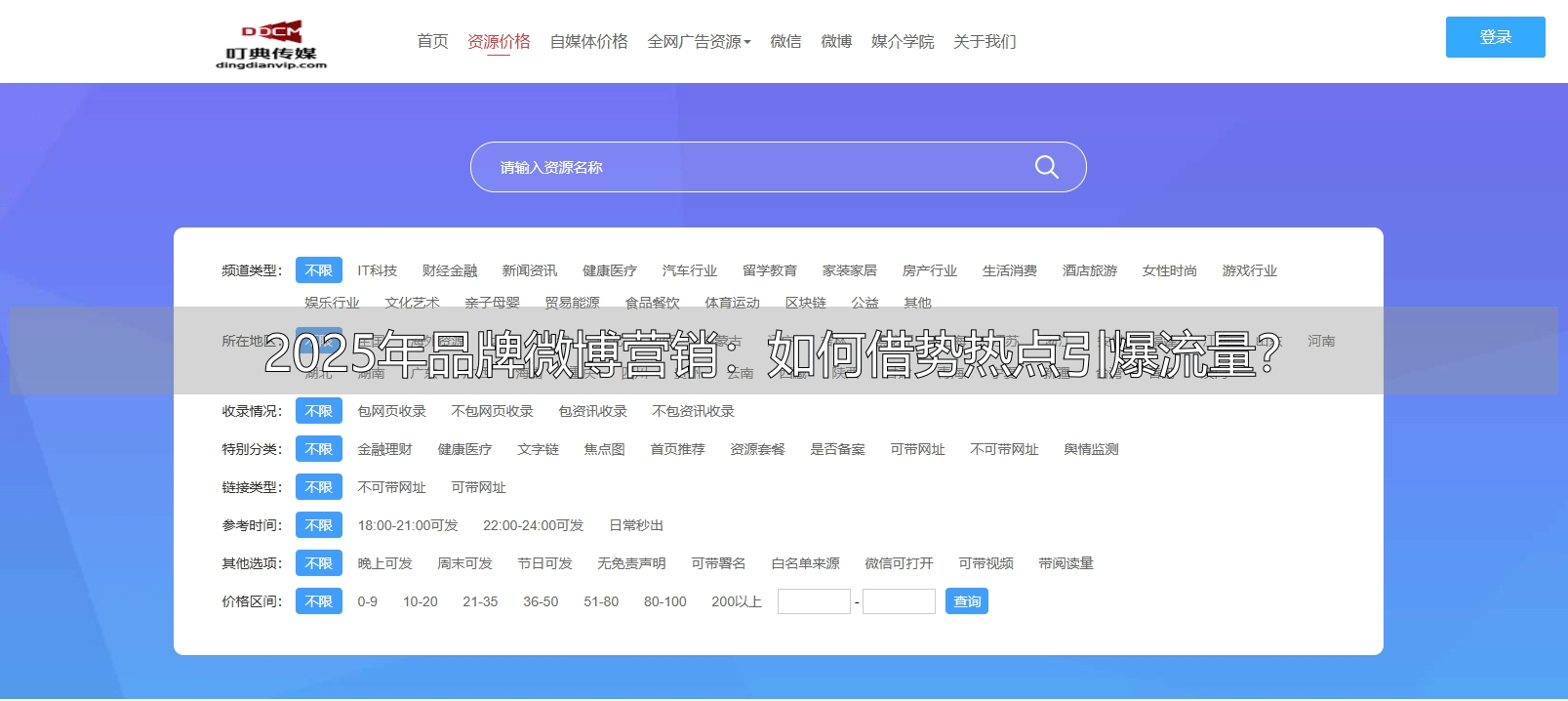
Core Viewpoint - The announcement reveals a significant change in the shareholding structure of Sanrenxing (605168.SH), with a notable reduction in the stake held by its controlling shareholder, Tai'an Zhongxing Investment Partnership, which decreased from 56.51% to 55.82% following a share reduction of 1.45 million shares [1][2]. Shareholding Changes - Tai'an Zhongxing Investment Partnership reduced its holdings by 1.4558 million shares, representing 0.69% of the total share capital, realizing approximately 46.0688 million yuan at an average price of 31.645 yuan per share during the reduction period [1][2]. - The share reduction occurred between September 3 and September 4, 2025, and the shares sold were originally acquired before the company's initial public offering and through capital reserve conversion [1][2]. Company Background - Sanrenxing was listed on the Shanghai Stock Exchange on May 28, 2020, with an issuance of 17.266 million shares at a price of 60.62 yuan per share, raising a total of 1.047 billion yuan [3][4]. - The net proceeds from the IPO amounted to 988 million yuan, which were allocated to various projects including the expansion of digital integrated marketing services and campus media [4]. Dividend Distribution - In 2021, the company distributed a cash dividend of 2.98396 yuan per share and increased its total share capital through a capital reserve conversion, resulting in a total of 101,407,289 shares post-distribution [5]. - For 2022, the cash dividend was set at 2.20 yuan per share, with a similar capital reserve conversion, increasing the total share capital to 147,040,569 shares [5]. - The 2023 dividend distribution announced a cash dividend of 1.70 yuan per share, further increasing the total share capital to 214,287,251 shares [6].

思美传媒2025年中报简析:增收不增利
Zheng Quan Zhi Xing· 2025-08-29 22:59
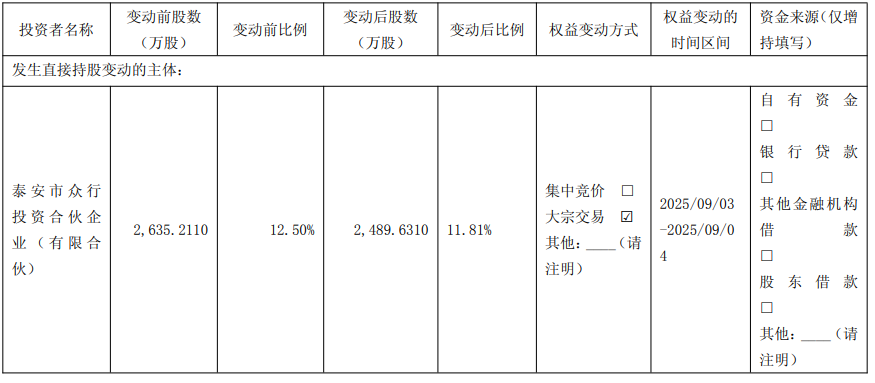
Core Viewpoint - Simic Media (002712) reported a significant increase in revenue but a substantial decline in net profit for the first half of 2025, indicating challenges in profitability despite revenue growth [1] Financial Performance - Total revenue reached 3.558 billion yuan, a year-on-year increase of 26.78% - Net profit attributable to shareholders was -11.4024 million yuan, a year-on-year decrease of 1084.13% - In Q2 2025, total revenue was 1.767 billion yuan, up 19.69% year-on-year, while net profit was -6.0858 million yuan, down 125.41% year-on-year [1] Profitability Metrics - Gross margin stood at 3.02%, a decrease of 22.81% year-on-year - Net margin was -0.3%, a decline of 460.28% year-on-year - Total selling, administrative, and financial expenses amounted to 104 million yuan, accounting for 2.93% of revenue, down 23.92% year-on-year [1] Key Financial Ratios - Earnings per share was -0.02 yuan, a decrease of 1095.24% year-on-year - Operating cash flow per share was -0.16 yuan, an increase of 38.23% year-on-year - Book value per share was 2.51 yuan, down 3.66% year-on-year [1] Business Evaluation - The company's historical return on invested capital (ROIC) has been weak, with a median of 1.41% over the past decade and a worst year in 2020 showing -37.52% [3] - The business model relies heavily on marketing-driven performance, necessitating a deeper analysis of the underlying drivers [3] Cash Flow and Debt Situation - Cash flow status is concerning, with cash and cash equivalents to current liabilities at only 23.51% - The company has a debt ratio of 26.29% for interest-bearing liabilities, with negative average operating cash flow over the past three years [3] Accounts Receivable Concerns - The company has faced challenges with accounts receivable, as indicated by negative net profit attributable to shareholders in the annual report [3]