葡萄酒和香槟

Search documents
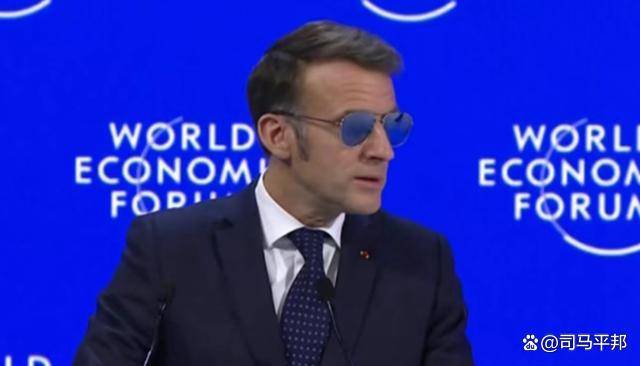
马克龙戴着墨镜,硬刚美国,当着全世界的面,向中国发出邀请函
Sou Hu Cai Jing· 2026-01-25 09:12
Group 1 - French President Macron criticized the United States for attempting to weaken and control Europe, labeling U.S. trade policies as unacceptable and suggesting imperial ambitions [1][3] - Macron's remarks at the Davos Forum signal a call for Europe to welcome Chinese investments in key sectors like renewable energy and machinery, aiming to boost economic growth and technology transfer [1][5] - The relationship between the U.S. and France has become increasingly tense, with Macron's strategic autonomy philosophy driving his criticism of U.S. actions that harm allies' interests [3][5] Group 2 - Macron's invitation to China for investment comes with conditions, including adjustments to trade deficits and adherence to European standards, reflecting a dual strategy of cooperation and caution [5][8] - The long-term realization of France's strategic autonomy depends on bridging internal EU divisions and promoting industrial upgrades, especially in the context of cooperation with China [5] - Macron's statements serve as a warning to the U.S. while also symbolizing Europe's vulnerability and uncertainty in the face of power dynamics [5][8]

马克龙疯了!公开拒签和平协议,特朗普宣布对法国加税200%
Sou Hu Cai Jing· 2026-01-25 06:14
Group 1 - The core issue revolves around the U.S. threatening to impose tariffs of up to 200% on French wine and spirits following France's refusal to join a U.S.-led peace committee for Gaza, signaling a warning to Europe about challenging U.S. authority [1][3] - The French wine and spirits industry is not only economically significant but also a cultural symbol for France, making it a primary target for U.S. tariffs, which could lead to immediate economic losses for France [3][15] - Macron's response to the U.S. actions highlights the lack of support from other European nations, with France standing isolated in its opposition to U.S. pressure, indicating a weak European response to U.S. threats [3][15] Group 2 - Macron's speech at the World Economic Forum, initially focused on economic issues, shifted to emotional undertones, reflecting his internal struggles amid external pressures from the U.S. [5] - Despite Macron's strong rhetoric against U.S. actions, he acknowledges Europe's lack of independent power to counter U.S. dominance, leading to discussions on a set of countermeasures within the EU [7][9] - The trade imbalance between China and Europe is a complex issue, with recent data showing a reduction in the EU's trade deficit with China by 27% in 2023, suggesting a more nuanced economic relationship than previously perceived [11][13] Group 3 - The ongoing tariff disputes between the U.S. and EU, particularly regarding alcoholic beverages, have historical roots, with France becoming a focal point in this trade conflict [13][15] - Macron's precarious position is characterized by his rejection of U.S. frameworks while facing economic pressure without substantial support from other European countries, leading to a search for new partnerships, particularly with China [15]

马克龙喊中国投资欧洲,中方硬气回应:愿做世界市场促共赢
Sou Hu Cai Jing· 2026-01-24 10:19
Group 1 - Macron's call for increased Chinese investment in Europe highlights the contrasting approaches of Europe and the US, with Europe seeking collaboration to alleviate economic pressures from US tariffs [1][2] - The urgency of Macron's request stems from the multiple pressures Europe is currently facing, particularly the threat of high tariffs from the Trump administration [2][3] - Trump's tariff threats specifically target key European industries, such as France's wine sector, which is crucial to its economy, thereby increasing tensions within Europe [5][7] Group 2 - The post-pandemic economic recovery in Europe is fraught with uncertainty, necessitating significant capital for industrial upgrades and technological advancements, which Europe currently lacks [9] - Macron's focus on Chinese investment is a logical response to Europe's internal capital flow challenges, as Chinese companies are increasingly globalizing and have the capacity to invest [9] - China's response emphasizes a mutually beneficial partnership, advocating for a fair and transparent market environment for Chinese enterprises in Europe [11][13] Group 3 - The potential for cooperation between China and Europe is significant, with China seeking to transition from being the "world's factory" to a global market player, presenting opportunities for European products and technologies [16][18] - For successful investment, Europe must dismantle invisible barriers and provide equal treatment for Chinese companies, fostering a stable and transparent investment climate [17][18] - The future of China-Europe economic cooperation hinges on mutual respect and the establishment of a fair market environment, which is essential for both parties to benefit from each other's strengths [18]