
中欧经贸合作

Search documents
欧洲衰落,全都怪中国?意大利前总统语出惊人:世界秩序名存实亡
Sou Hu Cai Jing· 2026-02-07 05:55
Core Viewpoint - The former Italian Prime Minister Draghi claims that Europe's economic decline is primarily due to China's rise, suggesting that the collapse of the global order is linked to international trade dynamics involving China [1][11]. Economic and Trade Relations - The cooperation between China and Europe has historically been mutually beneficial, contributing to economic growth in Europe since China's accession to the WTO in 2001 [2][4]. - The EU has maintained a leading position in high-end manufacturing and technology, with significant profits from exports to China, such as luxury goods and automobiles [2][4]. Structural Issues in Europe - Europe's economic decline is attributed to internal structural problems, including labor market issues, welfare systems, and a lack of innovation [6][10]. - The aging population in Europe, with 21% of the population aged 65 and older, has led to labor shortages and increased production costs, negatively impacting economic growth [7][10]. Global Order Dynamics - The evolution of the global order is a result of changing power dynamics among nations, with China acting as a maintainer and reformer of the global order rather than a disruptor [11]. - The U.S. policies, such as trade sanctions and protectionism, are seen as the primary factors weakening global trade rules, not China's actions [11][16]. Political Motivations - Draghi's comments may reflect a political strategy to shift blame onto China, avoiding criticism of U.S. actions and attempting to unify Europe against an external threat [13][15]. - The narrative of external threats, particularly from China, is used by some European politicians to address internal anxieties and crises, particularly in the context of U.S. pressure and competition from Asia [16].

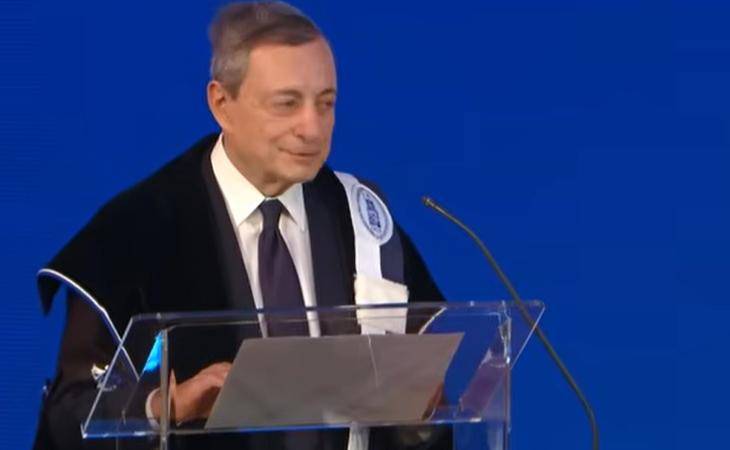
欧洲衰落,全都要怪中国?78岁德拉吉语出惊人,世界秩序名存实亡。
Sou Hu Cai Jing· 2026-02-07 05:50
Core Viewpoint - The statements made by Draghi highlight the perceived risks facing the EU, including potential domination, fragmentation, and deindustrialization, urging for faster integration and transformation into a "true federation" to avoid being left behind in global trends [2] Group 1: Economic Relations and Trade - Draghi's comments suggest that Western countries' trade with China post-WTO accession has led to political backlash, contributing to reduced global trade and weakened rules, ultimately impacting Europe's economic standing [2] - The narrative that EU-China economic cooperation has been detrimental is challenged, as the EU has benefited from exports in sectors like automotive and luxury goods, while Chinese goods have lowered production and living costs in Europe [4][6] Group 2: Internal EU Challenges - The decline in EU competitiveness is attributed to internal issues such as insufficient innovation investment, fragmented markets, high energy costs, and geopolitical risks, rather than external factors like China [6] - Europe's structural problems, including aging population and welfare system rigidity, along with energy policy missteps, have led to significant economic challenges, including industrial migration due to high energy prices [7] Group 3: External Pressures and Political Dynamics - The real threats to Europe are seen as stemming from U.S. hegemony and protectionist policies, which have undermined global trade rules and European economic foundations, rather than from China [7][9] - Draghi's remarks reflect a strategic anxiety among European politicians, caught between U.S. pressures and internal issues, leading to a tendency to externalize blame onto China [9] Group 4: Future Directions for Europe - The focus for Europe should shift from scapegoating to addressing internal challenges and fostering independent diplomatic and development strategies, recognizing that cooperation with China is essential for recovery [11]
欧洲企业既“向东看”又“向东投”(国际视点)
Ren Min Ri Bao· 2026-02-03 05:45
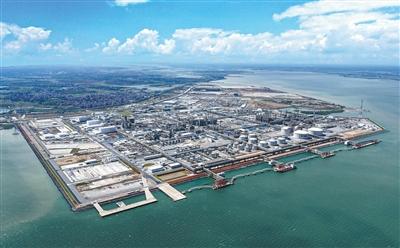
Core Insights - European companies are increasingly investing in China, with significant growth in investment from countries like the UK and Switzerland, and Germany's investment expected to reach approximately 7 billion euros in 2025, a 55% increase from 2024, marking the highest level since 2021 [4] - About 25% of European companies in China are shifting more production processes to the country, highlighting China's importance in their global strategies [5] - High-end manufacturing and technology-intensive industries are becoming the main focus of European investments in China, with 80% of European pharmaceutical companies planning to expand their production in the Chinese market [6] Group 1 - BASF's investment in the Zhanjiang integrated base marks its largest single investment project, with the first products successfully launched, emphasizing the company's commitment to strengthening its core competitiveness in China [7] - The comprehensive advantages of China, including cost-effectiveness and a complete industrial chain, are attracting more European companies to view China not just as a market but as a competitive export base [8] - Bosch plans to invest approximately 10 billion yuan in Suzhou to develop advanced intelligent driving assistance systems, indicating a shift towards local production for both domestic and global markets [8] Group 2 - The EU's direct investment in China has been steadily increasing, with a record 3.6 billion euros in greenfield investments in Q2 2024, and total investments exceeding 150 billion dollars by the end of 2024 [9] - A survey indicates that 93% of German companies in China plan to deepen their market presence, with 53% intending to increase investments, reflecting strong resilience in Sino-European economic cooperation [9] - Schneider Electric is enhancing collaboration with Chinese battery manufacturers and EV charging infrastructure suppliers, indicating a growing partnership in technology innovation and green transformation [10]
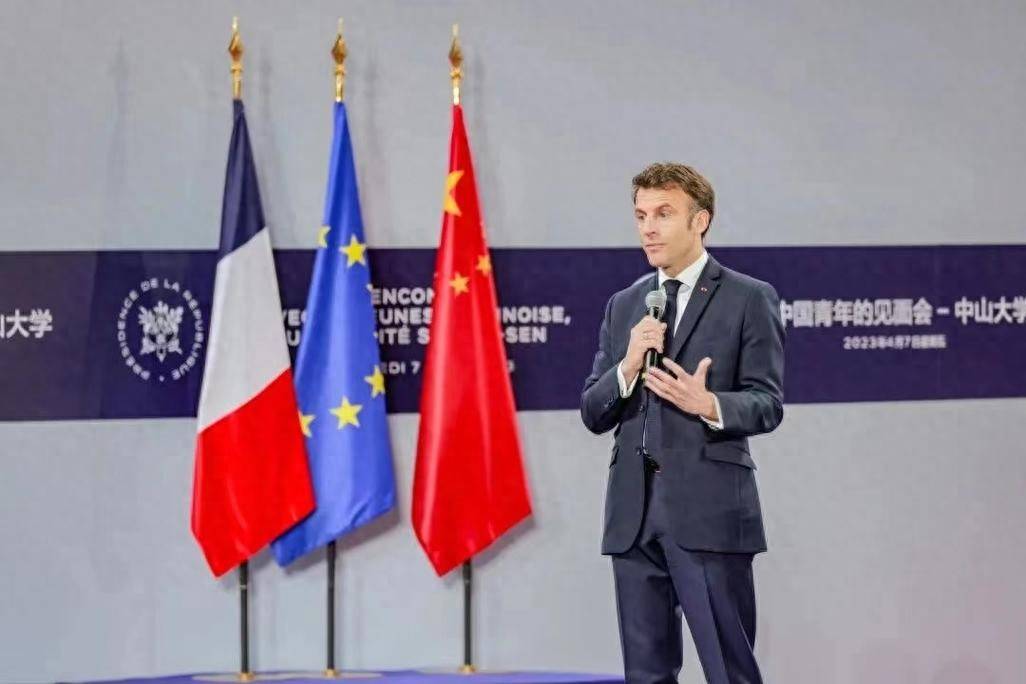
马克龙喊中国投资欧洲,中方硬气回应:愿做世界市场促共赢
Sou Hu Cai Jing· 2026-01-24 10:19
Group 1 - Macron's call for increased Chinese investment in Europe highlights the contrasting approaches of Europe and the US, with Europe seeking collaboration to alleviate economic pressures from US tariffs [1][2] - The urgency of Macron's request stems from the multiple pressures Europe is currently facing, particularly the threat of high tariffs from the Trump administration [2][3] - Trump's tariff threats specifically target key European industries, such as France's wine sector, which is crucial to its economy, thereby increasing tensions within Europe [5][7] Group 2 - The post-pandemic economic recovery in Europe is fraught with uncertainty, necessitating significant capital for industrial upgrades and technological advancements, which Europe currently lacks [9] - Macron's focus on Chinese investment is a logical response to Europe's internal capital flow challenges, as Chinese companies are increasingly globalizing and have the capacity to invest [9] - China's response emphasizes a mutually beneficial partnership, advocating for a fair and transparent market environment for Chinese enterprises in Europe [11][13] Group 3 - The potential for cooperation between China and Europe is significant, with China seeking to transition from being the "world's factory" to a global market player, presenting opportunities for European products and technologies [16][18] - For successful investment, Europe must dismantle invisible barriers and provide equal treatment for Chinese companies, fostering a stable and transparent investment climate [17][18] - The future of China-Europe economic cooperation hinges on mutual respect and the establishment of a fair market environment, which is essential for both parties to benefit from each other's strengths [18]
中欧电动汽车案“软着陆” ,中国汽车工业协会发布声明
Xin Lang Cai Jing· 2026-01-13 09:54
Core Viewpoint - The EU and China have achieved significant positive results in the electric vehicle case through mutual respect, continuous dialogue, and multiple rounds of consultations, leading to a "soft landing" [1][2]. Group 1: EU Guidelines and Evaluation - The European Commission has released guidelines for submitting price commitment applications, stating that it will adhere to non-discrimination, objectivity, and fairness principles [1][2]. - Applications from Chinese exporting car companies will be evaluated based on unified standards according to WTO rules, with eligible companies able to replace anti-subsidy duties with price commitments [1][2]. Group 2: Importance of the Soft Landing - The Chinese Automobile Industry Association views the soft landing of the electric vehicle case as a vivid example of resolving differences through dialogue and consultation within the WTO framework, which is crucial for maintaining healthy and stable development of China-EU economic and trade relations [1][2]. Group 3: Competitive Advantages of Chinese Electric Vehicles - The competitive advantage of Chinese electric vehicles stems from continuous technological innovation across the industry chain and cost and technological advantages formed through sufficient competition in a super-large market, rather than relying on subsidies [1][2]. - The association supports relevant companies in pursuing their export rights to Europe based on their actual conditions and business needs [1][2].
中国汽车工业协会关于中欧电动汽车反补贴案磋商取得积极成果的声明
中汽协会数据· 2026-01-13 09:32
Group 1 - The core viewpoint of the article emphasizes the importance of dialogue and negotiation between China and Europe to achieve a "soft landing" in the electric vehicle case, resulting in significant positive outcomes [1] - The European Commission has released guidelines for submitting price commitment applications, indicating that the EU will evaluate applications from Chinese exporting car companies based on non-discrimination, objectivity, and fairness, in accordance with WTO rules [1] - The China Association of Automobile Manufacturers believes that the "soft landing" of the electric vehicle case exemplifies how differences can be resolved through dialogue and negotiation within the WTO framework, which is crucial for maintaining healthy and stable development of China-EU economic and trade cooperation and bilateral relations [1] Group 2 - The competitive advantage of Chinese electric vehicles stems from continuous technological innovation across the industry chain and cost and technological advantages formed through full competition in a super-large market, rather than relying on subsidies [1] - The association supports relevant enterprises in striving for their export rights to Europe based on their actual conditions and operational needs [1]

中汽协:中欧双方推动电动汽车案“软着陆” 取得重要积极成果
Jing Ji Guan Cha Wang· 2026-01-13 09:28
Core Viewpoint - The China Automobile Industry Association announced positive outcomes from negotiations regarding the EU's anti-subsidy case on electric vehicles, emphasizing the importance of dialogue and mutual respect in resolving trade disputes [1] Group 1: Negotiation Outcomes - The EU and China have engaged in continuous dialogue and multiple rounds of negotiations to achieve a "soft landing" for the electric vehicle case, resulting in significant positive outcomes [1] - The European Commission has released guidelines for submitting price commitment applications, stating that evaluations will be based on non-discrimination, objectivity, and fairness according to WTO rules [1] Group 2: Implications for Trade Relations - The successful resolution of the electric vehicle case is seen as a vivid example of how dialogue and negotiation can resolve differences within the framework of WTO rules, which is crucial for maintaining healthy and stable development of China-EU economic and trade relations [1] - The competitive advantage of Chinese electric vehicles stems from continuous technological innovation across the industry chain and cost advantages formed through competition in a large-scale market, rather than relying on subsidies [1] Group 3: Support for Exporting Enterprises - The China Automobile Industry Association supports relevant enterprises in pursuing their export rights to Europe based on their actual conditions and business needs [1]
马克龙访华难改欧洲营商环境,学者:中国企业对欧投资或趋谨慎
Feng Huang Wang Cai Jing· 2025-12-06 12:23
Group 1 - French President Macron visited China this week, signing a series of cooperation agreements in nuclear energy, agriculture, and education, signaling a strengthening of Sino-French cooperation amid increasing EU-China trade tensions [1] - France, as the rotating G7 president in 2026, plans to promote cooperation and balance in the economic and trade sectors during the summit, hoping to invite China to participate and enhance major power collaboration [1] Group 2 - The European Commission released a document titled "Economic Security Principles" aimed at reducing reliance on critical raw materials from China, promoting greater self-sufficiency in European industry [1] - According to Long Jing, Deputy Director of the European Research Center at the Shanghai International Studies University, European policies will be flexibly adjusted based on circumstances, leading to a more cautious approach to corporate investment and cooperation at present [1]
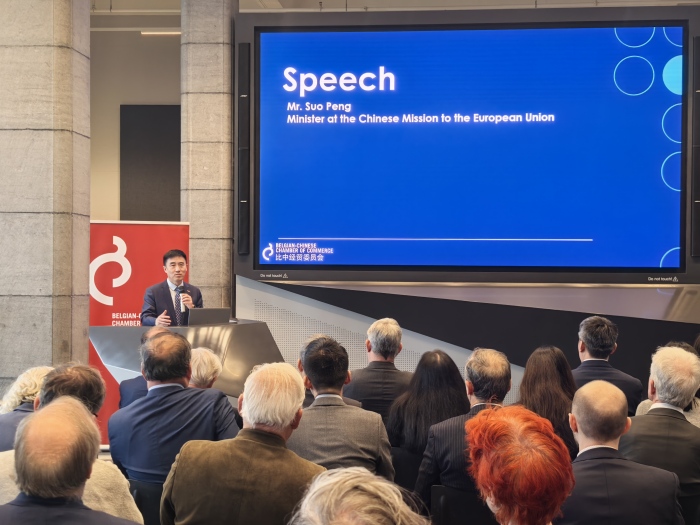
索鹏公使赴安特卫普出席比中经贸委会员活动并发表主旨演讲
Shang Wu Bu Wang Zhan· 2025-12-04 14:46
Group 1 - The core message emphasizes the importance of the 20th National Congress of the Communist Party of China, which approved the "14th Five-Year Plan" to provide more certainty for China's economic and social development in the coming period [1] - China aims to promote high-quality development and high-level opening-up, implementing measures such as innovation-driven growth, expanding domestic demand, and improving the business environment [1] - The country welcomes foreign investors, including those from Europe, to invest in China and share development opportunities through various initiatives like the China International Import Expo and "Invest in China" campaigns [1] Group 2 - The year marks the 50th anniversary of diplomatic relations between China and Europe, highlighting the essence of their economic cooperation as complementary advantages and mutual benefits [3] - Both parties are encouraged to resolve differences through dialogue and consultation, while maintaining open cooperation and multilateralism to ensure the resilience and stability of global supply chains [3] - The Port of Antwerp-Bruges, as the second-largest port in Europe, is positioned for deeper collaboration with China, particularly in areas such as green low-carbon initiatives and intelligent transformation [3]
王宇鹏副司长会见德国工商大会北京代表处首席代表欧阳利文
Shang Wu Bu Wang Zhan· 2025-12-01 14:36
Group 1 - The meeting on December 1 involved Wang Yupeng, Deputy Director, and Ouyang Liwen, Chief Representative of the German Chamber of Commerce in Beijing, focusing on Sino-German and Sino-European economic and trade cooperation [1]