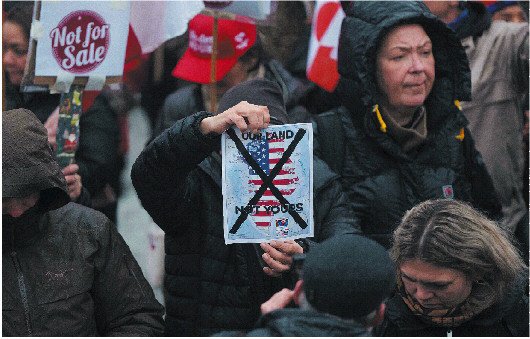
反胁迫工具

Search documents
关税威胁突然撤回,欧洲内部陷入分歧:该对美国强硬还是妥协?
Sou Hu Cai Jing· 2026-01-27 14:19
Core Points - The European Parliament has postponed the decision on unfreezing the US-EU trade agreement but hinted that it may pass later [1] - There was a lack of consensus among senior trade lawmakers after a two-and-a-half-hour closed-door meeting regarding whether to put the transatlantic agreement to a vote [1] - The postponement follows President Trump's withdrawal of threats regarding Greenland, which led some EU countries to call for lifting the blockade [1] Group 1 - The Social Democratic Party member, Katharina van Brempt, emphasized the need for clarity on Trump's claims regarding NATO agreements before proceeding with the trade deal [1] - The approval process for the agreement was frozen after Trump threatened tariffs on European allies supporting Greenland [1] - The chair of the European Parliament's International Trade Committee, Bernd Lange, stated that chief negotiators will meet on February 4 to decide on the next steps [1] Group 2 - The center-right European People's Party is eager to "move forward as quickly as possible," believing it will create more stability for businesses [3] - The right-wing European Conservatives and Reformists group, along with the far-right Identity and Democracy group, also support continuing the agreement's progress [3] - In contrast, the Socialists, Renew Europe, and the Greens advocate for a tougher stance, seeking more details on the Greenland agreement due to concerns over Trump's unpredictability [3] Group 3 - Social Democratic member van Brempt expressed the need to understand the European Commission's position on using its strongest trade weapon, the anti-coercion tool [3] - There was discussion among lawmakers about formally requesting the European Commission to initiate the first phase of the anti-coercion tool, but no majority support was formed [3] - A senior trade official from the European Commission indicated a desire to accelerate the agreement's progress following Trump's change in stance [3]

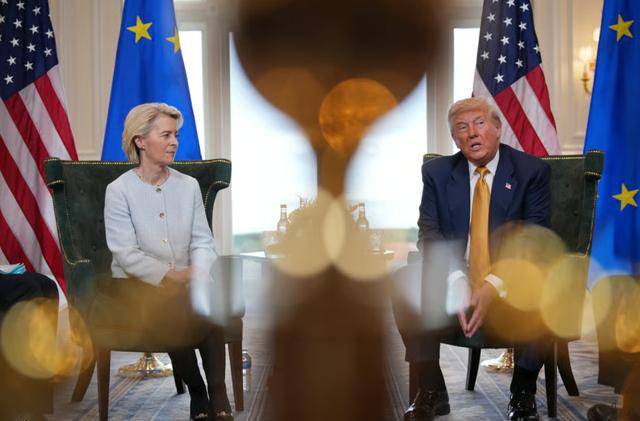
马克龙疯了!公开拒签和平协议,特朗普宣布对法国加税200%
Sou Hu Cai Jing· 2026-01-25 06:14
Group 1 - The core issue revolves around the U.S. threatening to impose tariffs of up to 200% on French wine and spirits following France's refusal to join a U.S.-led peace committee for Gaza, signaling a warning to Europe about challenging U.S. authority [1][3] - The French wine and spirits industry is not only economically significant but also a cultural symbol for France, making it a primary target for U.S. tariffs, which could lead to immediate economic losses for France [3][15] - Macron's response to the U.S. actions highlights the lack of support from other European nations, with France standing isolated in its opposition to U.S. pressure, indicating a weak European response to U.S. threats [3][15] Group 2 - Macron's speech at the World Economic Forum, initially focused on economic issues, shifted to emotional undertones, reflecting his internal struggles amid external pressures from the U.S. [5] - Despite Macron's strong rhetoric against U.S. actions, he acknowledges Europe's lack of independent power to counter U.S. dominance, leading to discussions on a set of countermeasures within the EU [7][9] - The trade imbalance between China and Europe is a complex issue, with recent data showing a reduction in the EU's trade deficit with China by 27% in 2023, suggesting a more nuanced economic relationship than previously perceived [11][13] Group 3 - The ongoing tariff disputes between the U.S. and EU, particularly regarding alcoholic beverages, have historical roots, with France becoming a focal point in this trade conflict [13][15] - Macron's precarious position is characterized by his rejection of U.S. frameworks while facing economic pressure without substantial support from other European countries, leading to a search for new partnerships, particularly with China [15]

特朗普的“格陵兰退让之举”或可避免一场经济战争
Xin Lang Cai Jing· 2026-01-22 17:04
Group 1 - The core issue revolves around President Trump's withdrawal of threats to impose tariffs on countries opposing the U.S. annexation of Greenland, which reduces the likelihood of a trade war with Europe [3][13] - Trump proposed a framework for an agreement regarding Greenland, which led to the cancellation of previously promised tariffs, illustrating a retreat from aggressive trade policies [3][13] - The European Union (EU) is set to hold an emergency meeting to discuss the situation, indicating ongoing tensions despite the temporary resolution [3][13] Group 2 - Following Trump's tariff threats, EU lawmakers agreed to suspend the approval of a transatlantic trade agreement that had been painstakingly negotiated [4][14] - The trade agreement was intended to impose a 15% tariff on most goods imported from the EU, with exemptions for certain categories, including pharmaceuticals, and included a commitment from the EU to purchase $750 billion worth of U.S. energy products [6][16] - Many Europeans view the trade agreement as heavily biased towards U.S. interests, leading to skepticism about its value [6][16] Group 3 - The EU had a potential retaliatory tariff plan worth €93 billion (approximately $109 billion) aimed at U.S. products, including soybeans and whiskey, which could politically impact Trump ahead of the midterm elections [7][17] - The EU possesses a "trade rocket launcher" mechanism, allowing for flexible punitive measures against trade partners, which could include new tariffs and restrictions on U.S. investments in Europe [7][17][18] - This mechanism could significantly impact U.S. businesses if supported by enough EU member states, demonstrating the EU's strategic options in trade disputes [8][18] Group 4 - The EU holds $8 trillion in U.S. stocks and bonds, making it the largest creditor to the U.S., and could consider selling U.S. debt as a countermeasure, although this is seen as impractical due to potential negative repercussions [10][20] - Analysts suggest that a trade dispute would have severe consequences for both the U.S. and Europe, with Trump's threats of a 30% tariff on EU goods potentially raising domestic prices and harming employment [11][21] - The potential for retaliatory measures raises concerns about broader geopolitical implications, including the risk of the U.S. withdrawing support for critical European policies [11][21]

美欧“贸易火箭筒”要点燃?欧盟对美930亿欧元报复性关税清单上会有什么
第一财经· 2026-01-21 12:08
Core Viewpoint - The European Parliament has announced the suspension of the approval process for the trade agreement reached with the United States last July, marking the EU's first response to President Trump's recent pressure tactics [3][4]. Group 1: Trade Measures and Implications - The EU is considering imposing tariffs on US goods worth €93 billion as a countermeasure against Trump's tariffs on European countries [3][4]. - The proposed tariffs include a 25% duty on US-made aircraft, which could significantly impact Boeing, as its products account for a large portion of the €11 billion in aircraft exports from the US to Europe in 2024 [4]. - Other high-value products on the tariff list include automobiles, bourbon whiskey, and soybeans, along with iconic American products like Harley-Davidson motorcycles and Levi's jeans [4][5]. Group 2: Selection Criteria for Tariffs - The EU has carefully selected products for the tariff list, focusing on items that can be easily sourced from other regions to minimize backlash from EU consumers [5]. - The selection also targets products linked to specific US politicians and their constituencies, aiming to exert political pressure while reducing economic harm to the EU [5]. Group 3: Internal EU Dynamics - The implementation of these tariffs requires support from EU member states, with some countries advocating for the removal of certain products from the list to protect their own exports [5]. - Over €20 billion worth of products have already been removed from the initial tariff list due to internal disagreements among member states [5]. Group 4: Response to US Tariffs - The EU has agreed to impose export controls on aluminum scrap, which is crucial for US metal production [6]. - The "anti-coercion instrument" (ACI) is being discussed as a potential tool to limit access for US companies in the EU market, with Macron emphasizing the need to use strong measures in response to disrespect from the US [7]. Group 5: Economic Impact on EU - The current 15% tariffs imposed by the US have already led to a 0.3% decline in Germany's GDP, highlighting the economic repercussions of the trade conflict [8]. - Germany's exports to the US have plummeted by 9.4% due to the tariffs, significantly affecting its automotive and engineering sectors [8]. - Estimates suggest that Trump's tariffs could reduce exports from targeted countries to the US by up to 50% compared to pre-2025 levels [8][9].
格陵兰岛风波激起“美欧关税战”
Bei Jing Shang Bao· 2026-01-20 15:10
Core Viewpoint - The article discusses the escalating tensions between the United States and European countries over President Trump's threats to impose tariffs on nations that do not support the U.S. acquisition of Greenland, highlighting the potential impact on global trade and transatlantic relations [1][10]. Group 1: Tariff Measures - President Trump announced a 10% tariff on goods from Denmark, Norway, Sweden, France, Germany, the UK, the Netherlands, and Finland starting February 1, which will increase to 25% on June 1 if no agreement is reached regarding Greenland [5][10]. - The tariffs will remain in place until a "complete and total purchase" of Greenland is agreed upon [1][5]. Group 2: European Response - European nations are preparing to respond to the U.S. tariffs, with a consensus reached during an emergency meeting in Brussels to use diplomatic channels and develop countermeasures [5][6]. - France's President Macron emphasized a unified response, including the potential use of "anti-coercion tools" if tariffs are implemented [5][8]. - Germany's Vice Chancellor stated that Europe is ready to respond to what he termed Trump's "extortion" with clear and unified measures, including retaliatory tariffs [6]. Group 3: Diplomatic Tensions - UK Prime Minister Starmer called for calm and emphasized that the future of Greenland should be determined by its people and Denmark, criticizing the imposition of tariffs on NATO allies [7]. - Analysts suggest that Trump's use of punitive tariffs as a diplomatic tool could lead to a hardened stance from European allies in trade negotiations [10]. Group 4: Broader Implications - The article notes that the U.S. tariffs could significantly damage the economic interdependence between the U.S. and Europe, exacerbating existing tensions in various areas including security and governance [10]. - The upcoming tariffs are seen as a potential catalyst for a breakdown in trust within the transatlantic alliance, with analysts warning of the long-term consequences for U.S.-European relations [10].

格陵兰岛风波持续发酵,美股准备先跌为敬?
Xin Lang Cai Jing· 2026-01-20 13:20
Core Viewpoint - The ongoing dispute between the US and Europe over Greenland is impacting the market, prompting Wall Street to prepare for stock sell-offs before understanding the reasons behind them [1][5]. Group 1: Market Reactions - US Treasury Secretary Scott Bessent urges global calm amid rising tensions, but rational voices are not prevailing [1][5]. - Citigroup downgraded European stock ratings due to potential corporate profit impacts, marking the first downgrade in a year, despite European stocks previously outperforming US stocks by 2025 [1][5]. - Morgan Stanley's Mike Wilson notes that the direct cost impact of President Trump's new tariff threats on major US indices is limited, but sectors with lower weight in indices, such as automotive, consumer staples, materials, and healthcare, face the greatest risks [1][5]. Group 2: Potential Risks - Wilson warns that the most significant risk from the Greenland crisis is whether the EU will activate its "anti-coercion tool" targeting the service sector, which could pose greater challenges for major US tech stocks [1][5]. - The EU's "anti-coercion tool," introduced in 2021, serves as a deterrent and encompasses measures beyond tariffs, including investment restrictions and taxes on US assets and services [2][6]. Group 3: Market Sentiment and Asset Preferences - Concerns about US tech companies being primary targets of EU countermeasures are reflected in the Nasdaq 100 futures, which are declining ahead of upcoming earnings reports from major US tech firms [2][6]. - TS Lombard's Christopher Granville suggests that significant market declines will only occur if US-EU tensions escalate beyond tariff increases to more aggressive confrontations, such as using LNG exports as leverage or restricting US tech companies' market access [2][6]. - Wilson expresses a favorable outlook on small-cap stocks, noting that their fundamentals are improving, which is driving their relative outperformance despite a cooling market expectation for Fed rate cuts [2][6][7]. Group 4: Recommended Small-Cap Sectors - Morgan Stanley identifies preferred small-cap sectors, including consumer discretionary, regional/mid-sized banks, short-cycle industrials, and biotechnology [3][7].

格陵兰岛风波持续发酵,美股准备先跌为敬?
Jin Shi Shu Ju· 2026-01-20 12:58
Group 1 - The core issue revolves around the escalating tensions between the US and Europe regarding Greenland, which is impacting the market significantly, prompting Wall Street to prepare for stock sell-offs [2] - Citigroup has downgraded its rating on European stocks, citing potential damage to corporate earnings, marking the first downgrade in a year, despite European stocks previously outperforming US stocks by 2025 [2] - Morgan Stanley's chief US equity strategist, Mike Wilson, notes that the direct cost impact of President Trump's new tariff threats on major US stock indices is relatively limited, but sectors like automotive, consumer staples, materials, and healthcare face the highest risks [2] Group 2 - Concerns are rising that the EU may activate its "anti-coercion tool," which could target the service sector and pose greater challenges for large US tech stocks [2][3] - Goldman Sachs' chief European economist, Sven Jari Stehn, indicated that activating this tool signals potential EU actions without immediate sanctions, encompassing measures beyond tariffs, such as investment restrictions and taxes on US assets and services [3] - The market's apprehension is reflected in the Nasdaq 100 futures, which have declined ahead of the earnings reports from major US tech companies [3] Group 3 - TS Lombard's Christopher Granville suggests that significant market declines would only occur if US-EU tensions escalate beyond tariff increases to more severe confrontations, such as using LNG exports as leverage or restricting US tech companies' market access [3] - Wilson expresses a relatively optimistic view on small-cap stocks, noting that their fundamentals are improving, which is driving their performance to potentially outperform the broader market [3][4] - Morgan Stanley's favored small-cap sectors include consumer discretionary, regional/mid-sized banks, short-cycle industrials, and biotechnology stocks [4]
斯塔默:英国不应在美欧之间做选择,不会对美国采取报复性关税措施
Sou Hu Cai Jing· 2026-01-20 12:37
Core Viewpoint - UK Prime Minister Starmer emphasizes the need for calm discussions regarding the Greenland issue to avoid a trade war with the US, while urging President Trump to respect NATO alliances rather than undermine them [1][5]. Group 1: Starmer's Position and Statements - Starmer has ruled out retaliatory tariffs in response to Trump's threats, aiming to de-escalate the situation and maintain a pragmatic approach [1][5]. - He insists that the UK should not choose between the US and Europe, maintaining a consistent stance held by previous governments [1][5]. - Starmer's approach is characterized as "pragmatic" and not passive, focusing on preventing a trade war that could harm already struggling households [5][6]. Group 2: Reactions to US Tariff Threats - Trump's threat to impose tariffs on eight European countries opposing the Greenland acquisition has been met with strong condemnation, with EU leaders warning of a "dangerous vicious cycle" [4][5]. - The EU is considering a response that includes tariffs on $1.1 trillion worth of US imports, indicating a potential for significant economic repercussions [5][6]. - European Parliament members are advocating for the use of the EU's "anti-coercion instrument" to counteract US threats, which could involve punitive measures against US investments and public procurement [6][7]. Group 3: Broader Implications for UK and EU Relations - Analysts suggest that the UK may be the weakest link in Europe's efforts to confront Trump over Greenland, highlighting the challenges faced by the UK in maintaining its position [2]. - The potential for a trade war could lead to a detrimental cycle affecting the UK's trade and alliance relationships, emphasizing the importance of diplomatic solutions [5][6]. - The situation underscores the fragility of transatlantic relations, with the UK needing to balance its security ties with the US against the need to oppose aggressive trade measures [5][6].

美财长锐评欧盟决策能力 白银有望冲击95美元
Jin Tou Wang· 2026-01-20 07:04
Group 1 - The current trading price of spot silver is above $94.16, with a recent high of $94.72 and a low of $92.56, indicating a short-term oscillating trend [1] - The U.S. Treasury Secretary expressed skepticism about the EU's ability to respond quickly to Trump's "Greenland tariffs," suggesting that the EU may form a "terrible European task force" instead [2] - The Secretary indicated that the decision on the next Federal Reserve Chair is unlikely to be announced during Trump's visit to Switzerland, with an expectation for an announcement by the end of January [2] Group 2 - Silver prices showed a bullish trend with a long bullish candle, breaking new highs, and the daily RSI reaching high levels, indicating potential support around $92.50 [3] - Despite the rising risk of a parabolic rise and eventual peak, the current upward trend remains constructive, with key support levels confirming demand [3] - The recent breakout suggests that the previous high of $80.31 serves as a critical support level, with the 10-day moving average at $87.13 providing dynamic support [3]
欧盟酝酿反制美“夺岛”威胁
Qi Lu Wan Bao· 2026-01-20 02:06
Core Viewpoint - The recent threats from U.S. President Trump regarding Greenland have sparked strong backlash from Europe, with the EU and multiple countries expressing opposition and preparing countermeasures, leading to heightened tensions in transatlantic relations [2][3]. Group 1: U.S. Actions and Statements - Trump threatened to impose a 10% tariff on goods from Denmark, Norway, Sweden, France, Germany, the UK, the Netherlands, and Finland starting February 1, increasing to 25% by June 1, unless an agreement for the "complete and total purchase" of Greenland is reached [3]. - Trump stated that the U.S. must control Greenland to ensure global security, criticizing Denmark for not addressing perceived threats from Russia [4]. - U.S. Treasury Secretary Mnuchin defended Trump's actions as a geopolitical decision aimed at avoiding military conflict, asserting that the U.S. must demonstrate strength [4]. Group 2: European Response - Eight European countries issued a joint statement condemning the tariff threats as damaging to transatlantic relations and warned of a dangerous cycle of retaliation [5]. - The EU is considering reviving a previously proposed tariff list targeting $930 billion worth of U.S. goods as a countermeasure to Trump's threats [5]. - European officials are preparing to use counter-coercion tools to respond to U.S. economic intimidation, emphasizing the need for a credible deterrent against perceived U.S. aggression [6]. Group 3: Domestic U.S. Reactions - Trump's actions have drawn criticism from both parties in Congress, with concerns about damaging relationships with NATO allies [7]. - Republican Senator Paul described the consideration of military action regarding Greenland as absurd, given the lack of an emergency situation [7]. - Democratic Senator Kaine indicated that Congress may push for a resolution to limit Trump's authority in foreign military actions or tariff impositions if adjustments are not made [8].