面制品

Search documents
陈克明面馆全国直营首店开业,锅气热炒定义新牌桌规则
Cai Jing Wang· 2025-12-31 11:19
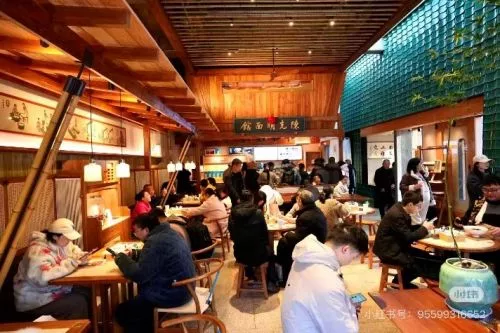
Core Insights - Kemin Food has expanded its business model by launching a noodle restaurant, Chen Kemin Noodle House, which emphasizes brand promotion and consumer engagement through a unique dining experience [1][2][4]. Group 1: Business Strategy - The new restaurant features a traditional Chinese courtyard design and offers a range of noodle dishes priced between 9.9 yuan and 39 yuan, showcasing the live noodle-making process to enhance customer experience [4][5]. - The company aims to address supply chain issues for small B-end clients while also focusing on expanding its market presence in various channels, including wholesale and catering [5][6]. - Kemin Food's strategic move into the restaurant sector is seen as a way to revitalize its brand and counteract declining sales in its core noodle products, which have seen revenue drops of 12.7% in 2023 and 6.37% in 2024 [6][8]. Group 2: Market Trends - The noodle restaurant market in China is becoming increasingly competitive, with a projected 785,000 noodle restaurants by Q1 2025, representing 9.7% of the overall restaurant industry [10][11]. - High-line cities are becoming hotspots for new noodle brands, with consumer preferences shifting towards unique dining experiences that emphasize freshness and cooking methods like "stir-frying" and "pot aroma" [10][11][14]. - The trend towards experiential dining is supported by a growing consumer willingness to pay for emotional value and scene experiences, particularly among younger generations [13][14]. Group 3: Future Outlook - The company plans to evaluate the performance of the new restaurant before considering further expansion beyond Changsha, indicating a cautious approach to growth [15][16]. - Experts suggest that establishing a sustainable customer repurchase habit and maintaining operational efficiency will be crucial for long-term success in the noodle restaurant sector [8][14].


热销“宝宝挂面”能做婴儿辅食吗?我们核查了营养成分
Xin Jing Bao· 2025-09-11 06:07
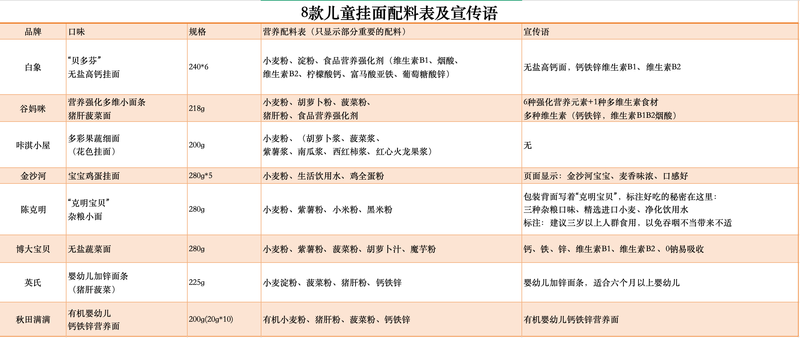
Core Viewpoint - The children's noodle market is experiencing significant growth, with products marketed as "baby" or "children's" noodles commanding high prices, often up to 50 yuan per jin, which is ten times the price of regular noodles. However, many of these products do not meet the national safety standards for infant food, raising concerns about their nutritional adequacy and safety for young children [1][4][7]. Market Overview - The market for children's noodles is diverse, with many products labeled as suitable for infants aged 6 months to 36 months. These products often emphasize health benefits such as "low salt," "high calcium," and "fortified with vitamins" [1][2][3]. - Parents are increasingly purchasing these noodles, believing they are healthier options for their children. Many products are marketed through e-commerce platforms and physical stores, with some achieving sales of over 30,000 units [2][3][6]. Pricing Analysis - The pricing of children's noodles shows a significant premium over regular noodles, with some products priced as high as 50 yuan per jin. A comparison of various products reveals a price range from 13 yuan to 50 yuan per jin [4][6]. - Despite the high prices, many parents are willing to pay for these products, associating them with safety and health benefits for their children [6]. Nutritional Standards - There is currently no national mandatory standard for children's food in China, leading to a situation where many products only adhere to company or group standards. Only a few products meet the national standard for infant food [7][11]. - A review of several popular children's noodles indicates that many do not meet the nutritional requirements set by the national standard for infant food, raising questions about their suitability for young children [10][11][12]. Marketing and Consumer Behavior - The marketing strategies employed by companies often include claims that their products are suitable for infants, despite not adhering to the necessary safety standards. This has led to potential misleading advertising practices [13][18]. - Parents' concerns for their children's health drive the demand for these products, with many believing that fortified noodles are essential for their children's nutrition [15][17]. Expert Opinions - Experts suggest that while some nutritional fortification can be beneficial, the effectiveness varies by individual needs. Many essential nutrients can be obtained through a balanced diet without relying solely on specialized products [14][17][18]. - The high price of children's noodles is seen by some industry insiders as a reflection of marketing strategies that exploit parental anxiety regarding child health [18].