黑色金属矿采选业等

Search documents
国家统计局:1月份全国工业生产者出厂价格同比下降1.4%
智通财经网· 2026-02-11 02:00
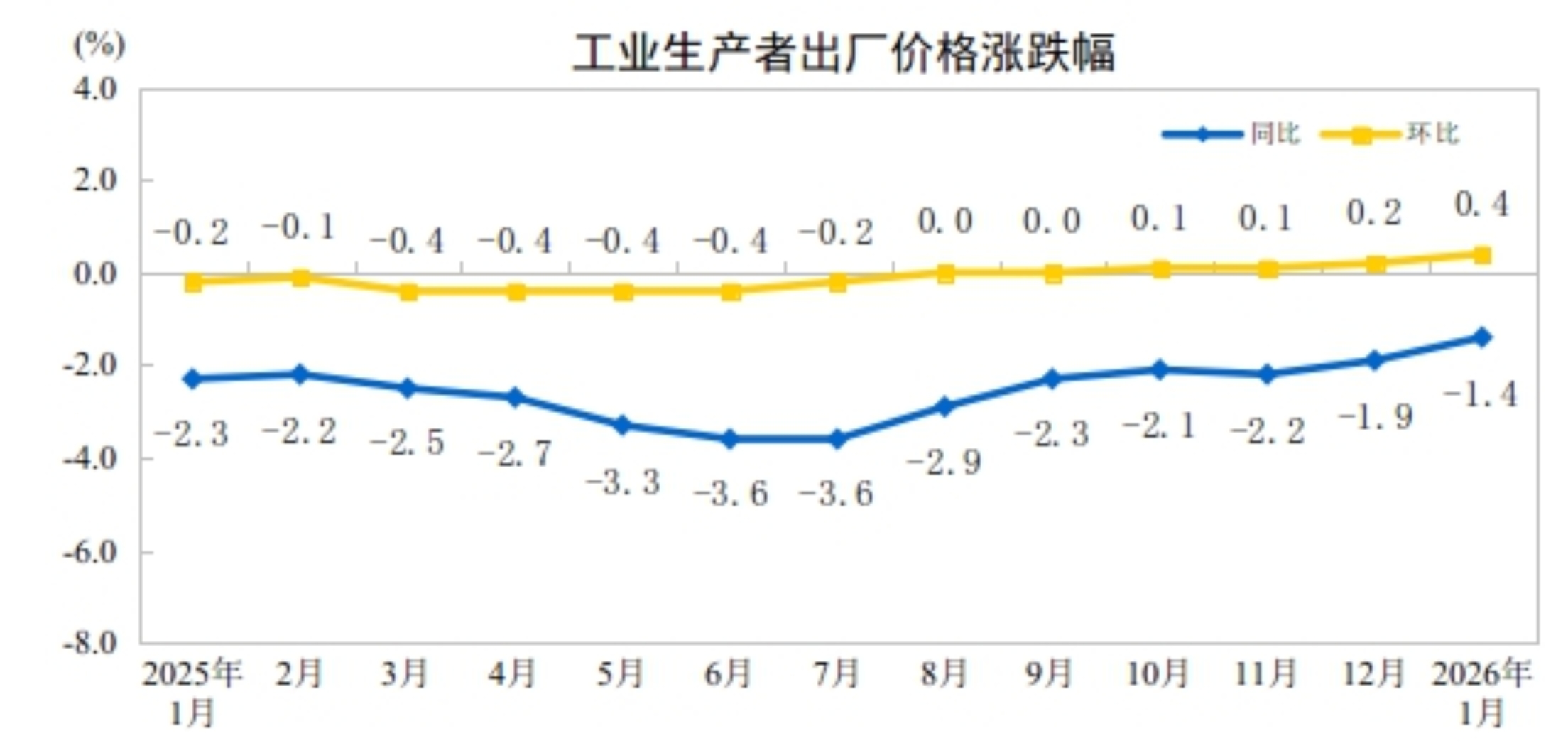
Group 1: Core Insights - In January 2026, the national industrial producer price index (PPI) showed a year-on-year decrease of 1.4%, with the decline narrowing by 0.5 percentage points compared to the previous month, while the month-on-month increase was 0.4%, expanding by 0.2 percentage points from the previous month [1] Group 2: Year-on-Year Changes - The prices of production materials decreased by 1.3%, contributing approximately 1.06 percentage points to the overall decline in the PPI. The mining industry saw a price drop of 8.1%, raw materials decreased by 2.0%, and processing industry prices fell by 0.4% [4] - Prices of living materials decreased by 1.7%, impacting the overall PPI by about 0.38 percentage points. Food prices fell by 1.9%, clothing prices decreased by 0.7%, and both general daily goods and durable consumer goods prices dropped by 1.8% [4] Group 3: Month-on-Month Changes - In January, the prices of production materials increased by 0.5%, contributing approximately 0.37 percentage points to the overall PPI increase. The mining industry prices decreased by 1.7%, while raw materials and processing industry prices increased by 0.7% and 0.5%, respectively [8] - Living materials prices saw a slight increase of 0.1%, with food prices decreasing by 0.1% and clothing prices dropping by 0.3% [8] Group 4: Industrial Purchase Prices - The industrial producer purchase prices showed a year-on-year decrease of 1.4%. Fuel and power prices fell by 7.1%, chemical raw materials decreased by 5.8%, and construction materials and non-metallic materials dropped by 4.7%. However, prices for non-ferrous metals and wires increased by 16.1% [7][10] - Month-on-month, the purchase prices increased by 0.5%, with non-ferrous metals and wires rising by 4.5%, while fuel and power prices decreased by 0.7% [8][10]

【数据发布】2025年11月份工业生产者出厂价格环比继续上涨
中汽协会数据· 2025-12-10 10:35
Group 1: Year-on-Year Changes in Industrial Producer Prices - In November, the industrial producer's ex-factory prices decreased by 2.2% year-on-year, while the purchase prices dropped by 2.5% [1] - For the period from January to November, the average ex-factory prices fell by 2.7% compared to the same period last year, and the purchase prices decreased by 3.1% [1] Group 2: Breakdown of Ex-factory Prices - In November, the prices of production materials decreased by 2.4%, contributing approximately 1.79 percentage points to the overall decline in ex-factory prices. The mining industry saw a price drop of 6.1%, raw materials decreased by 2.9%, and processing industries fell by 1.9% [3] - Prices of living materials decreased by 1.5%, impacting the overall ex-factory price level by about 0.38 percentage points. Food prices fell by 1.5%, clothing prices decreased by 0.3%, while general daily goods increased by 1.1% and durable consumer goods dropped by 3.6% [3] Group 3: Month-on-Month Changes in Industrial Producer Prices - In November, the ex-factory prices of production materials increased by 0.1%, contributing approximately 0.08 percentage points to the overall increase in ex-factory prices. The mining industry prices rose by 1.7%, while raw materials saw a slight decrease of 0.2%, and processing industries increased by 0.1% [7] - Living material prices remained stable, with food prices decreasing by 0.1%, clothing prices increasing by 0.1%, general daily goods rising by 0.2%, and durable consumer goods dropping by 0.2% [7] Group 4: Changes in Purchase Prices - In November, the purchase prices of fuel and power decreased by 6.9%, building materials and non-metallic products fell by 5.8%, and chemical raw materials dropped by 5.0%. Agricultural products decreased by 4.9%, black metal materials fell by 3.0%, and textile raw materials decreased by 1.9%. However, prices of non-ferrous metal materials and wires increased by 8.1% [6] Group 5: Industry-Specific Price Changes - The coal mining and washing industry saw a price drop of 11.8%, while the oil and gas extraction industry experienced a decrease of 10.3%. The black metal mining industry had a slight increase of 2.4%, and the non-ferrous metal mining industry saw a significant rise of 20.2% [8] - The food manufacturing industry experienced a price decrease of 1.2%, while the chemical raw materials and products manufacturing industry saw a decline of 5.2% [8]
国家统计局:11月PPI环比上涨0.1% 同比下降2.2%
智通财经网· 2025-12-10 01:44
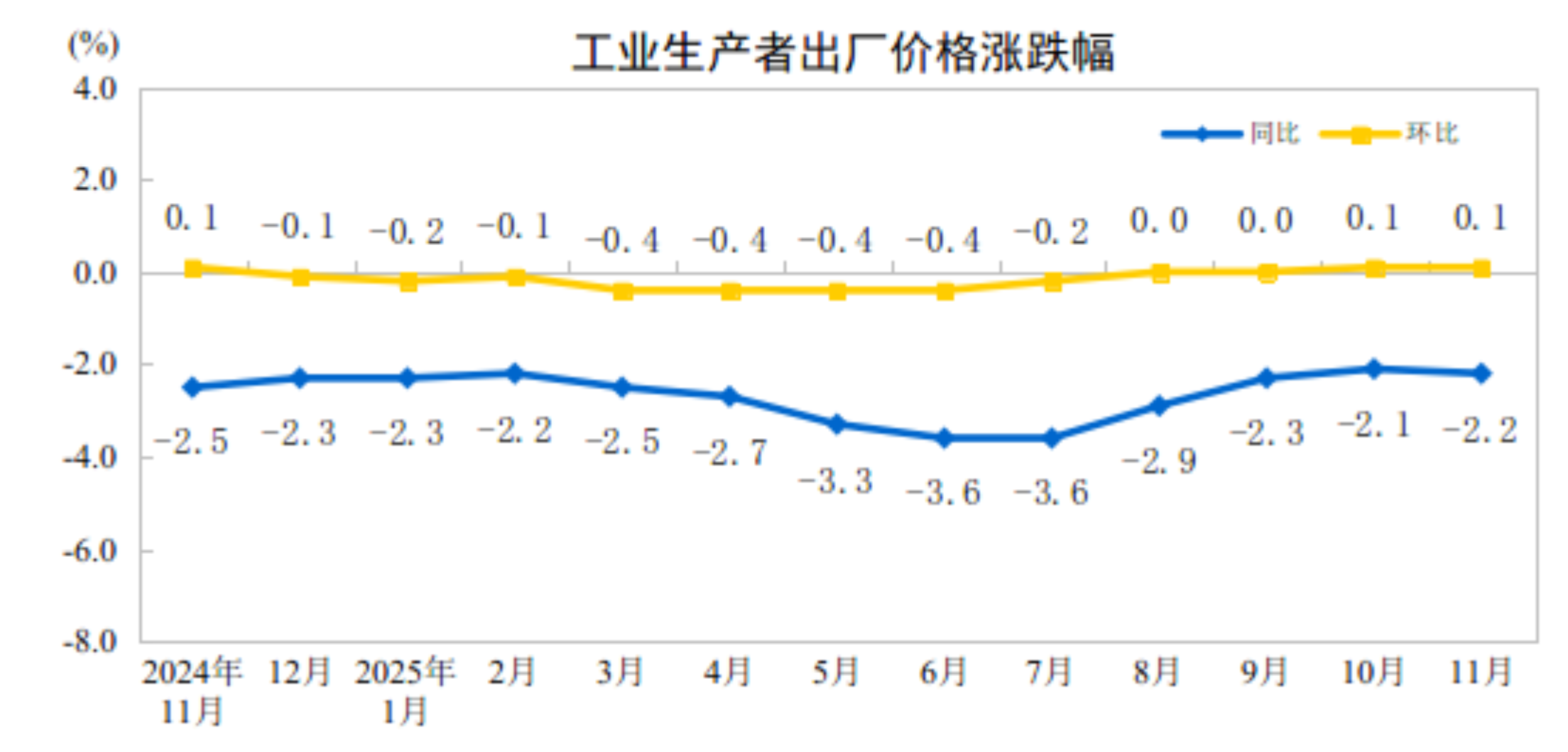
Group 1: Year-on-Year Changes in Industrial Producer Prices - In November, the producer prices for industrial producers saw a year-on-year decline of 2.2%, with production material prices decreasing by 2.4%, contributing approximately 1.79 percentage points to the overall decline [3][8] - The mining industry experienced a significant price drop of 6.1%, while raw materials and processing industries saw declines of 2.9% and 1.9%, respectively [3][8] - Consumer goods prices fell by 1.5%, with food prices down by 1.5% and durable goods prices decreasing by 3.6% [3][8] Group 2: Month-on-Month Changes in Industrial Producer Prices - In November, the producer prices for industrial producers increased by 0.1% month-on-month, with production material prices also rising by 0.1%, contributing approximately 0.08 percentage points to the overall increase [6][8] - The mining industry prices rose by 1.7%, while raw materials prices decreased by 0.2% and processing industry prices increased by 0.1% [6][8] - Consumer goods prices remained stable, with food prices down by 0.1% and general daily necessities prices up by 0.2% [6][8] Group 3: Changes in Purchasing Prices - The purchasing prices for industrial producers saw a month-on-month increase of 0.1%, with a year-on-year decline of 2.5% [8] - Fuel and power prices dropped by 6.9%, while prices for non-metallic building materials decreased by 5.8% [6][8] - Prices for non-ferrous metals and wires increased by 8.1%, indicating a significant rise in this category [6][8] Group 4: Price Changes in Major Industries - The coal mining and washing industry saw a year-on-year price drop of 11.8%, while the oil and gas extraction industry experienced a decline of 10.3% [8] - The non-ferrous metal mining industry reported a year-on-year price increase of 20.2%, indicating strong performance in this sector [8] - The food manufacturing industry experienced a year-on-year price decline of 1.2%, reflecting ongoing challenges in this sector [8]
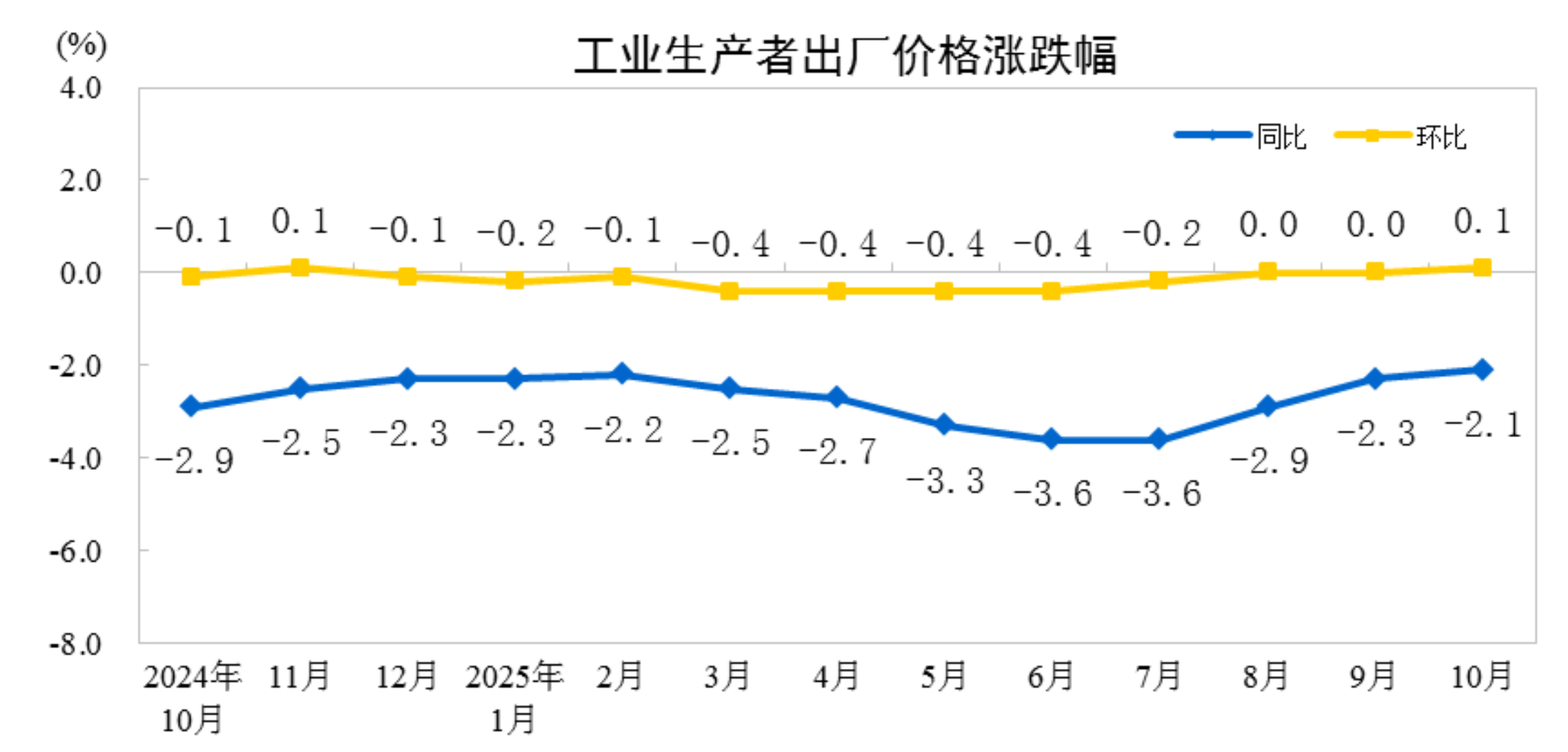
10月份工业生产者出厂价格同比降幅继续收窄 环比由平转涨
Yang Shi Wang· 2025-11-09 02:09
Core Insights - In October 2025, the national industrial producer's ex-factory prices decreased by 2.1% year-on-year, with the decline narrowing by 0.2 percentage points compared to the previous month, while month-on-month, it shifted from flat to an increase of 0.1% [1] - The average industrial producer's ex-factory prices from January to October 2025 fell by 2.7% year-on-year, and the industrial producer's purchase prices decreased by 3.2% [1] Year-on-Year Changes - In October, the prices of production materials dropped by 2.4%, contributing approximately 1.77 percentage points to the overall decline in industrial producer's ex-factory prices. The mining industry saw a price drop of 7.8%, raw materials decreased by 2.5%, and processing industry prices fell by 1.9% [3] - Consumer goods prices decreased by 1.4%, impacting the overall industrial producer's ex-factory prices by about 0.36 percentage points. Food prices fell by 1.6%, while clothing prices decreased by 0.3% [3] Month-on-Month Changes - In October, the prices of production materials increased by 0.1%, contributing approximately 0.08 percentage points to the overall rise in industrial producer's ex-factory prices. The mining industry prices rose by 1.0%, while raw materials remained flat, and processing industry prices increased by 0.1% [8] - Consumer goods prices remained stable, with food and clothing prices each declining by 0.1%, while general daily goods prices increased by 0.7% [8] Price Changes by Category - In the industrial producer's purchase prices, fuel and power prices decreased by 7.4%, agricultural and sideline products fell by 5.2%, and chemical raw materials dropped by 5.0%. However, prices for non-ferrous metal materials and wires increased by 7.5% [7] - The main industry price changes included a 1.6% increase in coal mining and washing, a 5.3% increase in non-ferrous metal mining, and a 2.4% increase in the non-ferrous metal smelting and rolling industry [11][12]
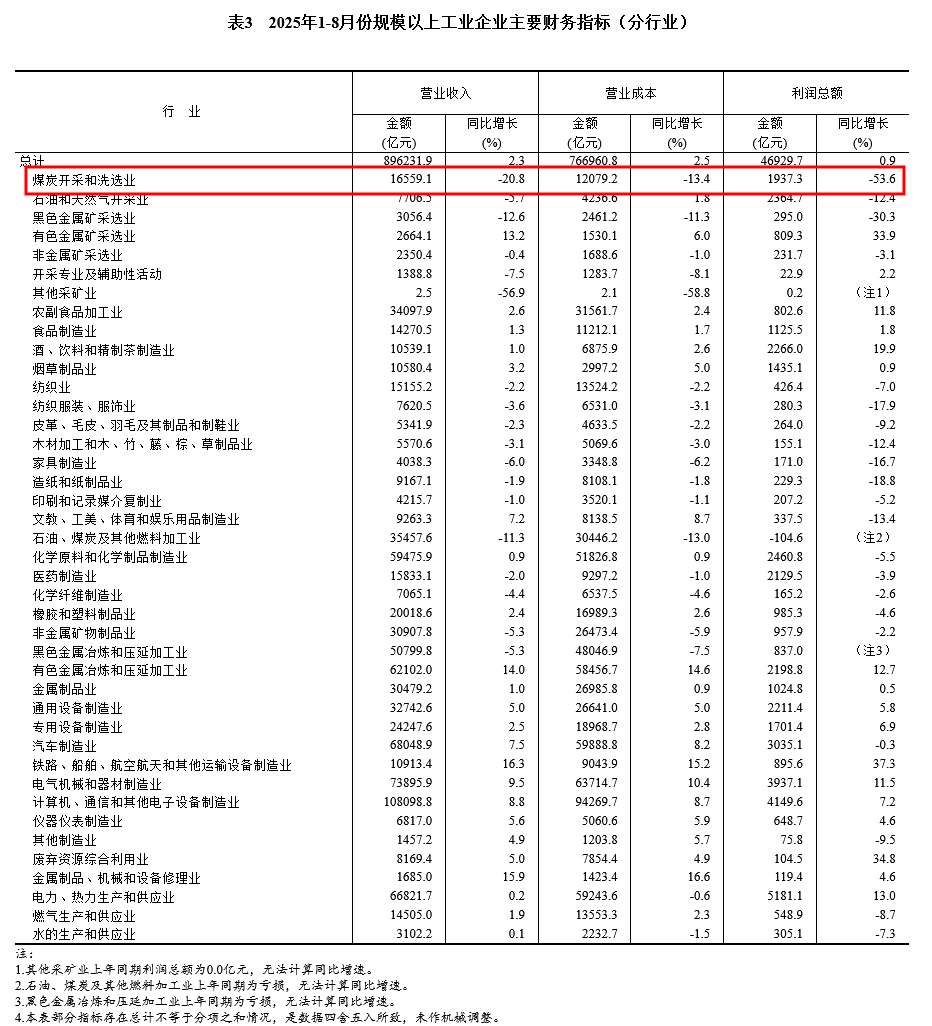
1-8月煤炭开采和洗选业利润总额1937.3亿元
Guo Jia Tong Ji Ju· 2025-09-28 02:26
Core Insights - From January to August, the total profit of industrial enterprises above designated size in China reached 46,929.7 billion yuan, reflecting a year-on-year increase of 0.9% [1] Group 1: Profit by Ownership Type - State-owned enterprises achieved a total profit of 15,156.5 billion yuan, a year-on-year decrease of 1.7% [1] - Joint-stock enterprises reported a total profit of 34,931.9 billion yuan, marking a growth of 1.1% [1] - Foreign and Hong Kong, Macao, and Taiwan-invested enterprises realized a total profit of 11,723.6 billion yuan, up by 0.9% [1] - Private enterprises recorded a total profit of 13,076.1 billion yuan, showing an increase of 3.3% [1] Group 2: Profit by Industry - The mining industry saw a total profit of 5,661.1 billion yuan, down by 30.6% year-on-year [1] - The manufacturing sector achieved a total profit of 35,233.5 billion yuan, reflecting a growth of 7.4% [1] - The electricity, heat, gas, and water production and supply industry reported a total profit of 6,035.1 billion yuan, increasing by 9.4% [1] Group 3: Major Industry Profit Changes - The electricity and heat production and supply industry experienced a profit increase of 13.0% [2] - The non-ferrous metal smelting and rolling processing industry grew by 12.7% [2] - The agricultural and sideline food processing industry saw an 11.8% increase [2] - The electrical machinery and equipment manufacturing industry grew by 11.5% [2] - The computer, communication, and other electronic equipment manufacturing industry increased by 7.2% [2] - The automotive manufacturing industry faced a slight decline of 0.3% [2] - The coal mining and washing industry suffered a significant profit drop of 53.6% [3]
“ESG行动派”年度A股评级更新,行业和地区平均得分前十名出炉
Mei Ri Jing Ji Xin Wen· 2025-07-04 12:02
Core Viewpoint - The "ESG Action Group" data platform has updated its ESG rating data for 2024, reflecting the growing importance of ESG factors in investment decisions and corporate governance [1] Group 1: ESG Ratings Overview - The number of A-share listed companies included in the ESG ratings has increased to 5,354 from 5,330 last year, covering major exchanges in Shanghai, Shenzhen, and Beijing [2] - The average ESG scores for the top five industries are in insurance, catering, construction installation, postal services, and black metal mining [2][5] - The average ESG scores for listed companies in Beijing, Tianjin, Ningxia, Shanghai, and Hainan rank highest among regions, with scores of 59.03, 57.96, 55.84, 54.34, and 53.93 respectively [7] Group 2: Industry and Regional Insights - The analysis indicates that industries with fewer listed companies may show inflated ESG scores due to the "head effect" from top-performing firms [6] - Industries such as ecological protection, power production, and waste resource utilization have high average ESG scores when excluding smaller sample sizes [6] - The ranking of listed companies by ESG scores has changed slightly, with local governments increasingly prioritizing sustainable development through policy initiatives [7] Group 3: Corporate Nature and Board Performance - The ranking of ESG scores by corporate nature is led by central state-owned enterprises, followed by other enterprises, local state-owned enterprises, public enterprises, collective enterprises, foreign enterprises, and private enterprises [8] - The scoring order by listing board remains consistent with last year, with the Sci-Tech Innovation Board leading, followed by the Main Board, Growth Enterprise Market, and North Exchange Market [8] Group 4: Regulatory and Market Developments - The regulatory focus on enhancing ESG rating capabilities in China's capital market has intensified, with the Shanghai Stock Exchange implementing a special action plan to improve ESG ratings [12] - By the end of 2024, 342 listed companies in Shanghai are expected to be included in the MSCI ESG ratings, with 100 companies achieving upgrades in their latest ratings [12] - The action plan emphasizes the importance of both international and domestic ESG rating systems, advocating for a dual benchmarking approach for companies [13]