Automobile Sales

Search documents
提了辆新车发现是展车还不给退?这些维权渠道能帮到你
Xin Lang Cai Jing· 2026-02-12 10:09
Core Viewpoint - The article discusses the issue of dealerships selling display cars as new vehicles, which constitutes a consumer trap and violates consumer rights [3][13]. Group 1: Consumer Rights and Legal Framework - Display cars, although not registered or driven, are considered "used goods" due to prior handling, and dealerships must disclose this information according to the Consumer Rights Protection Law [3][13]. - Concealing the fact that a display car is being sold as new infringes on consumers' right to know and their right to fair trade, allowing consumers to pursue legal action if the dealership refuses to exchange or refund [3][13]. Group 2: Complaint Channels and Their Characteristics - The 12315 platform is an official complaint channel with administrative enforcement power, suitable for serious issues like false advertising and fraudulent sales, though it has a longer processing time [4][14]. - Manufacturer's customer service can be effective since they have management authority over dealerships, but the effectiveness may vary based on the relationship between manufacturers and dealers [4][14]. - Industry associations, such as the Automotive Circulation Association, offer mediation but lack enforcement power, making cooperation from the dealership essential [5][15]. Group 3: Practical Complaint Strategies - Black Cat Complaints serves as a useful tool for consumers, applying pressure on dealerships by publicly exposing complaints and reporting data to regulatory authorities [6][16]. - The platform allows for easy submission of complaints through various channels, making it accessible for consumers who are exhausted from direct negotiations with dealerships [6][17]. - A recommended approach for consumers includes negotiating directly with the dealership, simultaneously filing formal complaints with 12315, and utilizing Black Cat Complaints for broader visibility [8][18]. Group 4: Conclusion and Consumer Empowerment - The article emphasizes that consumers should not feel helpless when facing issues like being sold a display car as new, as they have legal rights and various channels to assert them [9][19]. - The core of effective consumer protection lies in having information and visibility, leveraging both official channels and platforms like Black Cat Complaints to ensure accountability from dealerships [9][19].
中国经济温度计-开门红能持续么?
2026-02-03 02:49
Summary of Key Points from the Conference Call Industry Overview - The report focuses on the Chinese economy, particularly the real estate sector and local government GDP growth targets for 2026, which have been slightly lowered to around 5% [1][6]. Core Insights and Arguments - **Local Government GDP Targets**: Most provinces have maintained or slightly adjusted their growth targets, reflecting a more pragmatic approach rather than a pessimistic sentiment. The average target is around 5.1%, down from 5.4% the previous year [4][6]. - **Real Estate Sector**: There is an increasing narrative of easing in the real estate sector, but no significant measures have been introduced yet. The "three red lines" policy, which previously constrained real estate companies, has seen its practical impact diminish [1][6][7]. - **National Growth Target**: Despite local adjustments, the national growth target is expected to remain around 5%. This is seen as a strategic move to achieve a strong start to the year, allowing for a gradual slowdown later [6][7]. - **Policy Direction**: Future policies are anticipated to be cautious, focusing on targeted demand-side measures to manage the real estate adjustment process. This includes potential mortgage subsidies in cities with strong population inflows and selective easing of purchase restrictions [7][8]. Additional Important Insights - **Economic Fundamentals**: The economic fundamentals are described as stable but not strong. Infrastructure investment has been robust, with government bond issuance reaching a record high of 1.2 trillion RMB in January 2026 [8][10]. - **Export Resilience**: Container throughput has remained stable, indicating that export growth may continue to be resilient [8][18]. - **Consumer Spending**: Consumer demand is lagging, with significant declines in passenger car sales and weak appliance sales, suggesting limited support for consumption growth [8][21][22]. - **Real Estate Transactions**: The overall stability in second-hand housing sales is noted, with weekly transaction volumes remaining consistent [8][25]. This summary encapsulates the key points from the conference call, highlighting the current state of the Chinese economy, particularly in relation to local government targets and the real estate sector, while also addressing broader economic indicators.
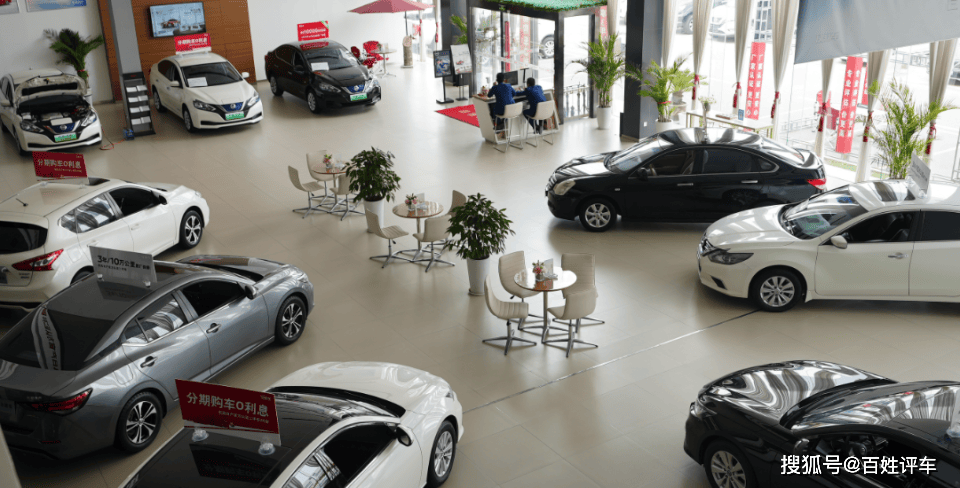
年终变淡季,2026年初4S店冷清到销售提前过年
Sou Hu Cai Jing· 2026-01-28 06:30
Core Viewpoint - The automotive dealership industry is experiencing a significant downturn, characterized by reduced customer traffic and sales, primarily due to policy changes, high inventory pressure, and evolving consumer demands [1][3][16] Group 1: Market Conditions - The end of 2025 and the beginning of 2026 saw a net reduction of 1,480 dealerships in China, with 2,749 stores closing [3] - In the first half of January 2026, dealer customer traffic dropped by 22.6% compared to late December 2025, and order volume plummeted by 54.1% [4][3] - The inventory of passenger vehicles surged to 3.65 million units by the end of 2025, with a turnover period of 66 days, significantly exceeding the healthy international range [6] Group 2: Profitability Challenges - The shift in policy regarding the new energy vehicle purchase tax has led to a demand imbalance, causing dealers to lose motivation to push sales and opt for a "winter retreat" strategy [4] - By the end of 2025, 74.4% of dealers faced price inversion issues, with 43.6% experiencing a price drop exceeding 15% [8] - Dealers are forced to reduce prices to clear inventory, with significant discounts on models like the BMW i7 and Cadillac CT5, but these actions often lack support from manufacturers [8] Group 3: Structural Changes in the Industry - The traditional dealership model is facing a crisis due to deep changes in channel strategies and shifts in consumer preferences [9] - New energy brands are adopting "light models" that reduce operational costs and enhance efficiency, posing a competitive threat to traditional dealerships [11] - The penetration rate of new energy vehicles in lower-tier markets reached 42% in 2025, expected to rise to 45% in 2026, highlighting a missed opportunity for traditional dealerships [15] Group 4: Consumer Behavior Shifts - New energy brands are establishing showrooms in key commercial areas and communities, significantly increasing customer traffic compared to traditional dealerships [13] - The younger consumer demographic prioritizes price transparency and digital experiences, which traditional dealerships struggle to provide [13] - By 2025, 65% of car-buying decisions considered channel service quality as a top factor, indicating a shift in consumer expectations [13] Group 5: Future Outlook - The current downturn in traditional dealerships is seen as a wake-up call for the industry, emphasizing the need for adaptation to new market realities [16] - To survive, traditional dealerships must develop robust profit models, enhance service quality, and explore new growth opportunities in the evolving automotive landscape [16]

已征车购税的车辆退回企业,退税金额如何计算?
蓝色柳林财税室· 2026-01-18 01:58
Core Viewpoint - Taxpayers can apply for a refund of vehicle purchase tax when returning vehicles to manufacturers or sales enterprises, with the refund amount calculated based on the tax already paid and the duration of use [1][3]. Refund Calculation - The refund amount is based on the tax paid, with a deduction of 10% for each year of use from the date of tax payment to the date of refund application [2][4]. - The formula for calculating the refund amount is: Refund Amount = Tax Paid × (1 - Years of Use × 10%) [3]. Case Example - In April 2025, a taxpayer named Li returned a vehicle purchased in January 2024, for which he had paid a vehicle purchase tax of 20,000 yuan. The refund amount calculated would be: 20,000 × (1 - 1 × 10%) = 18,000 yuan [6]. - It is essential that the vehicle is returned to the manufacturer or sales enterprise to qualify for the tax refund [6]. Application Requirements - Taxpayers must accurately fill out the Vehicle Purchase Tax Refund Application Form and provide identification proof along with relevant documentation based on the situation [6]. - For vehicles returned to manufacturers or sales enterprises, a return proof and invoice from the respective entity must be provided [6].

将购买的新车退回后,车辆购置税能退回多少呢?
蓝色柳林财税室· 2025-10-10 09:34
Group 1 - The article discusses the refund process for vehicle purchase tax when a vehicle is returned due to quality issues, highlighting the case of a customer named Xiao Ming who returned a vehicle and applied for a tax refund [2][3]. - According to the "Vehicle Purchase Tax Law of the People's Republic of China," taxpayers can apply for a refund of the vehicle purchase tax if they return a vehicle to the manufacturer or seller, with the refund amount based on the tax paid and reduced by 10% for each year since payment [3][4]. - The calculation formula for the refund amount is specified as: Refund Amount = Tax Paid × (1 - Years of Use × 10%), ensuring that the refund amount cannot be negative [4]. Group 2 - The article provides a reminder that the information shared is for educational purposes and not an official tax standard, encouraging readers to engage in learning and sharing experiences [8].

3 Things Investors Should Know About the New Deal Between Amazon and Hertz
The Motley Fool· 2025-08-26 08:55
Core Insights - Hertz is collaborating with Amazon to sell used rental cars on Amazon's platform, aiming to increase the variety of car brands available for consumers [1][2][3] - The partnership positions Hertz as Amazon Autos' first fleet dealer, expanding the selection of vehicles beyond Hyundai, which is currently the only merchant on the site [5][7] - Hertz has a significant inventory of used cars, with approximately 250,000 vehicles available for sale annually, which aligns with consumer demand for more selection in the used car market [10] Group 1: Partnership Details - Hertz will allow customers to browse and purchase used cars on Amazon, with transactions completed at Hertz Car Sales locations in select cities [7] - The initial rollout will include Hertz locations in Dallas, Houston, Los Angeles, and Seattle, with plans for future expansion to all 45 Hertz Car Sales locations nationwide [7] Group 2: Market Demand - There is a growing consumer demand for a wider selection of used cars, as indicated by the success of Hyundai's participation in Amazon Autos, which has expanded from 48 to 130 cities [9] - Hertz's extensive fleet and variety of car brands position it well to meet this demand, particularly for used vehicles [10] Group 3: Financial Outlook - Hertz has faced financial challenges, including losses in the last six quarters and significant debt of $19.4 billion, which may limit the impact of this partnership on its stock performance [12][13] - In contrast, Amazon is financially stronger and profitable, which may allow it to negotiate favorable terms from the partnership with Hertz [14]