π系列

Search documents
a16z 最新洞察:具身智能从 Demo 到落地,必须跨越的5个鸿沟
3 6 Ke· 2026-01-16 14:02
Core Insights - The article discusses the challenges faced by the robotics industry in transitioning from research to practical deployment, highlighting that the real bottleneck lies in the production system rather than the strength of the models themselves [2][10]. Group 1: Current State of Robotics - The robotics industry has seen significant advancements in the last decade, particularly with the emergence of Visual-Language-Action (VLA) models, which integrate semantic understanding with robotic control [5]. - Despite the progress in research, the deployment of these technologies in real-world scenarios remains limited, with most industrial robots still performing highly deterministic tasks [10][11]. - The gap between research and deployment is characterized by a lack of integration between research labs and industrial systems, leading to a disconnect in capabilities [12][13]. Group 2: Factors Limiting Deployment - Five key factors are identified as barriers to the widespread adoption of embodied intelligence: distribution changes leading to performance drops, reliability thresholds, computational and latency challenges, system integration issues, and maintenance complexities [10][14][17][21][24]. - The performance metrics in research settings do not translate effectively to production environments, where variations in conditions can drastically reduce success rates [15]. - The need for high reliability in production systems contrasts with the performance maximization goals of research, creating a fundamental divide [18]. Group 3: Solutions and Future Directions - To bridge the gap between research and deployment, the industry needs to develop infrastructure akin to DevOps in software, focusing on data collection and operational reliability [28]. - The evolution of robotics is likely to occur in an ecosystem manner, where general capabilities are refined for specific tasks, expanding application boundaries over time [31]. - The competition between the U.S. and China in robotics is framed as a race to solve deployment challenges, with the ability to convert technological advantages into economic value being crucial for future success [32].
自动驾驶的人才,正疯狂涌入具身智能......
自动驾驶之心· 2026-01-13 09:52
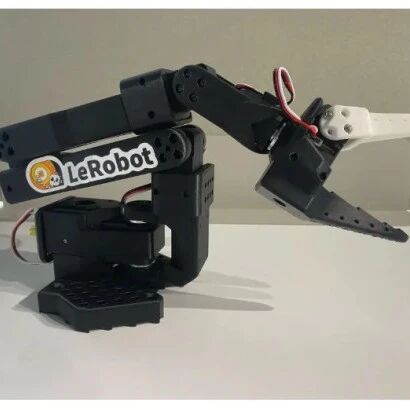
Core Viewpoint - The article discusses the transition from autonomous driving to embodied intelligence, indicating a new wave of technological advancement and talent movement within the industry [2]. Group 1: Industry Trends - The autonomous driving sector is entering a mature phase, while embodied intelligence is emerging as the next significant trend, with many professionals shifting their focus [2]. - Major players in the autonomous driving field are beginning to embrace robotics, forming teams dedicated to embodied intelligence [3]. Group 2: Technological Developments - The π series represents a milestone in the VLA (Vision-Language-Action) field, focusing on continuous technological breakthroughs that redefine the learning paradigms for robots in the generative AI era [4]. - Key developments in the π series include: - π0, which introduces Flow Matching for continuous action trajectory prediction, enhancing precision in manufacturing and autonomous driving scenarios [5]. - π0.5, which achieves a 94% success rate in generalizing complex tasks in unfamiliar environments, significantly reducing data costs by 90% [5]. - π0.6, which utilizes reinforcement learning for zero-shot generalization, achieving 100% task completion rates in industrial settings [5]. Group 3: Learning and Training Challenges - Many newcomers face difficulties in utilizing the π series effectively, often spending significant time troubleshooting without achieving satisfactory results [6][7]. - There is a demand for guided projects to enhance learning and improve job prospects in the field [8]. Group 4: Educational Initiatives - The "Embodied Intelligence Heart" platform has replicated π series methods to address the lack of real-world projects and guidance for learners [9]. - A comprehensive course has been developed, covering hardware, data collection, VLA algorithms, and real-world applications, aimed at providing practical experience [10][14]. - The course includes a SO-100 robotic arm as part of the training package, facilitating hands-on learning [17]. Group 5: Target Audience and Requirements - The course is designed for individuals seeking practical experience in the embodied intelligence field, including those transitioning from traditional CV, robotics, or autonomous driving sectors [24]. - Participants are expected to have a foundational understanding of Python and Pytorch, as well as experience with real machines and VLA algorithms [24].

为什么π系列对行业产生了这么大的影响?
具身智能之心· 2025-12-29 00:04
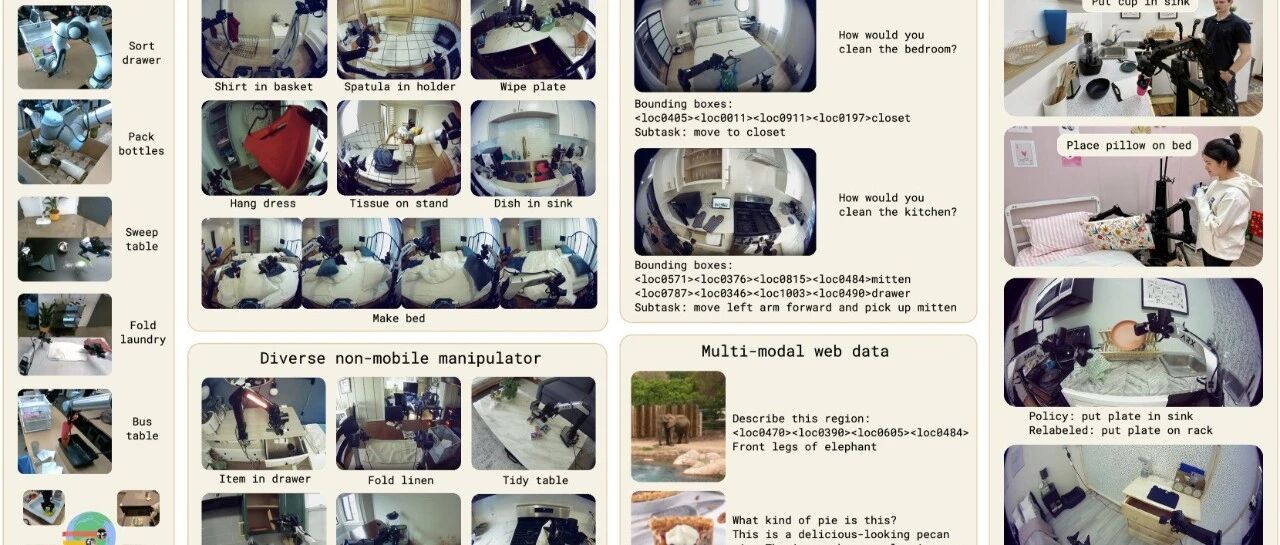
Core Viewpoint - The article discusses the advancements in the π series within the VLA (Vision-Language-Action) field, highlighting its role in transforming robotic learning paradigms and industry applications through continuous technological breakthroughs [2]. Group 1: Technological Advancements - The π0 model introduces Flow Matching for continuous action trajectory prediction, overcoming traditional discrete action precision limitations, providing a foundation for millimeter-level operations in precision manufacturing and autonomous driving scenarios [3]. - The π0.5 model features heterogeneous task collaborative training and hierarchical reasoning, achieving a 94% success rate in generalizing complex tasks in unfamiliar environments, while reducing data costs by 90% through human video training [3]. - The π0.6 model employs RECAP reinforcement learning for zero-shot generalization and efficient fine-tuning, surpassing human efficiency and precision in real-world applications, facilitating flexible production [3]. Group 2: Industry Impact - The π series models serve as a core reference for numerous VLA models in the industry since 2025, enabling the transition of general robots from laboratory settings to real-world applications in industrial manufacturing and home services [3]. - Companies are building their own demo machines based on the π series, such as for tasks like folding clothes and unpacking, indicating the practical implications of the technology [3]. Group 3: Learning and Development Challenges - Many beginners face difficulties in optimizing data and training VLA models based on the π series, with some spending up to six months without achieving satisfactory results [5]. - The article emphasizes the need for guided learning to help individuals gain practical experience and project work for job applications [6][11]. Group 4: Educational Offerings - The company offers a comprehensive course that covers hardware, data collection, VLA algorithms, evaluation, simulation, deployment of mainstream VLA models, and various real machine experiments [13][14]. - Participants in the course will receive a SO-100 robotic arm, enhancing hands-on learning opportunities [16]. Group 5: Target Audience - The course is aimed at individuals seeking practical experience in the VLA field, including students and professionals transitioning from traditional computer vision, robotics, or autonomous driving sectors [24].