《二十一日酉时》

Search documents
将书单主义进行到底︱“我没有原点可以回去,只能沿着道路向前”
Xin Lang Cai Jing· 2025-12-30 09:45
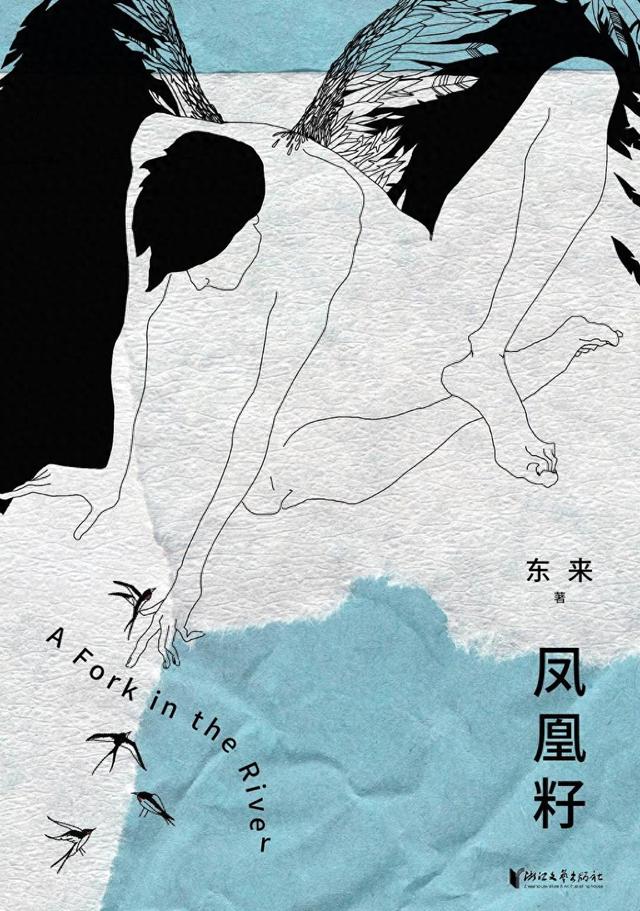
Core Viewpoint - The article discusses the works of contemporary young Chinese authors, highlighting their unique perspectives shaped by their experiences in a rapidly changing society, particularly focusing on themes of urbanization, identity, and cultural heritage. Group 1: Young Authors and Their Works - The term "young authors" is defined as those born in the 1980s and 1990s, reflecting a generation that has experienced significant societal changes in China [1][2]. - The article emphasizes the generational differences within the "post-80s" and "post-90s" groups, noting that their life experiences and emotional perceptions vary greatly due to the rapid societal transformations [1][2]. Group 2: Key Novels Discussed - The first novel discussed is "Phoenix Seed" by Dong Lai, which explores the life of a rural youth who transitions to urban life, highlighting the emotional and psychological struggles associated with this change [3][4]. - The second work, "Going to Shanghai" by Shui Xiaoying, focuses on the experiences of migrant workers, particularly mothers, and their complex relationship with urban life and their hometowns [5][6]. - The third novel, "Long River" by San San, presents a more melancholic view of Shanghai, contrasting the idealized urban life with the reality of disconnection and nostalgia [7][8]. - The fourth book, "Twenty-One Days at You Shi" by Qian Xing, integrates traditional Chinese culture with crime narratives, showcasing a new approach to literature that combines cultural elements with contemporary themes [10][11]. - The final work, "Wei Huang" by Wu Qingyuan, uses science fiction to explore the future of traditional Chinese culture in an AI-dominated world, presenting a unique perspective on cultural preservation [13][14].

青年写作,在时间中沉淀(圆桌谈)
Ren Min Ri Bao Hai Wai Ban· 2025-06-29 22:48
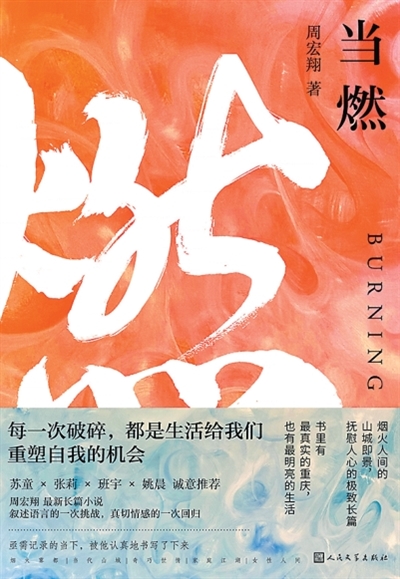
Core Viewpoint - The 12th "Writers' Activity Week" organized by the Chinese Writers Association focuses on the theme of "New Forces in Chinese Literature," highlighting the experiences and challenges faced by a new generation of young writers [5]. Group 1: Young Writers' Experiences - Zhou Wanqing, a young writer, emphasizes the importance of personal stories and the influence of the people she has met on her writing, leading to the creation of her short story collections [6]. - Lin Weipan shares that his journey into literature began with reading "One Hundred Years of Solitude," and his recent work "Dasa" reflects his exploration of Hakka culture [7]. - Zhou Hongxiang discusses his early start in writing and his recent long novel "When It Burns," which is connected to his hometown of Chongqing [8]. - Qian Xing recounts his return to writing after an eight-year hiatus, focusing on the lives of ordinary people he encounters [9]. Group 2: Challenges in Contemporary Writing - Qian Xing notes that the abundance of writing materials today makes it challenging to choose what to focus on, as he balances writing with a full-time job [13]. - Zhou Hongxiang identifies the increasing number of creators and decreasing readers as a significant challenge, leading to a disconnect between writers and their audience [12]. - Zhou Wanqing reflects on the struggle to maintain depth in writing amidst the fast-paced information flow of modern society [11]. Group 3: The Role of Technology and New Media - Lin Weipan argues that AI cannot replace human creativity, and that literature remains a vital form of expression despite technological advancements [10]. - Qian Xing suggests that writers should leverage new media and technology to connect with readers and enhance their storytelling [14]. - Zhou Hongxiang believes that the boundaries between different literary genres are blurring due to the internet, allowing for a more fluid approach to storytelling [15]. Group 4: The Concept of "New Forces" in Literature - The theme of "New Forces" in literature is seen as a call for young writers to produce impactful works that resonate with contemporary issues [17]. - Qian Xing emphasizes that authentic and compassionate narratives hold the most power in today's literary landscape [16]. - Zhou Hongxiang and Lin Weipan agree that the new generation of writers must navigate their unique experiences while contributing to the evolution of literature [16][17].