《司马迁》

Search documents
“写戏是我生命所必需的”(人物)
Ren Min Ri Bao· 2025-10-22 22:21
Core Viewpoint - Gu Qihong, a prominent figure in Chinese drama, has made significant contributions to the field through his historical plays, particularly "Li Bai," which has been performed for over 30 years and has won multiple awards, establishing him as a key player in the genre of literary historical drama [2][4]. Group 1: Career Development - Gu Qihong began his career in the 1960s as a playwright after graduating from Sun Yat-sen University, where he was influenced by his mentor Wang Jisi [3]. - His first successful work, the Peking opera "Sima Qian," was completed in 1979 and won a creative award for the 30th anniversary of the founding of New China [3][4]. - He joined Beijing People's Art Theatre at the age of 49, where he transitioned to writing for modern drama, starting with "Li Bai" [4]. Group 2: Creative Philosophy - Gu Qihong advocates for "transmitting the spirit of history, characters, and authors" in his works, which has garnered attention in the theater community and laid the theoretical foundation for his literary historical dramas [4]. - His writing style incorporates vivid imagery and emotional depth, allowing historical figures to resonate with audiences on a personal level, as seen in his works like "Du Fu" [5]. Group 3: Impact and Legacy - Gu Qihong's plays, including "Li Bai," "Tian Zhi Jiao Zi," and "Zhi Ji," form a trilogy that explores profound themes of human experience and historical reflection [4][5]. - He has written over 90 plays that blend literary quality with emotional resonance, influencing future generations of playwrights [5].


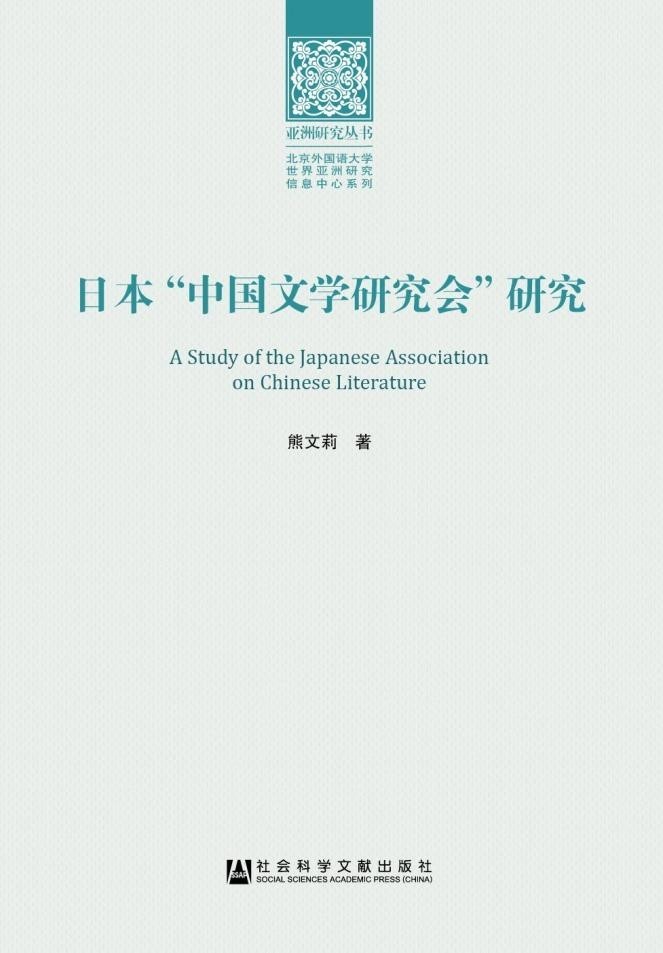
讲座|“民族的触手”:战前日本中国文学研究会的理想与困境
Xin Lang Cai Jing· 2025-10-05 03:04
Core Points - The article discusses the significance of the "Chinese Literature Research Association," established in 1934, as Japan's first organization dedicated to modern Chinese literature research, highlighting its role in countering traditional Sinology and "Shina Studies" [2][3][6] - The lecture at Shanghai International Studies University aims to analyze the founding background, key figures, and academic explorations of the association, particularly focusing on its members' contributions to Sino-Japanese literary studies [1][2] Group 1: Founding and Purpose - The "Chinese Literature Research Association" was founded by key figures such as Takeuchi Yoshimi, Takeda Taijun, and Okazaki Toshio, aiming to study contemporary Chinese literature as a means to challenge the prevailing traditional Chinese studies in Japan [2][3] - The association's establishment was motivated by a desire to promote genuine cultural exchange between China and Japan, despite the political tensions of the time [6][7] Group 2: Key Figures and Their Contributions - Takeuchi Yoshimi's early research emphasized the importance of understanding literature as a reflection of a nation's emotional life, leading him to focus on modern Chinese literature [8][9] - Takeda Taijun's work, particularly his book "Shiji," introduced a spatial historical perspective, critiquing the notion of a singular world center and reflecting on Japan's imperialist ideology [10][11][12] Group 3: Political Context and Challenges - The association's activities were often entangled with political issues, as members had to navigate the complexities of Japan's wartime propaganda while striving for authentic cultural dialogue [6][7] - The founding members experienced a sense of disillusionment with leftist movements, which influenced their decision to pursue Chinese literature as a field of study [14][19]