《杜甫》

Search documents
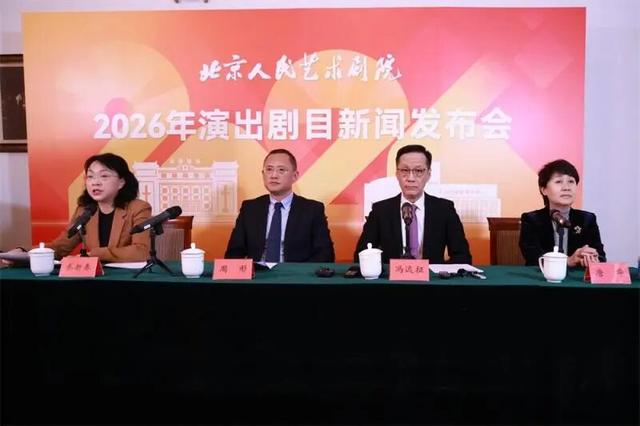
北京人艺2026演出计划来了,《茶馆》《雷雨》《哗变》都在
Xin Lang Cai Jing· 2026-01-20 16:47
Group 1 - The annual performance release for the year features classic plays such as "Teahouse," "Thunderstorm," and "The Incident" [1] - The play "Under the Red Flag," which combines folk customs and historical narratives, will open the new year performances and has been staged over seventy times since its premiere in January 2023 [3] - The "classic repertoire restoration plan" will see the return of "Snowy Night Returnee" and "Camel Xiangzi" in April and May, showcasing both contemporary aesthetic expressions and original versions [3] Group 2 - The play "The Incident" will celebrate its hundredth performance with a version characterized by dense dialogue, emphasizing its educational value in drama [3] - "Thunderstorm," which has been performed over 600 times since its debut in 1954, will be staged during the summer with a new direction by Yang Lixin, aiming to recreate the early appearance of the play [3] - Upcoming performances include "Du Fu" in July and "Li Bai" in August, highlighting the literary spirit of these historical figures [4]

“写戏是我生命所必需的”(人物)
Ren Min Ri Bao· 2025-10-22 22:21
Core Viewpoint - Gu Qihong, a prominent figure in Chinese drama, has made significant contributions to the field through his historical plays, particularly "Li Bai," which has been performed for over 30 years and has won multiple awards, establishing him as a key player in the genre of literary historical drama [2][4]. Group 1: Career Development - Gu Qihong began his career in the 1960s as a playwright after graduating from Sun Yat-sen University, where he was influenced by his mentor Wang Jisi [3]. - His first successful work, the Peking opera "Sima Qian," was completed in 1979 and won a creative award for the 30th anniversary of the founding of New China [3][4]. - He joined Beijing People's Art Theatre at the age of 49, where he transitioned to writing for modern drama, starting with "Li Bai" [4]. Group 2: Creative Philosophy - Gu Qihong advocates for "transmitting the spirit of history, characters, and authors" in his works, which has garnered attention in the theater community and laid the theoretical foundation for his literary historical dramas [4]. - His writing style incorporates vivid imagery and emotional depth, allowing historical figures to resonate with audiences on a personal level, as seen in his works like "Du Fu" [5]. Group 3: Impact and Legacy - Gu Qihong's plays, including "Li Bai," "Tian Zhi Jiao Zi," and "Zhi Ji," form a trilogy that explores profound themes of human experience and historical reflection [4][5]. - He has written over 90 plays that blend literary quality with emotional resonance, influencing future generations of playwrights [5].

“演出+旅游”成为文旅消费新潮流
Huan Qiu Wang· 2025-09-23 03:10
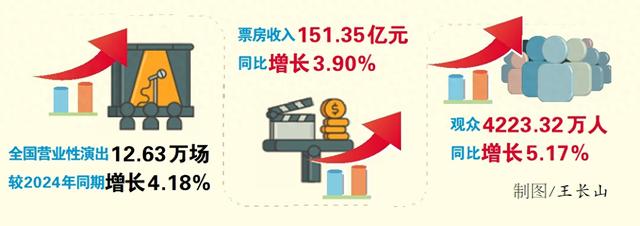
Core Insights - The domestic performance market in China has shown significant growth during the summer of 2025, with 126,300 performances held, a 4.18% increase year-on-year, and box office revenue reaching 15.135 billion yuan, up 3.90% from the previous year [1] - The audience attendance reached 42.2332 million, reflecting a 5.17% increase, indicating a strong demand for live performances [1] - The report highlights a trend towards high-quality performances, with consumers increasingly valuing artistic quality in theater productions [1] Group 1: Market Trends - The performance market is diversifying, with various forms of entertainment such as concerts, music festivals, and theatrical performances gaining popularity [2] - Quality productions remain the mainstay of box office success, with long-standing performances like "Silk Road Flower Rain" and "Du Fu" receiving positive reviews and strong attendance [1][2] - The integration of cultural tourism and performance arts is becoming more pronounced, with venues exploring new projects that reflect local culture [2] Group 2: Consumer Behavior - There is a notable shift towards experience-based consumption, particularly among younger demographics who prioritize emotional value in their spending [3] - The trend of combining travel with performance attendance is emerging, with consumers seeking to enhance their experience by visiting multiple attractions [3] - Various local governments are implementing policies to stimulate performance market consumption, such as cultural consumption vouchers and subsidies [3] Group 3: Economic Impact - Large performances like concerts and music festivals are creating a multiplier effect on local economies, extending consumer spending beyond the event itself [5] - The model of "3-hour performances driving 72-hour consumption" illustrates the potential for performances to boost local tourism and related industries [5] - The connection between performance experiences and local cultural identity is strengthening, enhancing the overall appeal of the destination [5]