皇国史观

Search documents
寰宇平:警惕日本军国主义阴魂不散
Ren Min Ri Bao· 2025-12-25 03:43
Core Viewpoint - The article discusses the resurgence of militarism in Japan, particularly through the actions and statements of political figures like Prime Minister Sanae Takaichi, which reflect a troubling trend of historical revisionism and militaristic rhetoric that threatens regional and global stability [1][9][16]. Group 1: Historical Context and Current Developments - The article highlights the historical context of Japanese militarism, tracing its roots back to events such as the First Sino-Japanese War and the Pacific War, where Japan used the concept of "crisis" to justify military aggression [3][4]. - Recent statements by Japanese leaders, particularly Takaichi's assertion that "Taiwan's issues" could trigger Japan's collective self-defense, mark a significant shift in Japan's military posture and reflect a revival of militaristic ambitions [1][9]. Group 2: Ideological Underpinnings - The article outlines the ideological foundations of Japanese militarism, including the "Emperor-centered" view and the promotion of a sense of racial superiority, which have historically justified Japan's expansionist policies [4][7]. - The militaristic ideology is further reinforced by cultural elements such as the glorification of war and the dehumanization of enemies, which have been perpetuated through education and public discourse [6][11]. Group 3: Political and Military Implications - The rise of "new militarism" in Japan poses significant risks to regional peace, as it undermines commitments made in international agreements regarding Taiwan and other territorial issues [16][20]. - Japan's military budget has seen unprecedented increases, with plans to enhance its defense capabilities, indicating a shift from a defensive to a more aggressive military stance [12][17]. Group 4: International Reactions and Consequences - The article notes that Japan's militaristic rhetoric has drawn criticism not only from neighboring countries but also from within Japan, highlighting a growing concern over the potential for conflict [16][22]. - The international community, including countries like China and South Korea, has expressed strong opposition to Japan's revisionist history and militaristic ambitions, emphasizing the need for accountability and historical reflection [20][24].
警惕日本军国主义阴魂不散(寰宇平)
Ren Min Ri Bao· 2025-12-24 22:59
Core Viewpoint - The article discusses the resurgence of militarism in Japan, highlighting the dangerous implications of recent political statements and actions by Japanese leaders, particularly regarding Taiwan and historical revisionism related to Japan's wartime actions [1][9][16]. Group 1: Historical Context and Military Resurgence - Japan's militaristic rhetoric has resurfaced, with Prime Minister Kishi Nobuo linking Taiwan's situation to Japan's collective self-defense, marking a significant shift in Japan's post-war stance [1][9]. - Historical patterns show that Japan has often framed its military actions as responses to perceived threats, a tactic that has been used since the late 19th century to justify invasions [3][4]. - The ideology of Japanese militarism is deeply rooted in cultural narratives that promote national superiority and the sanctification of war, which have been perpetuated through education and political discourse [5][6][7]. Group 2: Political and Military Developments - The Japanese government has increased defense spending significantly, with a budget proposal for 2025 that includes an additional 1.1 trillion yen, raising total defense expenditures to a record 11 trillion yen [12]. - There is a push within Japan to redefine the Self-Defense Forces as a national defense army, moving away from the post-war pacifist constitution [12][14]. - The political climate in Japan is shifting towards a more aggressive military posture, with calls for a departure from the "peace constitution" and an increase in military capabilities [11][12]. Group 3: Cultural and Educational Implications - The rise of "new militarism" in Japan is accompanied by efforts to revise historical narratives in education, downplaying or denying wartime atrocities such as the Nanjing Massacre [13][20]. - There is a concerted effort by right-wing factions to instill a sense of nationalism that glorifies Japan's military past, which poses risks for future generations [11][13]. - The use of historical revisionism in textbooks reflects a broader trend of denying Japan's wartime responsibilities, which could lead to increased tensions with neighboring countries [13][20]. Group 4: International Relations and Regional Stability - Japan's recent military rhetoric and actions have strained relations with China and South Korea, raising concerns about regional stability and the potential for conflict [16][22]. - The international community is increasingly wary of Japan's militaristic resurgence, with calls for accountability regarding its historical actions and commitments to peace [22][24]. - Japan's attempts to redefine its military role and historical narrative could undermine established international norms and provoke responses from other nations [21][24].
人民日报寰宇平文章:警惕日本军国主义阴魂不散
Xin Hua She· 2025-12-24 16:05
Core Viewpoint - The article emphasizes the persistent threat of Japanese militarism, highlighting recent actions and statements by Japanese officials that suggest a revival of militaristic ideologies and a disregard for historical accountability [1][10][18]. Group 1: Historical Context and Current Developments - The article discusses the historical context of Japanese militarism, tracing its roots back to various conflicts and the ideologies that justified Japan's expansionist actions [3][4][5]. - Recent statements by Japanese Prime Minister Kishi Nobuo linking Taiwan's situation to Japan's self-defense rights are seen as a provocative shift towards militarism, marking a significant departure from post-war pacifism [1][10][13]. Group 2: Ideological Underpinnings - The article outlines how the militaristic ideology in Japan is intertwined with concepts like "Kōkashikan" (the belief in Japan's divine right to rule) and the glorification of the samurai spirit, which have been manipulated to support militaristic agendas [4][5][6]. - The notion of "self-defense" has been historically used to justify aggressive military actions, reflecting a pattern where Japan portrays itself as a victim to rally domestic support for expansionist policies [3][5][6]. Group 3: Political and Military Implications - The article highlights the increasing military budget, which has reached a record of approximately 11 trillion yen, indicating a shift towards a more aggressive military posture [13]. - The push for revising military terminology and the potential elevation of the Self-Defense Forces to a formal military status are seen as steps towards normalizing militarism in Japan [13][14]. Group 4: Cultural and Educational Aspects - The article points out the ongoing efforts to revise historical narratives in educational materials, downplaying or denying Japan's wartime atrocities, which is part of a broader trend of historical revisionism [14][15]. - The influence of right-wing groups in shaping public perception and education about Japan's militaristic past is noted, with implications for future generations [12][14]. Group 5: International Relations and Regional Stability - The article discusses the implications of Japan's militaristic resurgence on regional stability, particularly in relation to China and Korea, where Japan's historical actions continue to evoke strong reactions [17][20]. - The potential for Japan's militarism to disrupt the post-war international order and provoke conflicts is emphasized, with calls for the international community to remain vigilant against these trends [21][22].
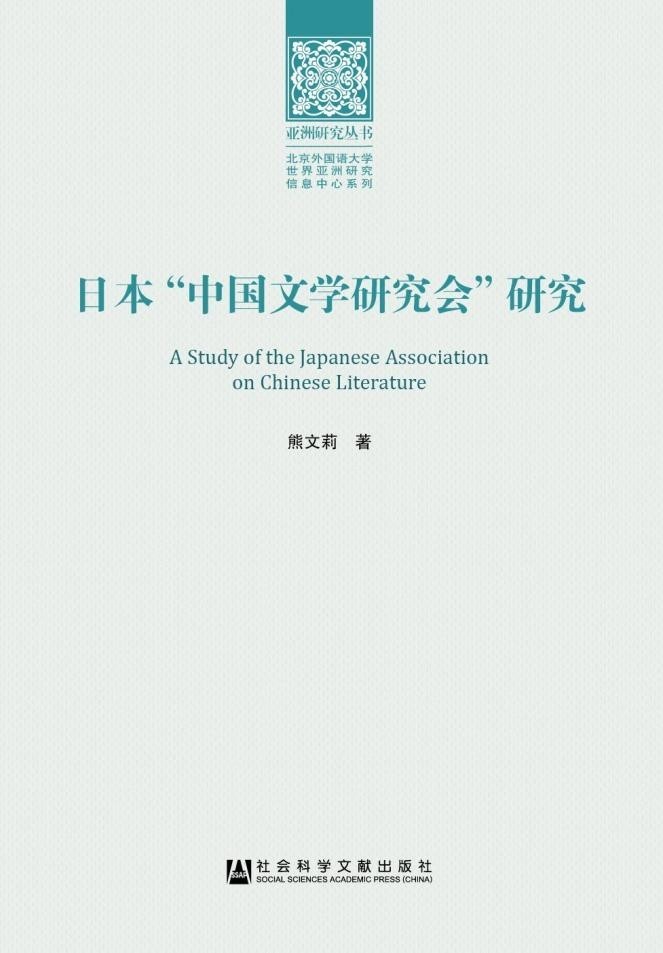
讲座|“民族的触手”:战前日本中国文学研究会的理想与困境
Xin Lang Cai Jing· 2025-10-05 03:04
Core Points - The article discusses the significance of the "Chinese Literature Research Association," established in 1934, as Japan's first organization dedicated to modern Chinese literature research, highlighting its role in countering traditional Sinology and "Shina Studies" [2][3][6] - The lecture at Shanghai International Studies University aims to analyze the founding background, key figures, and academic explorations of the association, particularly focusing on its members' contributions to Sino-Japanese literary studies [1][2] Group 1: Founding and Purpose - The "Chinese Literature Research Association" was founded by key figures such as Takeuchi Yoshimi, Takeda Taijun, and Okazaki Toshio, aiming to study contemporary Chinese literature as a means to challenge the prevailing traditional Chinese studies in Japan [2][3] - The association's establishment was motivated by a desire to promote genuine cultural exchange between China and Japan, despite the political tensions of the time [6][7] Group 2: Key Figures and Their Contributions - Takeuchi Yoshimi's early research emphasized the importance of understanding literature as a reflection of a nation's emotional life, leading him to focus on modern Chinese literature [8][9] - Takeda Taijun's work, particularly his book "Shiji," introduced a spatial historical perspective, critiquing the notion of a singular world center and reflecting on Japan's imperialist ideology [10][11][12] Group 3: Political Context and Challenges - The association's activities were often entangled with political issues, as members had to navigate the complexities of Japan's wartime propaganda while striving for authentic cultural dialogue [6][7] - The founding members experienced a sense of disillusionment with leftist movements, which influenced their decision to pursue Chinese literature as a field of study [14][19]