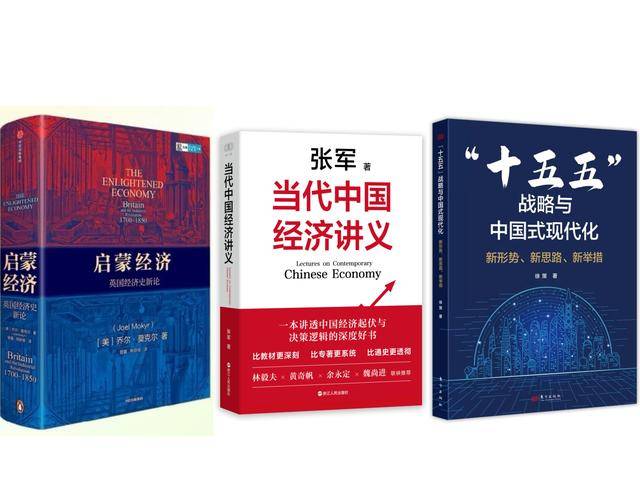
《启蒙经济:英国经济史新论》

Search documents
案头书|经济持续增长的真正源头
Sou Hu Cai Jing· 2026-01-09 11:14
Core Insights - The article discusses Joel Mokyr's groundbreaking work "Enlightened Economy," which challenges the "technological determinism" framework in explaining the Industrial Revolution, emphasizing the role of the Enlightenment and institutional environments in fostering economic growth [3][4]. Group 1: Industrial Revolution Insights - Mokyr argues that the Industrial Revolution was not solely a product of technological breakthroughs but rather a result of the Enlightenment's "intellectual revolution" and the resonance with institutional environments [3][4]. - He highlights the importance of "knowledge capitalization and sharing" mechanisms that transformed technological inventions from random attempts to systematic dissemination, serving as the true source of sustained economic growth [3][4]. - The article critiques the traditional view that focuses on technology alone, suggesting that the real question is why technology was created, improved, and widely applied at unprecedented speeds during this period [3][4]. Group 2: Knowledge Sharing and Economic Development - The article draws parallels between Mokyr's framework and China's rapid industrialization over 75 years, attributing it to a belief in knowledge sharing under the mission-driven leadership of the Communist Party [6]. - It emphasizes that the Chinese government's commitment to improving cultural levels and industrialization through science and technology, along with supportive industrial policies, laid the foundation for knowledge sharing and free flow [6]. - The significance of Mokyr's work is highlighted as a historical reference for understanding China's current strategy to develop "new quality productivity," which requires not just investment in R&D but also the creation of a vibrant innovation ecosystem [6].

2025年诺奖得主莫克尔:启蒙经济视角下英国现代经济增长的起源
Sou Hu Cai Jing· 2025-10-13 14:33
Core Insights - The 2025 Nobel Prize in Economic Sciences was awarded to Joel Mokyr, Philippe Aghion, and Peter Howitt for their contributions to understanding innovation-driven economic growth [2][4] - The Nobel Committee emphasized the importance of managing creative destruction constructively to avoid hindering innovation by established companies and interest groups [4] Group 1: Economic Growth and Beliefs - Economic changes in any period heavily depend on people's beliefs, more so than most economists acknowledge [6][7] - Mokyr's work highlights that the Enlightenment era significantly influenced economic outcomes, suggesting that ideology and culture play crucial roles in economic results [6][8] Group 2: Historical Context of Economic Transformation - Between 1700 and 1850, the UK experienced profound economic changes, with the population more than doubling and urbanization increasing significantly [9][11] - By 1850, 45% of the population lived in towns, up from 18% in 1700, indicating a shift towards market dominance in daily economic activities [9][10] Group 3: The Role of Ideas and Intellectual Competition - The competition among intellectuals, scientists, and entrepreneurs during the Industrial Revolution was pivotal in shaping economic development [7][8] - The emergence of dominant ideas often depended on favorable environments, but historical uncertainty and timing also played critical roles in their success [8][9] Group 4: Industrial Revolution and Economic Leadership - The Industrial Revolution marked the beginning of modern economic growth, with the UK becoming the undisputed world economic leader by the time of the Crystal Palace Exhibition in 1851 [10][11] - The period saw a significant transformation in consumption patterns and living standards, with luxury goods becoming accessible to a broader segment of the population [9][10]