
知识共享

Search documents
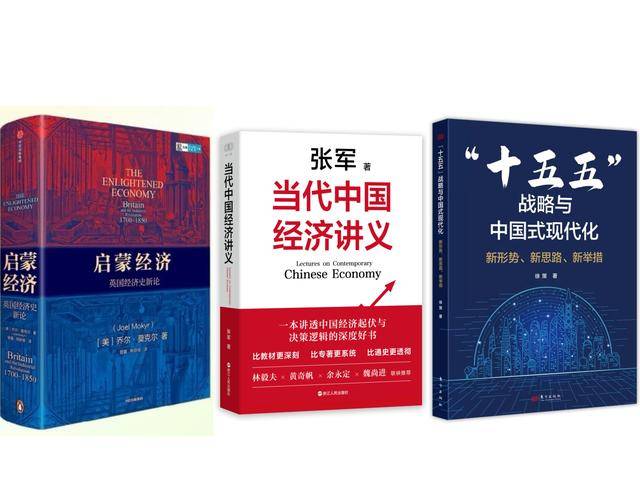
案头书|经济持续增长的真正源头
Sou Hu Cai Jing· 2026-01-09 11:14
Core Insights - The article discusses Joel Mokyr's groundbreaking work "Enlightened Economy," which challenges the "technological determinism" framework in explaining the Industrial Revolution, emphasizing the role of the Enlightenment and institutional environments in fostering economic growth [3][4]. Group 1: Industrial Revolution Insights - Mokyr argues that the Industrial Revolution was not solely a product of technological breakthroughs but rather a result of the Enlightenment's "intellectual revolution" and the resonance with institutional environments [3][4]. - He highlights the importance of "knowledge capitalization and sharing" mechanisms that transformed technological inventions from random attempts to systematic dissemination, serving as the true source of sustained economic growth [3][4]. - The article critiques the traditional view that focuses on technology alone, suggesting that the real question is why technology was created, improved, and widely applied at unprecedented speeds during this period [3][4]. Group 2: Knowledge Sharing and Economic Development - The article draws parallels between Mokyr's framework and China's rapid industrialization over 75 years, attributing it to a belief in knowledge sharing under the mission-driven leadership of the Communist Party [6]. - It emphasizes that the Chinese government's commitment to improving cultural levels and industrialization through science and technology, along with supportive industrial policies, laid the foundation for knowledge sharing and free flow [6]. - The significance of Mokyr's work is highlighted as a historical reference for understanding China's current strategy to develop "new quality productivity," which requires not just investment in R&D but also the creation of a vibrant innovation ecosystem [6].

首图助推更多名家书房落成开放
Xin Lang Cai Jing· 2025-12-24 14:45
Core Viewpoint - The establishment of "Chen Xia Study" transforms private collections into public library resources, enhancing the cultural landscape of Beijing and promoting knowledge sharing and cultural inheritance [1][2] Group 1: Overview of "Chen Xia Study" - "Chen Xia Study" is named after professors Chen Pingyuan and Xia Xiaohong, featuring an initial collection of 13,000 volumes, including personal works, edited collections, research materials, and signed books from academic peers [1] - The study will serve as a public space for reading, academic lectures, thematic seminars, and book salons, aiming to connect academia with the public and disseminate academic research to a broader audience [1] Group 2: Impact on Public Library Services - The unique and scenario-based construction of "Chen Xia Study" enriches library services, providing citizens with a cultural space that combines knowledge and experiential learning [2] - The capital library plans to establish more famous authors' studies, promoting knowledge sharing and cultural co-construction to deepen the public's reading engagement and enhance the cultural foundation of Beijing [2]
让传统继续呼吸 从拉美经验看“活态遗产”的全球意义
Jin Rong Shi Bao· 2025-10-24 02:02
Core Insights - The article emphasizes the importance of intangible cultural heritage (ICH) as a living expression that evolves and adapts in contemporary society, rather than being a relic of the past [1][2][3] Group 1: Definition and Importance of ICH - ICH is redefined as a source of social energy that connects identity, memory, and community, rather than merely a nostalgic object [1][2] - The concept of "living heritage" was introduced by Mexican anthropologist Guillermo Bonfil Batalla, highlighting that heritage is a dynamic expression of beliefs and skills [2][3] Group 2: Latin America's Approach to ICH - Latin American scholars reject the "museumization" of culture, advocating for a view of heritage as a living, evolving entity that is continuously reinterpreted [3][4] - In Peru, the "Cultura Viva" initiative integrates ICH projects with community development, emphasizing the role of culture in improving social welfare and self-esteem [4] Group 3: Globalization and ICH - The article discusses how globalization can lead to the commodification of culture, but Latin America's experience shows that true globalization involves mutual learning and cultural resilience [5][6] - The Day of the Dead in Mexico exemplifies how ICH can be reinterpreted in global culture while retaining its core essence [6] Group 4: Lessons for China - Latin America's experience serves as a reference for China in understanding "living heritage," transitioning from mere protection to mutual learning and cultural exchange [7][8] - The integration of digital heritage and traditional craft revitalization in China highlights the importance of community participation in cultural preservation [7][8] Group 5: The Future of ICH - The article concludes that the future of ICH lies in maintaining its vitality and relevance in modern contexts, allowing for new interpretations and expressions [8]