《我的天才女友》

Search documents
“意大利电影周”伴申城影迷过新年
Xin Lang Cai Jing· 2026-01-03 05:56
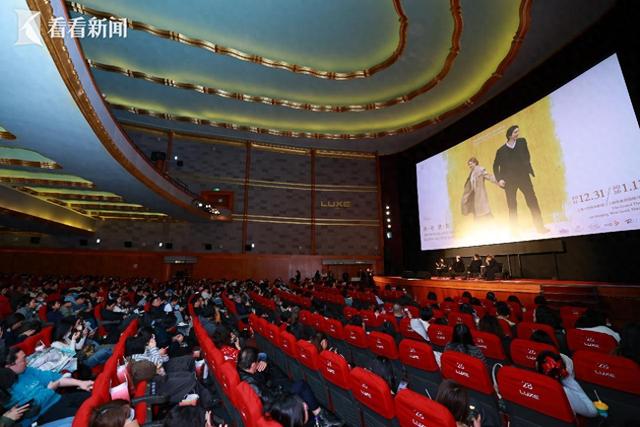
Core Insights - The "Italian Film Week" special event in Shanghai marks the first New Year's celebration organized by the Shanghai Art Film Alliance since its establishment in 2013, featuring prominent Italian filmmakers and actors [1] Group 1: Event Overview - The "New Year Italian Film Week" runs from December 31, 2025, to January 11, 2026, lasting twelve days and showcasing eight notable Italian films [3] - The event aims to celebrate and appreciate the support of film enthusiasts over the past twelve years [1] Group 2: Featured Films - The lineup includes: 1. "The Passenger," directed by Michelangelo Antonioni and starring Jack Nicholson, explores the consequences of identity swapping [3] 2. "The Dawn," a representative work by Saverio Costanzo, tells the story of a young girl navigating a harsh coming-of-age experience amidst desire and power [3] 3. "Hungry Hearts," another film by Saverio Costanzo, depicts a desperate story of obsessive motherhood turning a family into a sterile prison [3] 4. "The Solitude of Prime Numbers," adapted from Paolo Giordano's novel, focuses on how childhood trauma affects life choices and relationships [3] 5. "Eclipse," the third part of Antonioni's "Alienation Trilogy," features Alain Delon and Monica Vitti, telling the story of a stockbroker and his client's daughter [3] 6. "Deep Red," directed by Dario Argento with music by Goblin, narrates the tale of a British pianist caught in a murder case in Rome [3] 7. "The Leopard," a transitional work by Visconti starring Claudia Cardinale, reveals family secrets when a woman returns to her ancestral home [3][4] 8. "White Nights," another Visconti film based on Dostoevsky's work, explores a young woman's emotional turmoil between a year-long love promise and a brief encounter [4] Group 3: Additional Activities - The event includes complementary activities, merging film screenings, performances, and theatrical adaptations, enhancing the cultural experience for attendees [8] - The original Italian stage adaptation of "My Brilliant Friend," based on Elena Ferrante's bestselling novel, will also be presented in Shanghai, with tickets selling out quickly [6]

被爽剧惯坏的观众,容不下一个脆弱的女主角?
3 6 Ke· 2025-12-03 03:33
Group 1 - The article discusses the evolution of female narratives in the 21st century, highlighting the friendship between two female creators, Chen Ying and Zhang Yueran, and their shared literary experiences [1][3][5] - Their friendship began in 2017 during a literary trip to Italy, where they connected over their admiration for Italian author Elena Ferrante and her works [1][3][5] - The dialogue between Chen and Zhang reflects a broader trend in female self-narration, emphasizing the importance of personal experiences and the need for women to express their stories [12][18][30] Group 2 - The article notes a resurgence of autobiographical narratives by women in recent years, with authors like Yang Benfen and Wang Wan exploring ordinary lives and struggles [18][21][30] - Chen Ying and Zhang Yueran discuss the shift from earlier female narratives that emphasized material prosperity to contemporary stories that focus on personal struggles and finding one's voice [18][24][30] - The concept of "weak female narratives" is introduced, suggesting that these stories resonate more with readers by reflecting real-life complexities and emotional truths [41][43][46] Group 3 - The article highlights the changing dynamics of female friendships in literature, moving from simplistic portrayals to more complex and nuanced relationships [46][51][53] - Chen Ying emphasizes the need for female friendships to be recognized as public and enduring relationships, akin to male friendships, rather than private and transient [51][53] - The discussion includes the impact of societal structures on female narratives, suggesting that women's fluid social positions allow for diverse and dynamic friendships [53][55]

字幕从业者,如何夺回女性的语言?
Hu Xiu· 2025-05-21 08:09
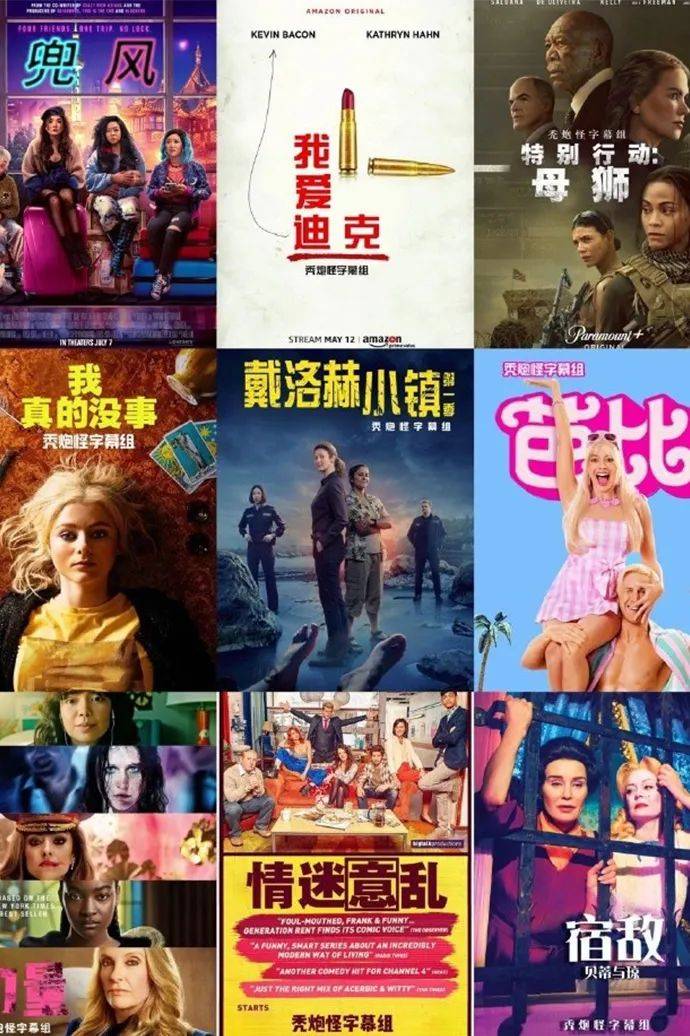
Core Viewpoint - The article discusses the issues surrounding the translation of film titles, particularly focusing on the gender implications and the visibility of women in the translated titles, highlighting the need for a more gender-sensitive approach in translation practices [2][11][21]. Group 1: Translation Issues - The translation of the film "Young Woman and the Sea" to "泳者之心" (Heart of the Swimmer) has been criticized for obscuring the female identity central to the story [1][2]. - Previous translations have also faced scrutiny for reinforcing gender stereotypes, such as translating "Madam President" as "总统夫人" (First Lady) instead of "总统女士" (Madam President) [3][11]. - The article emphasizes that many translations prioritize male perspectives, leading to a misrepresentation of female characters and narratives [17][21][24]. Group 2: Feminist Translation Practices - The "秃炮怪字幕组" (Bald Cannon Subtitle Group) has adopted feminist translation strategies, such as renaming shows to reflect a more accurate representation of female characters, like changing "Funny Woman" to "风趣女子" (Funny Woman) [4][19]. - The group has also implemented strategies like "hijacking" and "supplementing" to challenge patriarchal narratives and enhance the visibility of women in translations [29][38]. - The article highlights the importance of maintaining a gender-friendly approach in translation, which includes not altering female characters' language to fit traditional norms [75][76]. Group 3: Cultural and Ideological Implications - The article discusses how translation practices can reflect and perpetuate cultural biases, particularly in the context of gender, where women's identities are often marginalized [17][66]. - It points out that the translation of titles and dialogues can either reinforce or challenge existing power structures, making the role of translators crucial in shaping narratives [62][84]. - The article concludes that the evolution of feminist translation practices is essential for creating a more equitable representation of women in media [27][85].
男导演能拍好女性作品吗?
Hu Xiu· 2025-05-18 03:27
Group 1 - The controversy surrounding the translation of feminist works by male translators raises questions about gender identity in literary creation [1][2][4] - The discussion extends to whether specific groups have the legitimacy to interpret certain topics, such as whether male directors can accurately portray female characters or if able-bodied actors can play disabled roles [1][2][15] - The issue of "writing rights" is highlighted, noting that historically, many significant concepts regarding women have been articulated by male authors [4][8] Group 2 - The emergence of identity politics in literature prompts a reevaluation of how identity influences cultural life and artistic expression [2][21] - The distinction between male and female authorship is emphasized, with a focus on the challenges female writers face in gaining recognition and the societal structures that hinder their visibility [9][22] - The concept of "internal perspective" is discussed, suggesting that authentic representation in storytelling requires the involvement of those from the represented group [15][18] Group 3 - The film industry is noted for its evolving dynamics, where the representation of marginalized groups is increasingly being questioned, leading to a demand for more authentic narratives [17][20] - The discussion includes the impact of gender on creative processes, with examples of how female directors may approach filmmaking differently than their male counterparts [20][21] - The need for more diverse voices in literature and film is underscored, as the current landscape often limits creators to narratives tied to their identities [22][23]