《数字贸易产教融合共同体运作模式与管理规范》

Search documents
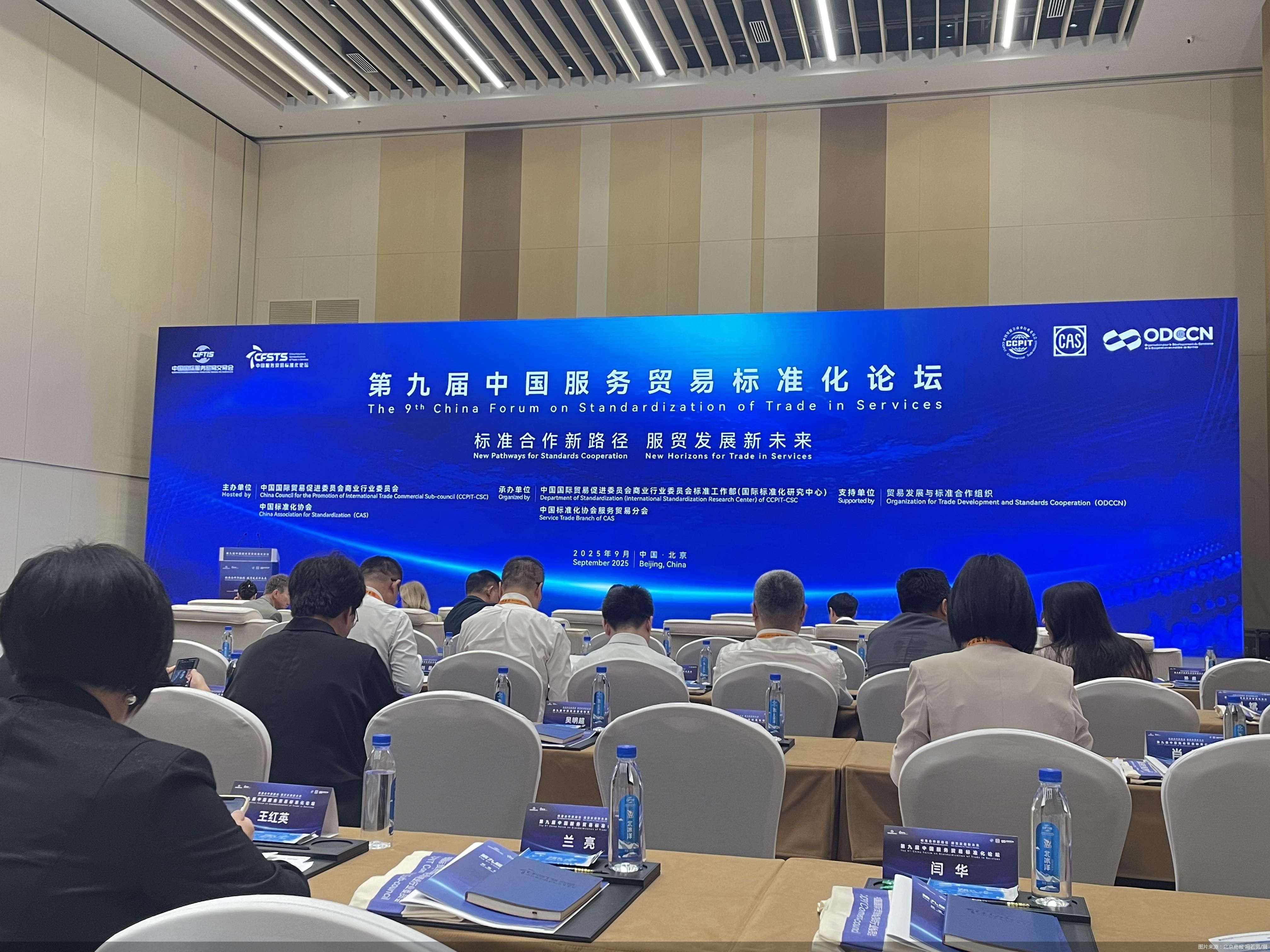
强化国际话语权 服务贸易新标准发布
Bei Jing Shang Bao· 2025-09-12 13:09
Core Viewpoint - The rapid development of international service trade has made standardization in the service industry a crucial area for international economic cooperation, highlighted by the recent International Service Trade Standardization Forum held on September 12, themed "New Pathways for Standard Cooperation, New Future for Service Trade" [1] Group 1: Importance of Standardization - The forum aims to establish compliance support platforms for Chinese enterprises to navigate international market rules, thereby enhancing China's international voice in service trade standardization [4] - Standardization is increasingly recognized as essential for improving competitiveness and sustainable development as Chinese enterprises expand globally [5] - The complexity of the current global environment necessitates exploring new pathways for standard cooperation to address the evolving challenges in service trade [5] Group 2: Current Trends and Challenges - China's service trade is experiencing a transformation period, with new technologies and business models emerging, which raises the demand for higher adaptability and resilience in standardization [5] - The global service trade market is projected to reach over $1 trillion in 2024, with China being the second-largest service trade nation, showing a 13.2% year-on-year growth, surpassing the global average growth rate of 4.2% [7] - Despite the growth, discrepancies between domestic and international standards create "invisible barriers" that hinder the free flow of products across borders [7] Group 3: Initiatives and Developments - The forum announced the launch of 19 new group standards, including guidelines for digital trade and cross-border e-commerce logistics, aimed at enhancing standardization in key sectors [8] - The establishment of various technical committees will facilitate the development of diversified standards in cultural and creative industries, promoting participation in international standard formulation [8] - The transition from being a "follower" to a "standard setter" is evident, with the release of the 2025 "Service Trade Standardization China Case," showcasing ten selected standard projects [9] Group 4: Future Directions - China's participation in international standard organizations is increasing, with a significant number of new technical committees related to service trade being established, indicating a growing influence in this area [10] - The consensus among experts emphasizes that standards are not only institutional support for service trade but also a vital link for innovation, cooperation, and inclusivity [11] - Future efforts will focus on deepening standard cooperation, enhancing standard supply and promotion, and increasing the participation of small and medium-sized enterprises in global service trade [11]

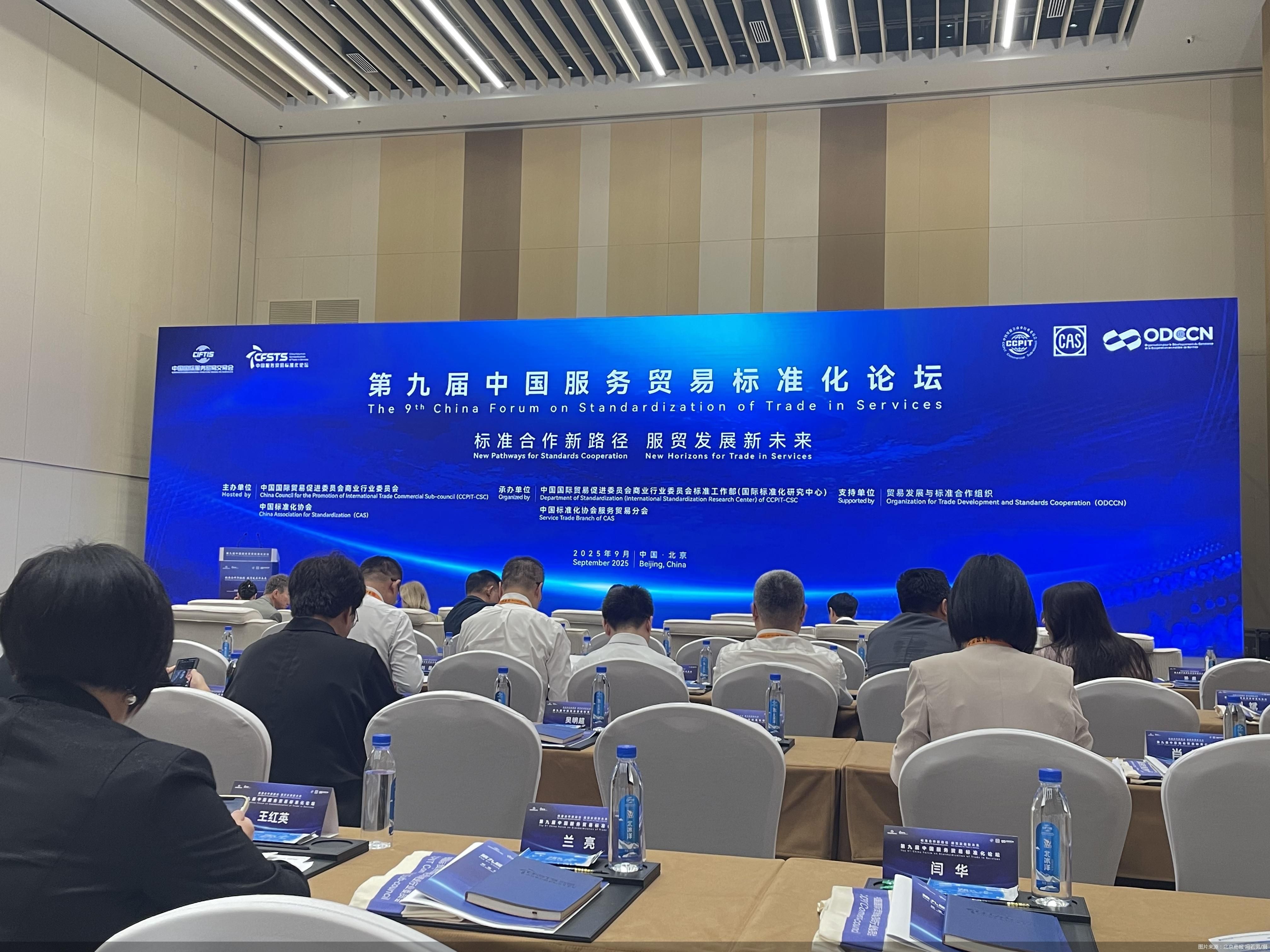
2025服贸会|强化国际话语权 服务贸易新标准发布
Bei Jing Shang Bao· 2025-09-12 12:58
Core Viewpoint - The rapid development of international service trade has made standardization in the service industry a crucial area for international economic cooperation, highlighted by the recent International Service Trade Standardization Forum held on September 12, 2023, under the theme "New Pathways for Standard Cooperation, New Future for Service Trade" [1] Group 1: Forum Objectives and Initiatives - The forum aims to establish a compliance support platform for Chinese enterprises to navigate international market rules, enhancing China's international voice in service trade standardization [3] - A series of industry standards were released, and international platforms and projects were initiated to support the globalization of Chinese enterprises [3][8] Group 2: Challenges and Adaptation - The increasing complexity of the global market and emerging technologies pose new challenges for standardization in service trade, necessitating higher adaptability and resilience from China's service trade sector [4] - The Ministry of Commerce plans to strengthen inter-departmental collaboration and promote standardization in emerging industries to meet these challenges [4] Group 3: Importance of Standardization - Standardization is recognized as a universal language that enhances service facilitation, productivity, and reduces transaction costs, thereby providing a stable institutional guarantee for enterprises to engage in global cooperation [5][6] - The lack of unified global standards creates "invisible barriers" that hinder enterprises' international expansion, making the push for service trade standardization essential [6] Group 4: Growth and Competitiveness - China's service trade scale is projected to exceed $1 trillion in 2024, ranking second globally with a year-on-year growth of 13.2%, outpacing the global average growth rate of 4.2% [7] - Despite the growth, discrepancies between domestic and international service standards create challenges for free trade, highlighting the need for unified technical specifications [7] Group 5: New Standards and Initiatives - The forum announced the launch of 19 group standards, including guidelines for digital trade and cross-border e-commerce logistics, aimed at enhancing standardization in key sectors [8] - The establishment of technical committees for standardization in various sectors, including cultural and creative products, is part of the effort to provide diverse standards and participate in international standard development [8] Group 6: Transition from Follower to Leader - China's standardization process is evolving from being a "follower" to a "creator," with the release of the 2025 "Service Trade Standardization China Case" showcasing ten selected standards [9] - Active participation in international standard organizations is enhancing China's influence in service trade standardization [10] Group 7: Future Directions - Experts emphasize that standardization is not only a support system for service trade development but also a key link for innovation, cooperation, and inclusivity [11] - Future efforts will focus on deepening standard cooperation, enhancing standard supply and promotion, and increasing participation from small and medium-sized enterprises to drive high-quality global service trade development [11]