《新青年》杂志

Search documents
沙滩北街:沙痕载史,古巷留声(北京胡同时光叙事之二十六)
Bei Jing Ri Bao Ke Hu Duan· 2026-02-20 03:52
Core Viewpoint - The historical significance of Shatan North Street is highlighted, showcasing its evolution from a low-lying sandy area during the Yuan Dynasty to a vibrant cultural and educational hub in modern China, particularly during the New Culture Movement and the May Fourth Movement [1][2][4][10]. Historical Development - In the Yuan Dynasty, Shatan North Street was characterized by its sandy terrain due to the nearby Tonghui River, which contributed to the accumulation of sand in the area [1]. - By the Ming Dynasty, the area began to develop as part of the inner city, with the establishment of residences and a small village, gradually leading to the formation of a street [2]. - The Qing Dynasty saw significant changes, with the area being transformed into a bustling street lined with residences and shops, particularly after the establishment of the Eight Banners system [2][3]. Cultural Significance - The establishment of the Imperial University (京师大学堂), which later became Peking University, marked a pivotal moment in the cultural landscape of Shatan North Street, serving as a center for new ideas and educational reform [4][6]. - The iconic "Red Building," constructed between 1916 and 1918, became a symbol of modern education in China, featuring advanced facilities for its time [5][6]. Key Figures and Events - Influential figures such as Chen Duxiu and Li Dazhao played crucial roles in the New Culture Movement while associated with Shatan North Street, fostering a rich intellectual environment [6][7][9]. - The May Fourth Movement, a significant anti-imperialist and cultural revolution, was notably centered around Shatan North Street, with the Red Building serving as a command center for the movement [9]. Modern Developments - After the victory in the Anti-Japanese War, Shatan North Street experienced a revival, with the Red Building being restored and repurposed as a memorial for the New Culture Movement [10]. - The area has been designated as a key cultural heritage site, preserving its historical significance and continuing to serve as a center for education and cultural remembrance [10].
最舒服的活法:不回应恶意,不共鸣悲情,不执念亏损
洞见· 2025-08-08 12:37
Core Viewpoint - The article emphasizes the importance of not responding to negativity, avoiding excessive empathy, and letting go of past losses to maintain a positive and fulfilling life [5][10][20]. Group 1: Not Responding to Malice - The article illustrates the idea that engaging with malicious comments or attacks only serves to empower the aggressor and drain one's own energy [7][8]. - It cites the example of Hu Shi, who chose not to retaliate against critics, leading to their eventual silence [7]. - The recommended approach is to treat malice as background noise and not to engage, thereby protecting one's mental well-being [8][12]. Group 2: Avoiding Excessive Empathy - The article discusses a psychological experiment showing that excessive empathy can harm one's own mental state, as it activates the same pain perception areas in the brain [11]. - It highlights the story of a psychologist who learned to maintain emotional distance from patients to avoid absorbing their negativity [11][18]. - The message is that while empathy is important, over-identifying with others' suffering can lead to self-inflicted emotional pain [11][18]. Group 3: Letting Go of Loss - The article addresses the tendency to cling to losses, which can lead to greater emotional distress and hinder personal growth [21][23]. - It recounts the experience of scholar Ji Xianlin, who faced significant loss but chose to move forward rather than dwell on what was lost [26][30]. - The key takeaway is to focus on what one still has and to release attachments to the past, allowing for new opportunities to emerge [33].

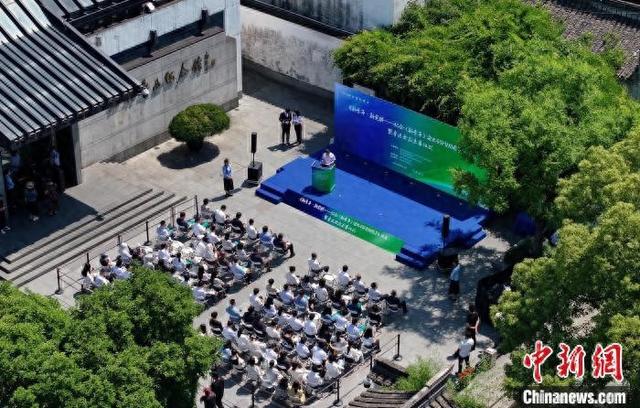
《新青年》杂志创刊110周年 鲁迅故乡展出76件珍贵文物
Zhong Guo Xin Wen Wang· 2025-05-13 15:36
Core Viewpoint - The exhibition "New Youth · New Awakening - Commemorating the 110th Anniversary of the 'New Youth' Magazine" highlights the historical significance of the magazine in promoting cultural and ideological liberation in China, marking a pivotal moment in the New Culture Movement and the May Fourth Movement [1][3]. Group 1: Exhibition Details - The exhibition consists of two main sections: "Igniting the Torch of New Culture" and "Sounding the Horn of a New Era," showcasing historical materials, images, and artifacts that vividly depict the background, process, and significance of the New Culture Movement and the May Fourth Movement [3]. - A total of 76 valuable cultural relics are displayed, including 2 national first-class cultural relics, 1 national second-class cultural relic, and 3 national third-class cultural relics, allowing visitors to revisit that remarkable historical period [3]. Group 2: Cultural Significance - Lu Xun, a key contributor to the "New Youth" magazine, published several important works in it, including China's first vernacular novel "A Madman's Diary," establishing a lasting connection between Lu Xun and the magazine [5]. - A strategic cooperation framework agreement was signed between the Shaoxing Lu Xun Memorial Hall and the Beijing Lu Xun Museum, aiming for in-depth collaboration in Lu Xun cultural research and exhibitions [5].