
《水调歌头·明月几时有》

Search documents
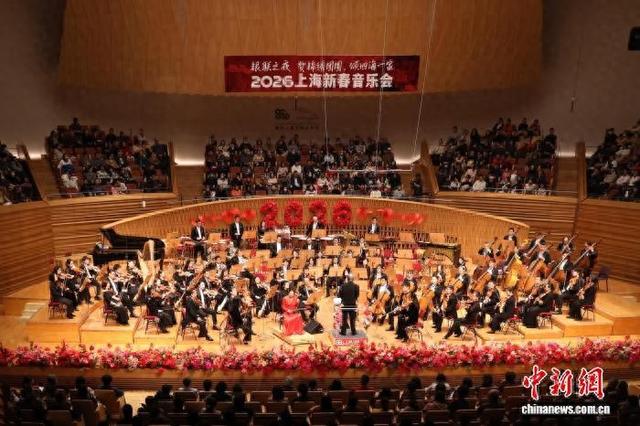
2026上海新春音乐会传递浓厚年味
Xin Lang Cai Jing· 2026-02-07 07:23
Core Viewpoint - The 2026 Shanghai Spring Concert, conducted by Yu Long, showcases a blend of Eastern and Western music, celebrating cultural integration and the Chinese New Year through various performances [1][3][5]. Group 1: Event Overview - The concert took place on February 6 at the Shanghai Symphony Hall, featuring prominent artists including erhu player Jiang Jianhua and baritone singer Liao Changyong [1]. - The program included traditional pieces such as "Spring Festival Overture" and contemporary works like "Chinese Kitchen - A Feast of Flavors" by composer Liang Hao, highlighting the depth of Chinese culture [3][5]. Group 2: Cultural Significance - Yu Long introduced the "New Year Concert" format to China in the 1990s and has since expanded the concept globally, including performances in cities like Melbourne and London [5]. - The concert serves as a tribute to cultural heritage and symbolizes the new beginnings, demonstrating how music transcends boundaries and connects people [8].

让世界听懂中国年
Xin Lang Cai Jing· 2026-02-07 07:21
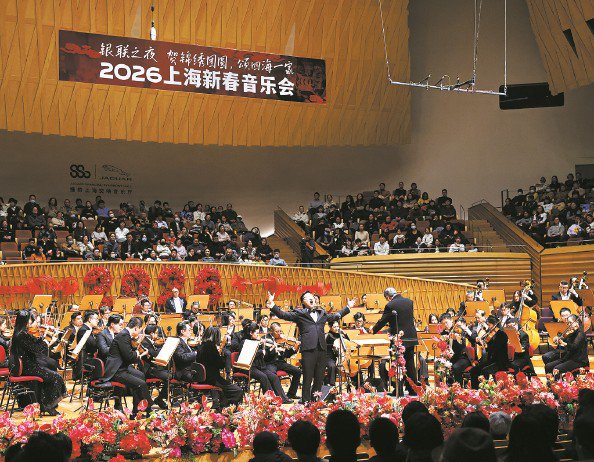
Core Viewpoint - The 2026 Shanghai Spring Festival Concert, conducted by Yu Long, showcases a blend of traditional Chinese music and Western classics, celebrating cultural heritage and the power of music to connect people across borders [2][3]. Group 1: Concert Highlights - The concert featured well-known pieces such as "Spring Festival Overture" and "Chinese Kitchen - A Feast of Flavors," alongside new compositions like "The Melody of the Red Plum" and "Chinese Flower Drum," emphasizing a rich cultural dialogue [3][4]. - Notable performances included baritone Liao Changyong's rendition of "Water Tune Song" and soprano Gu Wenmeng's interpretation of "The Sunflower Sent by My Lover," highlighting the emotional resonance of the music [3][4]. - The concert concluded with the premiere of "Nian," a piece by Hasbagan that merges traditional Mongolian music with symphonic elements, aiming to evoke the vastness of the grasslands and the warmth of homeland [4]. Group 2: Cultural Significance - The event serves as a cultural ritual for Shanghai residents, reinforcing the importance of music in celebrating the Lunar New Year and fostering community spirit [4]. - Yu Long, as the founder of the Shanghai Spring Festival Concert, emphasizes the event's role in cultural transmission and its ability to transcend geographical boundaries [2][3].
每一曲都是年味硬菜,和上交一起感受浓浓“中国味”
Xin Lang Cai Jing· 2026-02-06 14:48
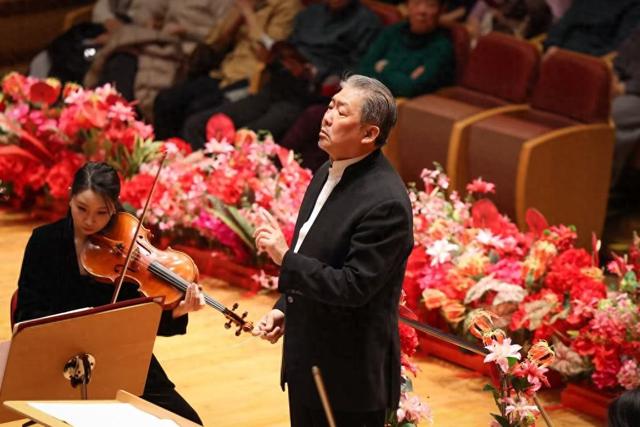
Core Viewpoint - The concert conducted by Yu Long at the Shanghai Symphony Orchestra celebrated the upcoming Lunar New Year with a rich selection of traditional Chinese music, showcasing the cultural significance of the holiday and the beauty of Chinese musical heritage [1]. Group 1: Concert Highlights - The concert featured well-known pieces such as "Spring Festival Overture," "Chinese Kitchen," "Chinese Flower Drum," "The Moonlight Song," and "Water Tune Song," all contributing to a festive atmosphere [1]. - The encore included "Good Night" and two pieces related to horses, symbolizing New Year blessings [1]. Group 2: Featured Performers - Jiang Jianhua performed the erhu concerto "Red Plum Thoughts," which is adapted from the opera "Jiang Jie," highlighting the dramatic and technical aspects of the music [3]. - Rising star Zhang Ao-zhe, a student from Shanghai Conservatory of Music, performed "The Sun Shines on Tashkurgan" and "Chinese Flower Drum," reflecting both local and foreign interpretations of Chinese culture [5]. Group 3: New Works and International Outreach - The world premiere of "Nian," inspired by the horse-head fiddle and throat singing, was performed, enriching the repertoire of the horse-head fiddle and promoting Chinese folk music internationally [7]. - Yu Long is set to conduct the New York Philharmonic for the "Chinese Lunar New Year Concert" on February 25, continuing the tradition of celebrating Chinese New Year through music globally [13].
“天涯共此时——中秋诗会”在联合国总部举行
Xin Hua She· 2025-10-14 14:02
Core Viewpoint - The "Mid-Autumn Poetry Festival" held at the United Nations aims to promote cultural exchange between the East and West, emphasizing themes of reunion, harmony, and harvest associated with the Mid-Autumn Festival [1][2]. Group 1: Event Highlights - The event featured bilingual recitations of classical poems such as "Quiet Night Thoughts" and "Water Melody," showcasing the cultural significance of the Mid-Autumn Festival [1]. - Performances included traditional music and dance, such as "Chasing the Moon" and "Hundred Birds Welcoming the Phoenix," enhancing the poetic experience [1]. - The festival concluded with a solo performance of "May You Live Long," encapsulating the spirit of the celebration [1]. Group 2: Cultural Significance - The event was organized by the Chinese Tourism Office in New York and supported by the US-China Cultural and Arts Foundation, highlighting the collaborative efforts in promoting cultural understanding [2]. - UN representative Peter Dawkins emphasized the power of poetry and art to transcend language barriers, aligning with the UN's mission of peace and understanding [1].
“天涯共此时·中秋诗会暨中国故事讲座”活动在布鲁塞尔中国文化中心举行
人民网-国际频道 原创稿· 2025-10-07 02:30
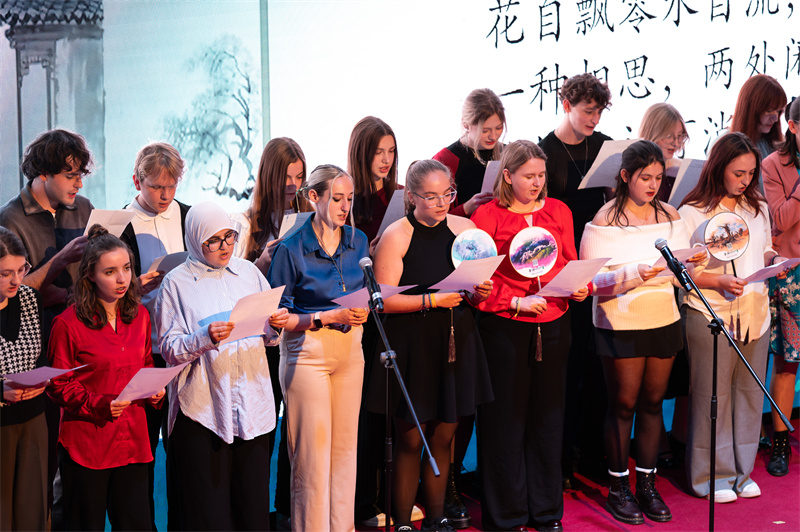
Core Points - The event "Mid-Autumn Poetry Gathering and Chinese Story Lecture" was held at the Brussels Chinese Cultural Center to celebrate its 10th anniversary, bringing together over a hundred participants including students, teachers, and friends of Chinese culture [1][3] - The event featured a variety of activities such as lectures, poetry recitations, artistic performances, interactive Q&A, and calligraphy experiences, emphasizing the cultural richness of the Mid-Autumn Festival [1][3] - The highlight of the event was a collective recitation of Su Shi's famous poem "Water Melody: When Will the Moon Be Clear and Bright," which was accompanied by a discussion on its artistic beauty [3] Summary by Sections Event Overview - The event took place on October 4, marking the 10th anniversary of the Brussels Chinese Cultural Center, and included a diverse audience of students and cultural enthusiasts [1] - Activities included a lecture on "Chinese Stories" and poetry recitations that showcased the cultural significance of the Mid-Autumn Festival [1][2] Cultural Exchange - The event was hosted by students from the Brussels Confucius Institute and Mons University, who introduced the cultural connotations and traditions of the Mid-Autumn Festival in both Chinese and English [2] - Young students recited famous Chinese poems and also performed works by French and American poets, highlighting the universal appeal of poetry [2] Performances and Engagement - Various performances such as flute music, dance, and children's songs were presented, creating a lively atmosphere filled with applause and laughter [3] - The event concluded with participants enjoying mooncakes, symbolizing reunion, while engaging in calligraphy and appreciating the depth of Chinese culture [3]
中国诗人、译者王钦刚对话非洲首位诺贝尔文学奖得主索因卡:跨越时空,与苏东坡一起“把酒问青天”
Huan Qiu Shi Bao· 2025-08-03 22:51
Group 1 - The conversation highlights the role of literature as a mirror of reality, emphasizing that it should reflect, transform, and even break norms, as illustrated by Soyinka's works like "Prison Poems" and "Death and the King's Horseman" [1][2] - Soyinka views literary awards as a recognition of collective African literature rather than personal achievement, suggesting that individual accolades should not overshadow the creative purpose [1][2] - The discussion draws parallels between Soyinka and historical literary figures, such as Su Dongpo, emphasizing the shared human experience of suffering and the transcendence found in literature [2][3] Group 2 - Soyinka's "mythopoetics" framework asserts the equality of African and Western civilizations, linking Yoruba mythology with Chinese creation narratives, indicating a shared human heritage [3] - The conversation touches on the "poetry as a means of expressing aspirations" tradition in Chinese literature, aligning with Soyinka's belief that literature serves as a voice for the voiceless [3][4] - Soyinka advises young writers to be wary of the pitfalls of success, emphasizing the need for creativity to thrive outside of comfort zones, and highlights the importance of translating literary works with both fidelity and innovation [4]