
《消息》

Search documents
迈向跨界融合的“大文学”时代
Ren Min Ri Bao Hai Wai Ban· 2026-01-14 22:50
Core Viewpoint - The emergence of "New Popular Literature" signifies a shift where the general public becomes the main creator of new cultural narratives, influenced by digitalization and technological advancements [20][33]. Group 1: New Popular Literature - "New Popular Literature" was recognized as one of the "Top Ten New Words of 2025," highlighting the role of the public in cultural creation [20]. - The rise of digital media, including mobile internet and AI, has unleashed a vast amount of creative potential among ordinary authors [20][33]. - The phenomenon of "amateur writing" has gained traction, with various authors from different backgrounds contributing unique narratives [21][34]. Group 2: Impact of AI on Literature - The integration of AI in writing has sparked discussions about the nature of literary creation and the unique qualities that define human authorship [10][11]. - The coexistence of human and AI-generated literature raises questions about the future of writing and the preservation of human experiences in storytelling [10][11]. Group 3: Notable Literary Works and Themes - The year 2025 saw a surge in literature focusing on historical themes, particularly related to the Anti-Japanese War, reflecting a collective memory and cultural identity [16][19]. - Works like "The Sea Wind" and "Peach Blossom Dock" explore the experiences of individuals during wartime, emphasizing the resilience and spirit of the people [17][19]. - The literary landscape is enriched by diverse narratives that address contemporary issues, such as the struggles of ordinary people and the complexities of human relationships [13][14][30]. Group 4: The Role of Individual Experience - Authentic personal experiences and emotional impulses are highlighted as essential elements for creating impactful literature, which AI cannot replicate [11][12]. - The exploration of individual narratives, such as those from ordinary workers and their life stories, contributes to a richer understanding of society [21][34]. Group 5: Future Directions in Literature - The evolving literary scene calls for a reevaluation of traditional literary boundaries, encouraging cross-genre experimentation and collaboration with other media [25]. - The concept of "Big Literature" emerges as a response to the changing cultural landscape, aiming to connect literature with broader social contexts [25].

一幅灵秀传神的当代“山居图”
Xin Lang Cai Jing· 2026-01-14 22:46
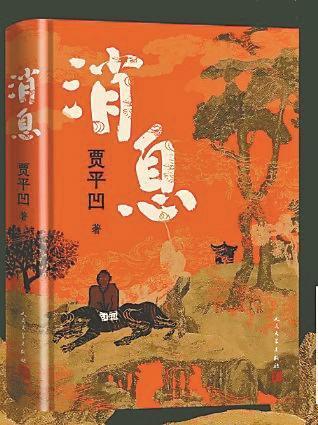
Core Perspective - The book "Messages" by Jia Pingwa presents a unique structure of ninety-three independent short stories that collectively form a comprehensive narrative about existence and the subtle changes in life and culture [3][4][5] Summary by Sections Structure and Style - The book is not a traditional novel with a continuous plot or central characters; instead, it resembles a collection of "messages" that reflect the nuances of life and existence [3][4] - Jia Pingwa employs a minimalist writing style, focusing on authentic observations without excessive embellishments, reminiscent of ancient literary traditions [3][5] Characters and Themes - The characters depicted are ordinary individuals from the land, whose lives and choices are presented without judgment, creating a realistic portrayal of their struggles and resilience [4][5] - The fragmented narrative style may initially seem disjointed, but it encourages readers to engage deeply with each piece, reflecting the complexity of contemporary life, especially in rural China [4][5] Overall Message - The book challenges the fast-paced consumption of information in modern society, offering a different kind of "message" that emphasizes patience and a deeper understanding of cultural roots and individual experiences [5][6] - It serves as a reminder to listen to the slower, more profound "messages" from the land, which are essential to understanding identity and heritage [6]
2025年11月“中国好书”推荐书目发布
Xin Hua She· 2025-12-16 06:19
Group 1 - The "China Good Books" recommended list for November 2025 has been released in Beijing under the guidance of the Publication Bureau of the Publicity Department of the Communist Party of China [1] - The selected titles include "The History of Taiwanese People's Anti-Japanese Struggle during the Japanese Occupation," "Civilization China: A Million-Year Human History, Ten-Thousand-Year Cultural History, and Five-Thousand-Year Civilization History," and "The Spiritual Pursuit of Chinese Civilization" among others [1]
江苏师范大学举办新时代文学论坛
Ren Min Ri Bao· 2025-12-05 19:34
Core Viewpoint - The recent New Era Literature Forum and academic seminar on Jia Pingwa's novel "Message" highlighted the relationship between traditional Chinese literary resources and the construction of new literary theoretical discourse in the context of contemporary issues [1][2] Group 1: Event Overview - The forum was co-hosted by the New Era Literature Research Center of the China Writers Association, with bases at Jiangsu Normal University and Shaanxi Normal University [2] - The event focused on themes such as "Constructing New Era 'Chinese-style Critique'" and "Digital Humanities and the Modern Activation of Ancient Chinese Literary Resources" [1] Group 2: Academic Insights - Experts discussed how Jia Pingwa's "Message" creatively transforms classical Chinese literary traditions, drawing narrative techniques reminiscent of "Dream of the Red Chamber" while addressing contemporary human issues [1] - The balance between traditional narrative resources and contemporary experiences was emphasized, showcasing Jia Pingwa's approach of neither simply reverting to the past nor blindly pursuing novelty [1]
写好中国文字的每一个句子(文思)
Ren Min Ri Bao· 2025-11-16 22:31
Group 1 - The book "Message" explores the state and possibilities of Chinese literature in a modern global context, addressing human dilemmas and the relationship between people and the external world [1] - The author emphasizes the importance of experiencing rural life and understanding the current state of society, moving beyond conceptual knowledge to real-life observations [2] - The author reflects on the evolution of their writing perspective, shifting from catering to a specific audience to a broader exploration of human nature and the natural world [3] Group 2 - The author dedicates all their energy to writing, focusing solely on this craft without distractions, especially after the age of 70 [4] - The writing process is described as increasingly challenging, with a growing sense of insecurity, and the author is attentive to societal reactions to their work for future adjustments [4]