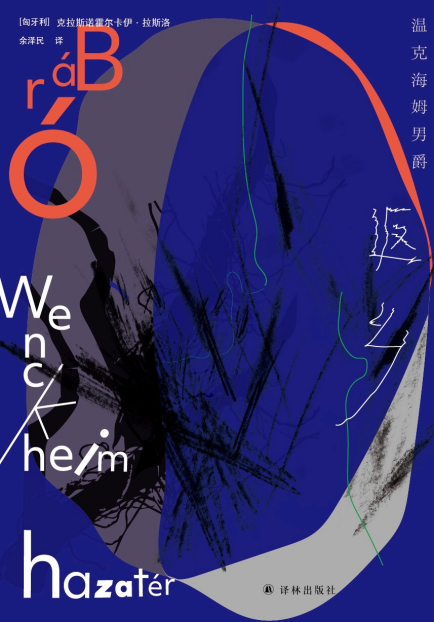
《温克海姆男爵返乡》

Search documents
界面荐书 | 诺奖得主的著作看不懂怎么办?
Xin Lang Cai Jing· 2025-10-12 04:34
Core Points - The 2025 Nobel Prize in Literature was awarded to László Krasznahorkai for his impactful works that reaffirm the power of art amidst apocalyptic fears [1] - Krasznahorkai is recognized as one of the most prominent contemporary Hungarian authors, known for his complex and postmodern writing style [1][2] - His works often feature dystopian and melancholic themes, characterized by long, winding sentences that create a dizzying grammatical rhythm [1][2] Summary by Categories Author Background - László Krasznahorkai has received numerous prestigious awards, including the International Booker Prize and the National Book Award [1] - He is referred to as the "master of the apocalypse" by writer Susan Sontag, highlighting his thematic focus on existential dread [1] Writing Style and Themes - Krasznahorkai's writing is described as difficult to penetrate, often requiring readers to navigate a unique universe filled with recurring archetypal characters [1][2] - His narrative style is experimental, challenging traditional language limits and often leaving readers feeling lost initially, which is seen as a valuable reading experience [2][4] Notable Works - "The World is Advancing" is his second short story collection published after nearly thirty years, featuring significant contemporary themes and an experimental approach [6] - "The Baron Wenckheim's Homecoming" tells the story of a baron returning to his hometown amidst absurd rumors and societal chaos [8] - "The Melancholy of Resistance" is a long novel that explores fragmented narratives surrounding a giant whale brought to a town, reflecting societal fears and chaos [10] - "Satan's Tango" depicts a bleak village life filled with despair and betrayal, showcasing a unique narrative structure [12] - "The Mercy Relations" is a collection of short stories that exemplify his postmodern style, characterized by ambiguous settings and elusive meanings [14]

余泽民谈拉斯洛新作《温克海姆男爵返乡》:一场漫长的毁灭
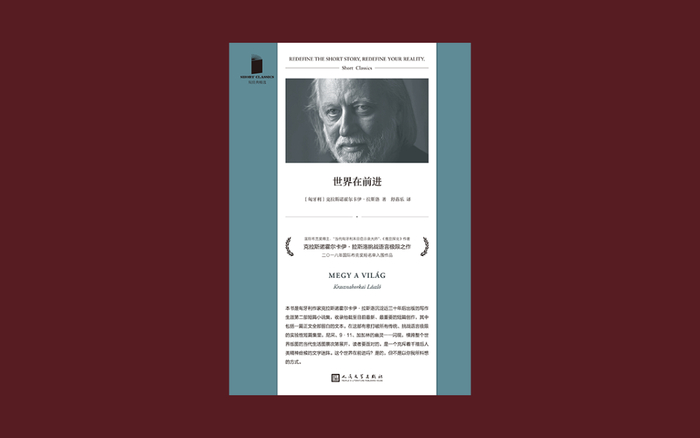
Xin Jing Bao· 2025-10-09 14:34
Core Insights - The novel "Wenckheim's Return" by László Krasznahorkai is a significant continuation of his earlier works, particularly "Satan's Tango," exploring themes of despair, waiting, and the cyclical nature of human existence [2][3][17] - The narrative reflects the socio-political changes in Hungary and Eastern Europe, portraying a small town's residents who are caught in a state of anticipation for the return of the titular baron, symbolizing hope and potential salvation [6][10][17] Summary by Sections Author and Background - László Krasznahorkai, a prominent figure in Hungarian literature, gained international acclaim with his debut novel "Satan's Tango" in 1985, which is considered a cornerstone of postmodern Hungarian literature [2][3] - "Wenckheim's Return" is seen as a sequel to "Satan's Tango" and "The Melancholy of Resistance," forming a thematic trilogy that delves into the helplessness and futile waiting experienced by the characters [3][4][17] Themes and Narrative Style - The central theme revolves around the concept of waiting, which is depicted as the only action available to the characters, leading to despair and destruction [4][11][17] - The narrative employs a multi-perspective storytelling technique, allowing various characters to share their viewpoints, creating a rich and complex tapestry of the town's life [15][17] Character Analysis - The character of Baron Wenckheim, who returns from Argentina, embodies the hopes of the townspeople, yet he is portrayed as a flawed and ineffective figure, unable to fulfill their expectations [6][8][17] - The residents of the town, including significant figures like the mayor and police chief, collectively represent the societal longing for change and salvation, yet their actions are ultimately futile [10][17] Societal Reflection - The novel critiques the stagnation and despair within Hungarian society, illustrating how the characters are trapped in a cycle of waiting for a savior that never arrives [10][11][17] - It addresses contemporary social issues such as systemic change, the refugee crisis, and media ethics, while maintaining a philosophical perspective on human existence [17][18] Literary Techniques - Krasznahorkai's writing style is characterized by long, complex sentences that challenge readers, reflecting the intricate nature of the characters' lives and their societal context [18][19] - The use of dark humor and absurdity in the narrative adds a layer of complexity, contrasting the underlying themes of despair with moments of levity [17][20]