《百科全书》

Search documents
李公明|一周书记:“用书籍普及政治思想”与……塑造启蒙运动的历史过程
Xin Lang Cai Jing· 2026-02-26 04:15
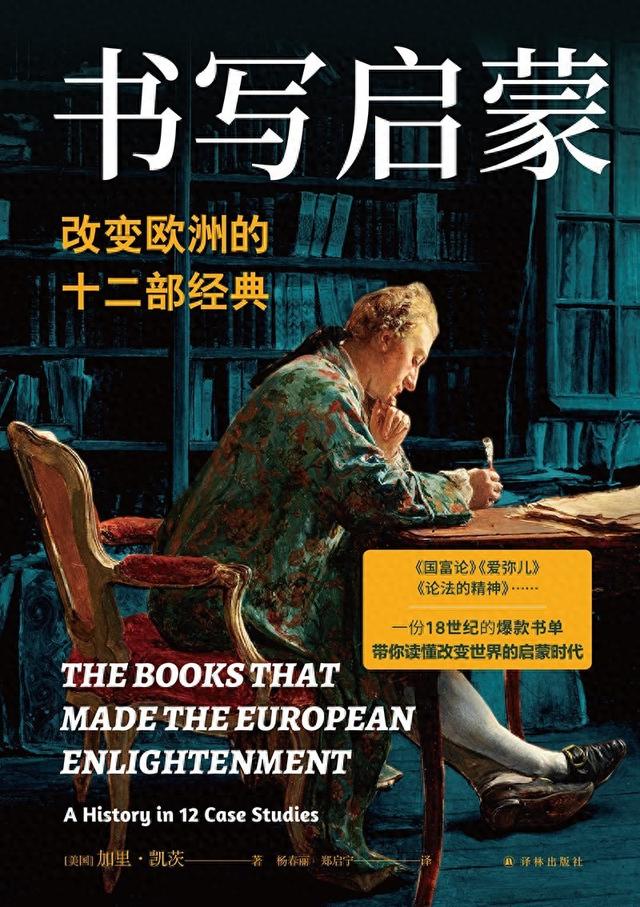
《书写启蒙:改变欧洲的十二部经典》,[美] 加里·凯茨著,杨春丽 、郑启宁译,译林出版社,2025年 11月版,568页,98.00元 凯茨进而指出:"启蒙运动的经典是读者、书商、出版商和作者高度合作的产物,这一切只发生在18世 纪。……历史学家把启蒙运动看作读者、作者和出版商共同参与的一个历史事件。这使我们更清楚地看 到,启蒙运动是由批判性阅读群体共同创造的,这个群体在欧洲及其海外殖民地出现,并蓬勃发 展。"(引言,第3-4页)——1971年罗伯特·达恩顿(Robert Darnton)以一篇综述论文的形式发表了这 个结论,自此开启了对启蒙运动的文化历史研究:应该首先理解的是观念如何走向社会、如何在复杂的 社会体系中传递的,因此最重要的是要研究在十八世纪的欧洲,图书和期刊的流通如何决定了思想的传 播。 达恩顿的《启蒙运动的生意》(Business of Enlightenment,1979)关注的是《百科全书》如何在1759年 法国法律的压制之下流行起来,细致缜密地描述了法国及其邻国的书商、印刷商、政府审查员、警察甚 至宗教事务官之间的同谋关系。在这之后,达恩顿的主要研究成果集中体现在1995年出版的《17 ...

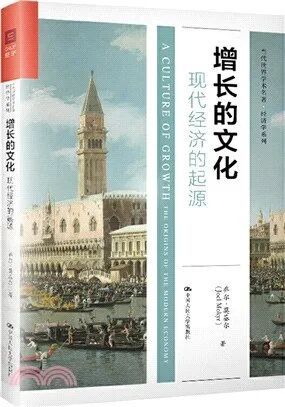
文化繁荣如何带来经济持续增长:2025年诺贝尔经济学奖的启示
Xin Jing Bao· 2026-01-28 05:40
Core Insights - The article discusses the cultural transformation that enabled sustained economic growth in Europe since the 18th century, as articulated by Joel Mokyr, the 2025 Nobel Prize winner in Economics [1][6][31] - Mokyr's work emphasizes the importance of "useful knowledge" and cultural evolution in shaping economic systems and technological paths, rather than merely focusing on institutional or geographical factors [4][31] Group 1: Cultural Evolution and Economic Growth - Mokyr argues that the key to modern economic growth lies in a "growth-friendly culture" that emerged in Europe between the 16th and 18th centuries, characterized by a belief in controlling nature, valuing empirical evidence, and promoting open communication among intellectuals [3][4][31] - The concept of "cultural entrepreneurs" is introduced, highlighting figures like Francis Bacon and Isaac Newton, who reshaped societal attitudes towards knowledge and innovation [15][18] Group 2: Knowledge Structures - Mokyr distinguishes between propositional knowledge (understanding why) and prescriptive knowledge (knowing how), asserting that the interaction between these two forms of knowledge is crucial for technological advancement [10][12][31] - The article notes that the scientific revolution in the early modern period led to a systematic approach to knowledge accumulation, allowing for continuous innovation rather than sporadic advancements [11][12] Group 3: The Role of Institutions and Competition - Mokyr emphasizes that the political fragmentation of early modern Europe fostered a competitive "market of ideas," which encouraged innovation and the dissemination of new knowledge [18][19] - The concept of a "republic of letters" is introduced, where intellectuals could freely exchange ideas, contributing to a culture of knowledge sharing and collaboration [19][22] Group 4: Industrial Enlightenment - The article discusses the "Industrial Enlightenment," which connects the application of systematic knowledge to practical improvements in production processes and living standards [23][24] - Mokyr highlights the rise of "philosophical engineers," who combined theoretical knowledge with practical skills, thus enhancing the precision and effectiveness of industrial practices [26][27] Group 5: Comparative Analysis with China - Mokyr contrasts the cultural and institutional environments of Europe and ancient China, suggesting that China's centralized governance stifled innovation and the exploration of new ideas, which hindered its industrial development [28][29][30] - The article critiques the Chinese examination system for promoting rote learning over innovative thinking, which limited the integration of practical and theoretical knowledge [29][30] Group 6: Implications for Modern Economic Growth - Mokyr's insights suggest that fostering a culture that values knowledge, encourages innovation, and supports the integration of theory and practice is essential for sustained economic growth [31][32] - The article concludes that understanding the historical context of knowledge production and dissemination can inform contemporary policies aimed at enhancing innovation and economic development [41][42]