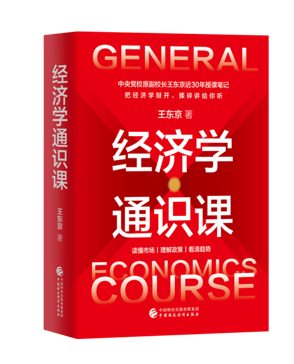
《经济学通识课》

Search documents
给领导干部写一本“再通俗些”的经济学教材︱21书评
2 1 Shi Ji Jing Ji Bao Dao· 2026-02-09 07:46
Core Viewpoint - The article discusses the significance of the book "Economic Literacy Course" by Wang Dongjing, which aims to simplify Western economic theories and address unique Chinese economic issues for leaders, business personnel, and students [1][10]. Group 1: Author's Background and Motivation - Wang Dongjing, a former vice president of the Central Party School, has nearly 30 years of experience teaching economics to mid-level and senior officials, recognizing the need for accessible economic education [1][6]. - The author was inspired to write an economics textbook during his undergraduate studies, influenced by the complexity of existing materials and the need for a more understandable approach [4][5]. Group 2: Book Structure and Content - The book is structured around three assumptions, three principles, and three methods, consisting of 20 chapters that first cover microeconomic principles and then apply them to macroeconomic issues [8]. - The teaching approach is designed to be practical, avoiding heavy mathematical content and instead using case studies to illustrate economic principles, catering specifically to the needs of government officials [8][9]. Group 3: Reception and Revisions - The initial publication of "Economic Literacy Course" in early 2021 received positive feedback, leading to multiple reprints within the same year, indicating strong interest from government officials, entrepreneurs, and students [9]. - Based on reader feedback, the author made revisions to enhance clarity and accessibility, ensuring that complex theories are better explained and more relatable to everyday life [9][10].

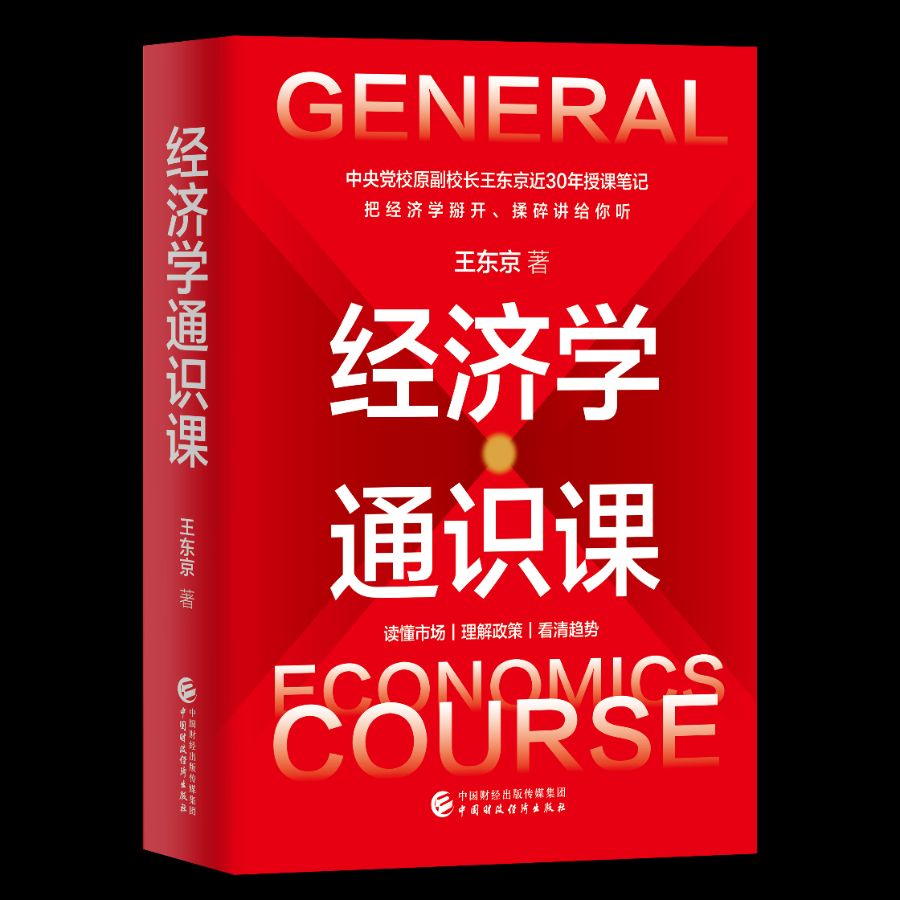
明白国家调控背后的规律与逻辑,学会运用经济学方法分析解决现实难题
3 6 Ke· 2026-01-14 23:08
Core Insights - The book "Economic Literacy Course," authored by Wang Dongjing, aims to provide a foundational framework and analytical tools for understanding real economic issues in a simplified and systematic manner [2][3] Group 1: Author Background - Wang Dongjing, the author, is a former vice president of the Central Party School, with extensive experience in macroeconomic research and teaching [3] - He has observed that non-economics readers often struggle with the complexities of economic theories and concepts [3] Group 2: Book Structure and Content - "Economic Literacy Course" emphasizes overall coherence and logic, focusing on basic assumptions, core principles, and common analytical methods in economics [3] - The book avoids heavy use of formulas and jargon, instead opting for clear reasoning and real-life case studies to illustrate economic laws [3][4] Group 3: Practical Implications - The book is designed to enhance long-term analytical capabilities rather than provide short-term judgments or specific conclusions [4] - It serves various audiences, including policymakers, business decision-makers, and general readers, by offering insights into the internal mechanisms of economic operations [4]
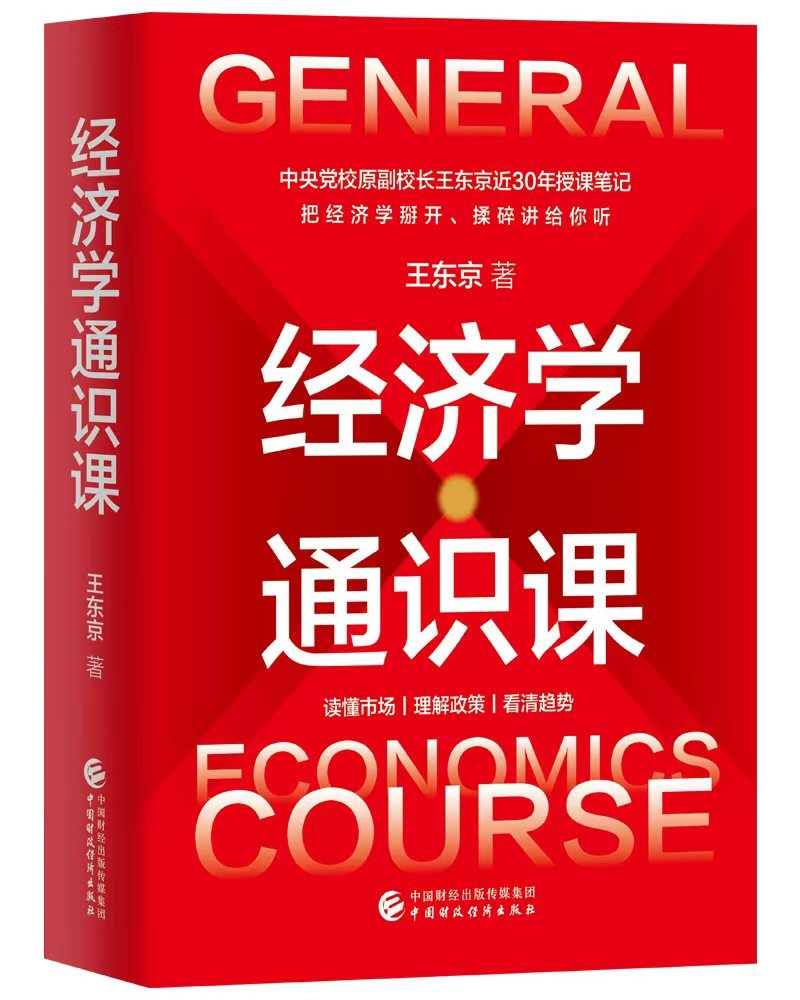
《经济学通识课》:以通俗化、体系化的方式梳理经济学基本原理
Sou Hu Cai Jing· 2026-01-04 08:35
Core Insights - The book "Economic Literacy Course" authored by Wang Dongjing aims to provide a foundational framework and analytical tools for understanding real economic issues in a simplified and systematic manner [1][3] Group 1: Author Background - Wang Dongjing, the author, is a former vice president of the Central Party School and has extensive experience in macroeconomic research and teaching [3] - He has observed that non-economics professionals often struggle with the complexities of economic theories and concepts, which can hinder their practical application [3] Group 2: Book Structure and Content - The book emphasizes overall coherence and logic, focusing on basic assumptions, core principles, and commonly used analytical methods in economics [3] - It avoids heavy use of formulas and jargon, instead opting for clear reasoning and real-world examples to illustrate economic principles [3][4] Group 3: Practical Implications - "Economic Literacy Course" is designed to enhance long-term analytical capabilities rather than provide short-term judgments or specific conclusions [4] - It is beneficial for a wide range of readers, including policymakers, business decision-makers, and ordinary readers seeking to understand economic news and policy logic [4]