
《中国的选择》

Search documents
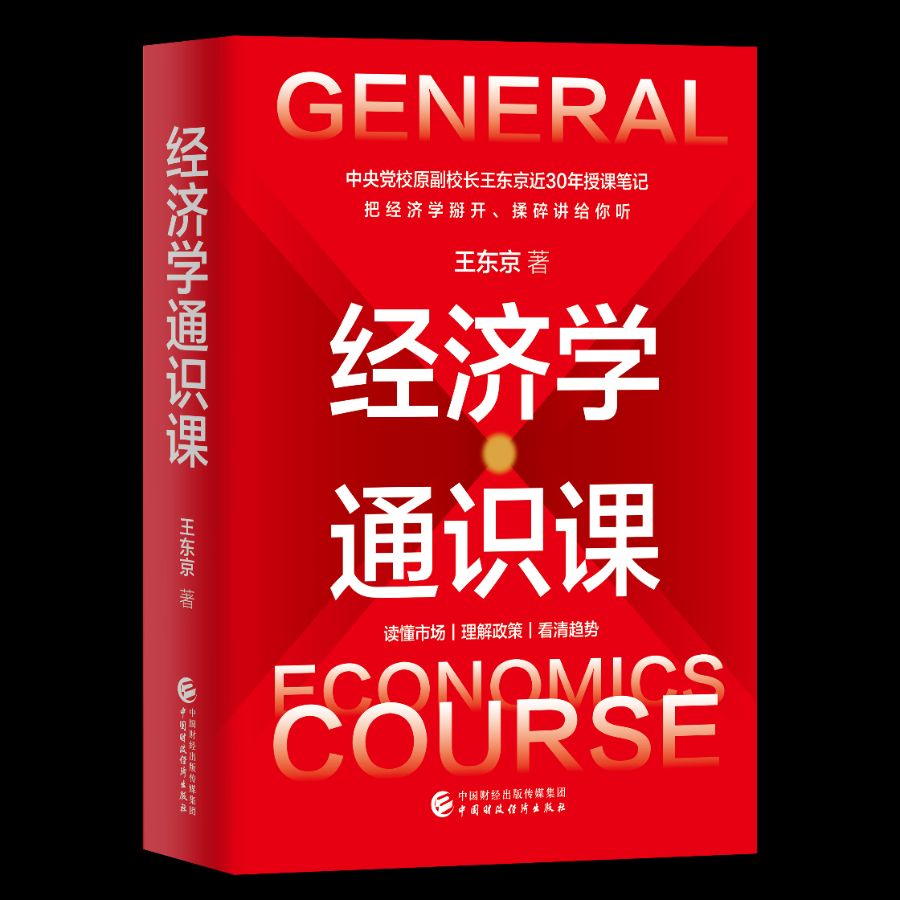
给领导干部写一本“再通俗些”的经济学教材︱21书评
2 1 Shi Ji Jing Ji Bao Dao· 2026-02-09 07:46
Core Viewpoint - The article discusses the significance of the book "Economic Literacy Course" by Wang Dongjing, which aims to simplify Western economic theories and address unique Chinese economic issues for leaders, business personnel, and students [1][10]. Group 1: Author's Background and Motivation - Wang Dongjing, a former vice president of the Central Party School, has nearly 30 years of experience teaching economics to mid-level and senior officials, recognizing the need for accessible economic education [1][6]. - The author was inspired to write an economics textbook during his undergraduate studies, influenced by the complexity of existing materials and the need for a more understandable approach [4][5]. Group 2: Book Structure and Content - The book is structured around three assumptions, three principles, and three methods, consisting of 20 chapters that first cover microeconomic principles and then apply them to macroeconomic issues [8]. - The teaching approach is designed to be practical, avoiding heavy mathematical content and instead using case studies to illustrate economic principles, catering specifically to the needs of government officials [8][9]. Group 3: Reception and Revisions - The initial publication of "Economic Literacy Course" in early 2021 received positive feedback, leading to multiple reprints within the same year, indicating strong interest from government officials, entrepreneurs, and students [9]. - Based on reader feedback, the author made revisions to enhance clarity and accessibility, ensuring that complex theories are better explained and more relatable to everyday life [9][10].

“看多中国”的背后逻辑!独家专访《中国的选择》作者马凯硕,关于西方误读、中国开放与全球新秩序……
聪明投资者· 2025-11-26 07:03
Core Viewpoint - The article discusses the insights of Mahesh Shastri, an Indian scholar and diplomat, on the complexities of Sino-American relations and the importance of understanding cultural differences in global interactions [3][5][20]. Group 1: Understanding Sino-American Relations - Mahesh Shastri emphasizes that many Western misconceptions about China stem from a lack of understanding of different civilizations rather than information gaps [5][20]. - He argues that the Western perspective is often limited to a binary view of progress, failing to recognize that different civilizations can have distinct paths to success [22][24]. - Shastri believes that the future of Sino-American competition will likely be manageable rather than leading to chaotic confrontation [42]. Group 2: Global Economic Dynamics - Shastri points out that 85% of global trade is not directly related to the U.S., indicating that globalization is still ongoing despite geopolitical tensions [6][39]. - He notes that while the dollar remains dominant in global financial transactions, there is a gradual trend of countries reducing their reliance on it [40][41]. - The article highlights that Western capital is pragmatic and will flow to markets that offer better returns, including China, as long as there are no investment sanctions [26][39]. Group 3: China's Economic Strategy - Shastri argues that even if China achieves self-sufficiency in key areas, it should not close off its economy, as historical evidence shows that openness leads to better performance [28][30][32]. - He stresses the importance of maintaining open economic policies to ensure continued prosperity and integration with the global economy [32][46]. - The article suggests that China's commitment to openness aligns with its long-term strategic interests and can enhance its global standing [45][47]. Group 4: Regional Opportunities - Shastri discusses the roles of Southeast Asia and the Middle East in the context of U.S.-China relations, noting that these regions benefit from stable Sino-American ties [33][37]. - He highlights that Southeast Asia has significantly benefited from globalization and foreign investment, with U.S. investments in the region surpassing those in China, Japan, South Korea, and India combined [36][39]. - The article indicates that the restructuring of global supply chains may lead to more resilient business models rather than increased costs and inefficiencies [38][39].

五一阅读:致敬每一位平凡而伟大的劳动者
戴康的策略世界· 2025-05-02 01:41
Group 1 - The core viewpoint of the article emphasizes the importance of understanding the dynamic nature of financial markets through the lens of human behavior and biases, as articulated in George Soros's "reflexivity theory" [4] - The article highlights that traditional economic models often overlook the interplay between participants' perceptions and objective reality, which can lead to market distortions that reinforce biases [4] - It discusses how Soros's insights have allowed him to successfully predict market movements and financial crises, suggesting that markets are influenced by human emotions and not merely mathematical calculations [4] Group 2 - The article presents a global perspective on China's development logic and diplomatic strategies, as analyzed in "China's Choice" by Singaporean author Ma Kai-shuo [6] - It notes that the book provides a thorough analysis of China's rise, focusing on its institutional resilience, cultural genes, and governance wisdom, while addressing Western misconceptions [6] - The text emphasizes the practical outcomes of China's strategies, such as the Belt and Road Initiative and the concept of a "community with a shared future for mankind," supported by economic data and case studies on improving livelihoods [6]