经济学

Search documents
给领导干部写一本“再通俗些”的经济学教材︱21书评
2 1 Shi Ji Jing Ji Bao Dao· 2026-02-09 07:46
Core Viewpoint - The article discusses the significance of the book "Economic Literacy Course" by Wang Dongjing, which aims to simplify Western economic theories and address unique Chinese economic issues for leaders, business personnel, and students [1][10]. Group 1: Author's Background and Motivation - Wang Dongjing, a former vice president of the Central Party School, has nearly 30 years of experience teaching economics to mid-level and senior officials, recognizing the need for accessible economic education [1][6]. - The author was inspired to write an economics textbook during his undergraduate studies, influenced by the complexity of existing materials and the need for a more understandable approach [4][5]. Group 2: Book Structure and Content - The book is structured around three assumptions, three principles, and three methods, consisting of 20 chapters that first cover microeconomic principles and then apply them to macroeconomic issues [8]. - The teaching approach is designed to be practical, avoiding heavy mathematical content and instead using case studies to illustrate economic principles, catering specifically to the needs of government officials [8][9]. Group 3: Reception and Revisions - The initial publication of "Economic Literacy Course" in early 2021 received positive feedback, leading to multiple reprints within the same year, indicating strong interest from government officials, entrepreneurs, and students [9]. - Based on reader feedback, the author made revisions to enhance clarity and accessibility, ensuring that complex theories are better explained and more relatable to everyday life [9][10].

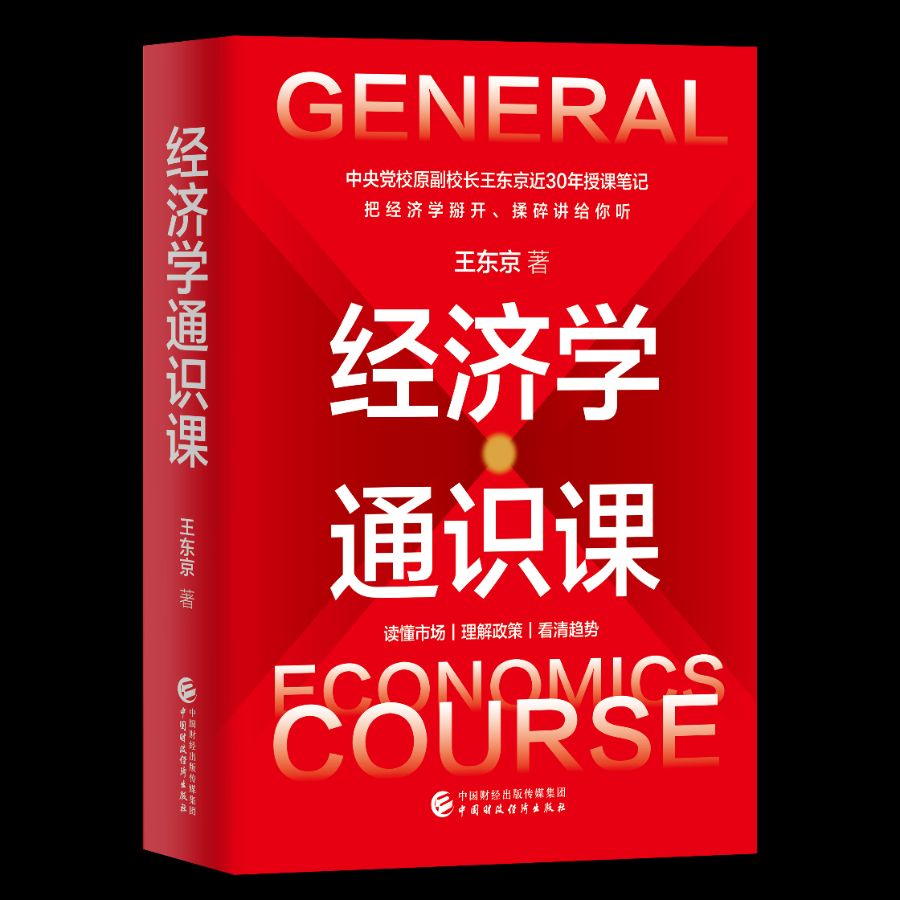
明白国家调控背后的规律与逻辑,学会运用经济学方法分析解决现实难题
3 6 Ke· 2026-01-14 23:08
Core Insights - The book "Economic Literacy Course," authored by Wang Dongjing, aims to provide a foundational framework and analytical tools for understanding real economic issues in a simplified and systematic manner [2][3] Group 1: Author Background - Wang Dongjing, the author, is a former vice president of the Central Party School, with extensive experience in macroeconomic research and teaching [3] - He has observed that non-economics readers often struggle with the complexities of economic theories and concepts [3] Group 2: Book Structure and Content - "Economic Literacy Course" emphasizes overall coherence and logic, focusing on basic assumptions, core principles, and common analytical methods in economics [3] - The book avoids heavy use of formulas and jargon, instead opting for clear reasoning and real-life case studies to illustrate economic laws [3][4] Group 3: Practical Implications - The book is designed to enhance long-term analytical capabilities rather than provide short-term judgments or specific conclusions [4] - It serves various audiences, including policymakers, business decision-makers, and general readers, by offering insights into the internal mechanisms of economic operations [4]
【我是这样做学问的】研理于经,征事于史,济世于民
Xin Lang Cai Jing· 2026-01-11 20:19
Core Viewpoint - The article reflects on the evolution of economics as a discipline in China, highlighting its transition from obscurity to prominence, particularly after the reform and opening-up period, and emphasizes the importance of developing a unique Chinese economic theory rooted in national practices and challenges [1][6][8]. Group 1: Historical Context - In the late 1970s, economics was not widely recognized or understood in China, with many people unaware of its significance [1][2]. - The restoration of the college entrance examination in China led to a surge of interest in economics, as students began to explore the subject more deeply [3][6]. - The teaching of economics evolved through three stages: unfamiliarity, imitation of foreign models, and the current phase of developing indigenous theories based on China's unique experiences [6][7]. Group 2: Educational Influence - Influential educators played a crucial role in shaping the understanding of economics, emphasizing rigorous scholarship and a commitment to truth [4][5]. - The teaching approach has shifted to focus on engaging students with real-world applications of economic theories, fostering a deeper understanding of the subject [5][6]. Group 3: Theoretical Development - The article discusses the emergence of significant theoretical contributions from Chinese economists that address critical issues such as market mechanisms, government roles, and social governance [7]. - There is a call for a deeper understanding of China's economic development through the lens of Marxist political economy, particularly guided by contemporary Chinese thought [7][8]. Group 4: Future Directions - The construction of a Chinese autonomous knowledge system in economics is essential, requiring a blend of local practices and global insights [8]. - The ongoing challenges faced by China necessitate a robust theoretical framework that can adapt to both domestic and international contexts [8].
从大学讲台到市场前沿:野村欧洲首席经济学家George Buckley的25年实践之路
野村集团· 2025-12-23 04:01
Core Insights - The article features an interview with George Buckley, the Chief Economist for Europe at Nomura, discussing his career journey and the unique aspects of Nomura's research [1][2]. Group 1: Career Background - George Buckley has over 25 years of experience as a market economist and has been with Nomura for more than eight years, applying academic economic theories in practical settings [3][4]. - He holds a PhD and a Master's degree from the University of Bristol, where he also taught macroeconomics and econometrics [2]. Group 2: Passion for Economics - Buckley emphasizes the importance of applying economic knowledge to real-world scenarios to assist various stakeholders, including clients and media [4]. - He believes that explaining the analytical process is as crucial as presenting the final conclusions, akin to demonstrating the steps in solving a math problem [4]. Group 3: Unique Services at Nomura - Nomura offers distinctive services in Europe, including a podcast series designed for relaxed listening, which has received positive feedback from clients [6]. - The company balances speed and depth in data interpretation, providing both quick updates and in-depth analysis that uncovers overlooked insights [6]. Group 4: Focus on Asian Markets - Nomura's research heavily emphasizes Asian markets, supported by a robust research framework covering stocks and industries across Asia [8]. - The company values localized perspectives, with economists like Buckley focusing on the UK economy, enhancing client engagement through their local expertise [8].


交大高金朱宁:经济学家视角下AI时代的范式思维转变 | MEET2026
量子位· 2025-12-13 02:00
Core Viewpoints - The concept of scarcity has changed after the emergence of AI, prompting a need for deeper consideration on how to make better choices in the face of this new reality [6][11] - As AI begins to replace human decision-making, competition may arise between humans and algorithms, as well as among algorithms themselves [6][22] Economic Implications - Economics has historically focused on technological progress and its impact on economic principles and human welfare, with fundamental concepts like "what is human?" and "what is production?" undergoing significant changes in the AI era [8][11] - The traditional view of scarcity, which included time, computational power, and creativity, is being challenged as AI can now perform tasks that previously required significant human effort [11][12] - AI is expected to contribute to global economic growth by 0.5% to 0.7% annually over the next decade, although this may not be sufficient to support high valuations in tech markets [14][24][25] Industry Impact - The nature of work is changing, with both white-collar and blue-collar jobs facing potential replacement by AI, blurring the lines between these categories [31] - Knowledge-intensive industries, previously thought to be safe from AI disruption, are also at risk as AI capabilities evolve [33] - Companies are encouraged to focus on how to leverage AI technology to enhance productivity and efficiency rather than seeking industries that are immune to AI [33] Global Considerations - There is a significant disparity in access to AI capabilities between high-income and low-income countries, which may exacerbate global wealth distribution issues [28][29] - The shift towards AI-driven trade will lead to new regulatory and governance challenges, particularly regarding accountability in cross-border transactions [30]

诺奖得主萨金特港大最新演讲:AI的突破本质上是经济学的数百年进化(万字实录)
Sou Hu Cai Jing· 2025-12-01 14:41
Core Insights - The core discussion revolves around how AI is fundamentally changing the basic rules of economic operation, particularly in the context of uncertainty in the global economy [2][3]. Group 1: AI's Nature and Economic Impact - AI is currently more focused on "fitting" data rather than "understanding" it, highlighting a significant gap between machine learning and economics [4]. - The mathematical foundation of AI is rooted in economics and dynamic decision theory, indicating a long-term convergence of knowledge across disciplines [5]. - AI is reshaping the distribution of labor, capital, and market structures, acting as a transformative force in income distribution and competition [6][8]. Group 2: Historical Context and Methodological Differences - The historical evolution of scientific thought, from Ptolemy to Newton, illustrates the difference between descriptive models (curve fitting) and structural models (mechanism explanation) [11][14]. - AI's development is not a new phenomenon but rather an extension of mathematical and economic research into human decision-making [8][12]. - The distinction between fitting models and structural models is crucial, as many regression models merely fit relationships without explaining underlying mechanisms [14]. Group 3: Labor Market Dynamics - AI tends to complement high-skilled labor while substituting low-skilled labor, leading to a structural shift in labor market dynamics [15][28]. - The ongoing technological changes are resulting in a decline in labor's share of income while increasing capital's share [8][15]. Group 4: Education and Skill Development - The impact of AI on education is significant, with concerns that students may rely too heavily on AI tools, potentially undermining their learning [27][28]. - There is a call for a focus on foundational skills in mathematics and statistics, which are essential for understanding economic principles and decision-making [25][30].

新加坡国立大学高级研究员陈波:经济学能成为中国学发展助力
Zhong Guo Xin Wen Wang· 2025-10-14 11:00
Core Viewpoint - The integration of economics into the development of Chinese Studies can significantly enhance the discipline, leveraging China's economic success as a model for developing countries and the world [1] Group 1: Economic Success and Chinese Studies - Chinese Studies is a broad and comprehensive yet relatively new discipline, where economics can play a crucial role in its development [1] - China's rise as the world's second-largest economy and largest trading nation provides a successful case study that can be referenced by developing countries globally [1] Group 2: Regional Economic Initiatives - The China-ASEAN Free Trade Area 3.0 and the Belt and Road Initiative are generating significant positive spillover effects in Southeast Asia [1] - In the context of complex international economic and trade conditions, China's collaborative approach through industrial chain cooperation demonstrates that its rise is a boon rather than a threat to the world [1]
读创今日荐书 | 为何说懂一点经济学,你会吃得更满足?
Sou Hu Cai Jing· 2025-09-26 12:59
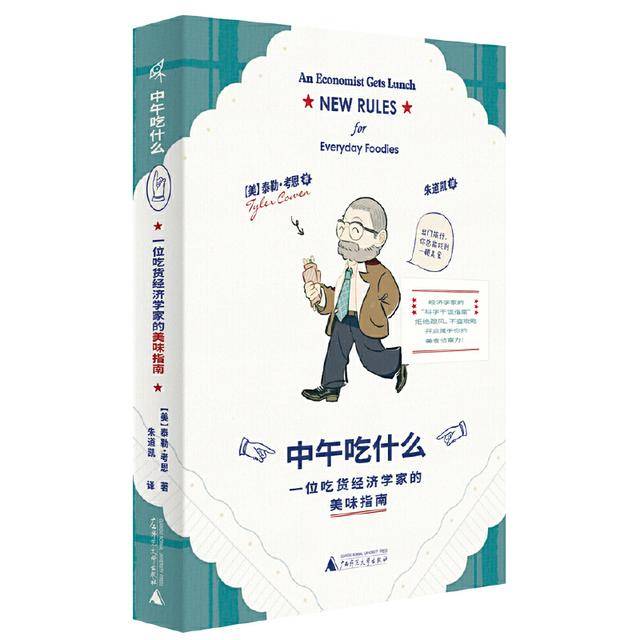
Core Insights - The article discusses the perspective of economist Tyler Cowen on the food industry, emphasizing the availability of affordable and high-quality food options globally [1][4] - Cowen's book "What to Eat at Noon" explores the economics behind food choices and consumption patterns, aiming to reshape decision-making regarding food [1][3] Group 1: Economic Perspective on Food - Cowen believes that good food is often inexpensive and can be found nearby, challenging the notion that quality food must be expensive [4] - He argues that understanding the economics of food can empower consumers to make better choices and positively impact both national and international economies [4] Group 2: Food as a Market Product - Cowen views food as a result of market supply and demand, highlighting the commercialization and entrepreneurial spirit within the food industry [4] - He suggests that the best food options are found in places where suppliers are creative and consumers are well-informed [4]
剥光经济学“沉闷的外衣”
Hua Xia Shi Bao· 2025-08-29 01:08
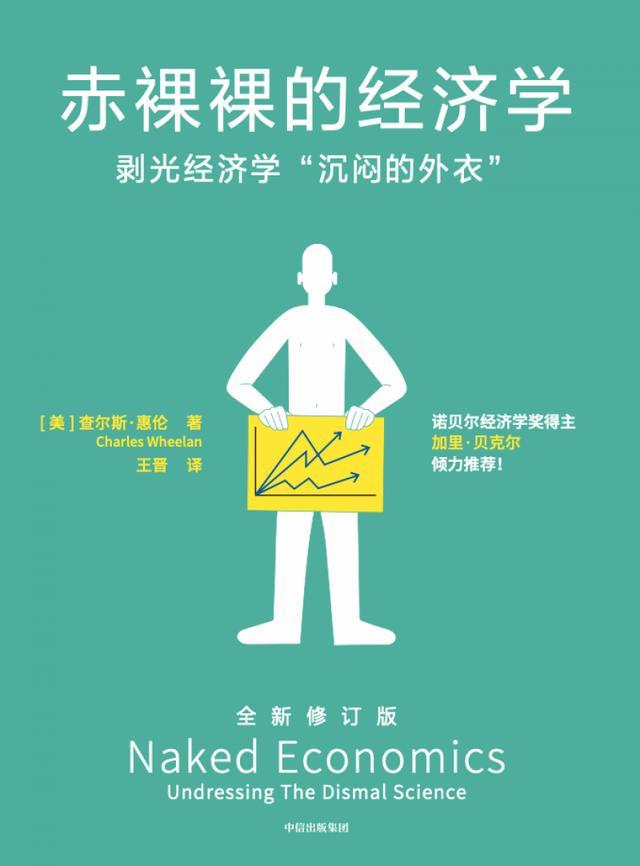
Group 1 - Economics is often perceived as a dull and complex field, with economists criticized for their obscure language and reliance on advanced mathematics [4][5] - The book by Charles Wheelan aims to simplify economic concepts, presenting them in an accessible manner without complex equations or jargon [4][5] - Economic analysis is recognized as a challenging discipline, often more complex than physical sciences, due to the unpredictability of human behavior [5][6] Group 2 - Economists play a crucial role in government decision-making, influencing policies related to economic growth, employment, and inflation [6][7] - Economic considerations are integral to various government functions, including competition promotion, pollution control, and healthcare provision [6][7] - The influence of economists extends to the business sector, where they assist companies in demand forecasting and strategic planning [7]
盛夏相聚,满载而归丨2025年经济学理学硕士项目优秀大学生夏令营-体验营活动回顾
Sou Hu Cai Jing· 2025-08-17 04:57
Group 1 - The 2025 Summer Camp organized by the Chinese University of Hong Kong (Shenzhen) and Shenzhen Advanced Institute of Finance successfully concluded, providing participants with an immersive experience in the MSc in Economics program [4][23]. - The camp included various activities such as project introduction sessions, sharing experiences from senior students, and a unique English experiential class led by Professor Xu Shiyuan, which combined theoretical knowledge with practical case studies [9][15]. - Participants engaged in a corporate visit to OPPO, where they learned about the company's culture and innovation, and received insights from alumni on how the MSc program aided their career development in the tech industry [30]. Group 2 - The opening ceremony featured speeches from university officials, highlighting the institution's educational philosophy and the advantages of the MSc in Economics program, including strong employment support [23][25]. - The camp provided opportunities for networking and discussions among students, faculty, and alumni, fostering a sense of community and collaboration [22][26]. - The final day included personal interviews, allowing participants to showcase their talents and potential, concluding the camp on a positive note [37].